

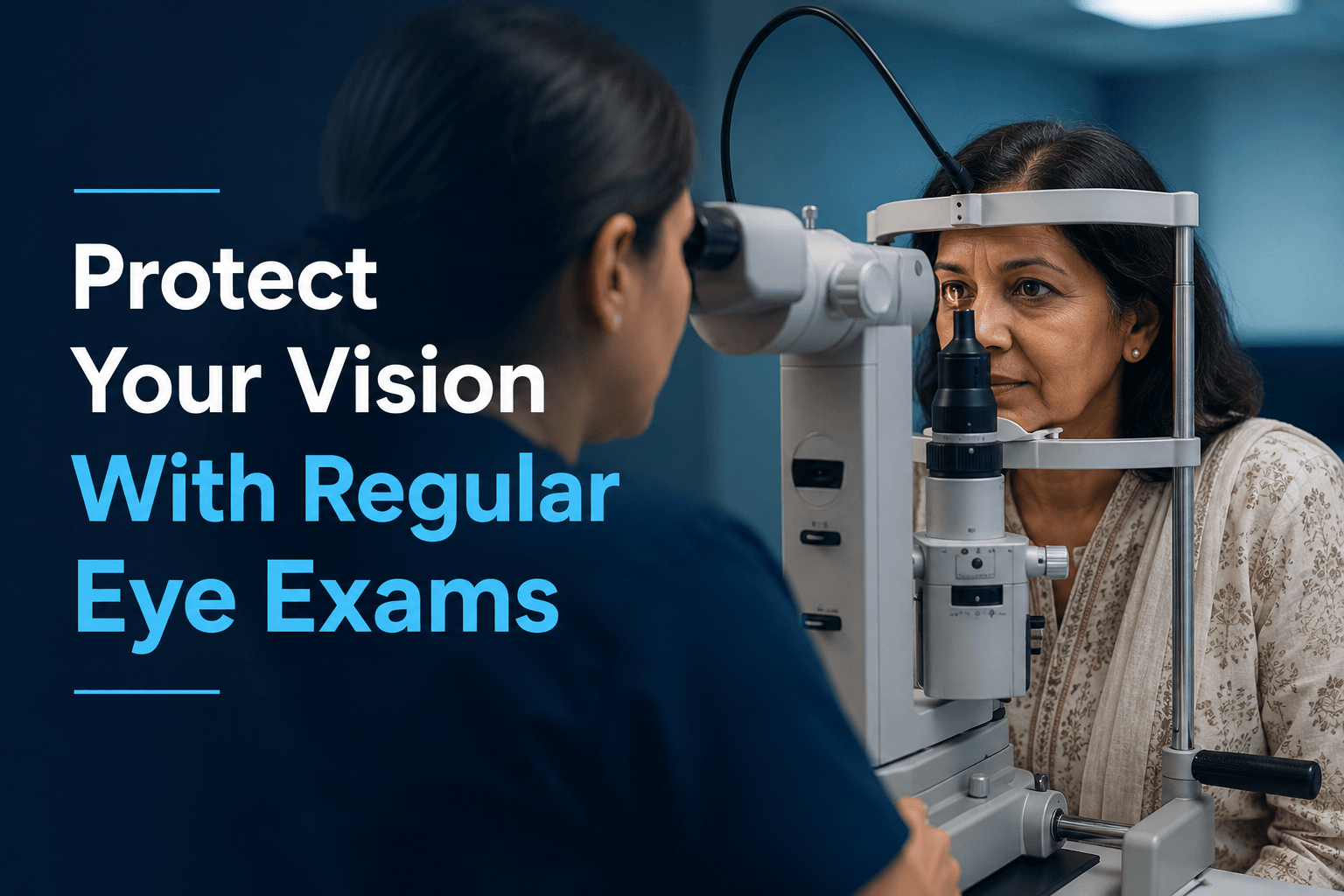
You can read a book comfortably, recognize faces from a distance, drive without difficulty, and work on a computer without noticing any major problem. It may seem like your eyes are perfectly healthy. But clear vision does not always mean healthy eyes.
Many eye conditions develop gradually and may cause little or no noticeable change in vision during their early stages. This is why Regular Eye Checkups are an important part of preventive healthcare, even when you feel that your eyesight is completely normal.
A routine eye examination is not simply about checking whether you need glasses. A comprehensive eye checkup can help an eye specialist evaluate the overall health of your eyes, identify potential risks, monitor changes over time, and recommend timely treatment when necessary.
Clear Vision Does Not Always Mean Healthy Eyes
One of the biggest misconceptions about eye health is that an eye problem will always cause blurred vision, pain, redness, or another obvious symptom.
Some conditions can progress quietly before affecting everyday vision. Glaucoma, for example, may cause gradual visual field changes that are difficult to notice in daily life. The U.S. Preventive Services Task Force notes that visual field loss can occur before visual acuity becomes affected in glaucoma.
This explains the importance of regular eye checkups. An eye examination gives a specialist an opportunity to look beyond how clearly you can see and assess structures such as the retina, optic nerve, cornea, and other parts of the eye.
In other words, waiting until your vision becomes blurry may mean waiting longer than you should.
Why Eye Exams Are Important for Preventive Eye Care
The main purpose of preventive eye care is to identify potential problems before they become more difficult to manage.
During an appropriate comprehensive eye checkup, an eye specialist may assess visual acuity, eye pressure, peripheral vision, pupil responses, the front of the eye, optic nerve, and retina. Depending on your age, symptoms, medical history, and risk factors, additional diagnostic tests or imaging may also be recommended.
This makes an eye exam much more than a simple vision test.
Regular examinations can help:
- Monitor changes in eyesight over time
- Identify refractive errors
- Evaluate eye pressure and glaucoma risk
- Examine the retina and optic nerve
- Detect signs that may require further investigation
- Monitor existing eye conditions
- Support timely treatment and follow-up
- Maintain long-term eye health
The specific tests and frequency of examinations should always be determined according to an individual’s age, risk factors, medical history, and eye health.
Early Detection of Eye Diseases Can Make a Difference
One of the greatest benefits of regular eye exams is the opportunity for early detection.
Eye diseases can sometimes progress without obvious symptoms. A person may continue with their normal routine while subtle changes are occurring inside the eye. A professional eye health screening can help identify abnormalities that may not be apparent during everyday activities.
Glaucoma is one example where early changes can be difficult for a person to recognize. Comprehensive evaluation may involve several components rather than relying on one measurement alone. Tests can include eye pressure measurement, visual field testing, examination of the optic nerve, and imaging such as optical coherence tomography when clinically appropriate.
Early identification does not mean that every abnormal finding will necessarily lead to serious disease. Instead, it allows an eye specialist to assess the situation, monitor it appropriately, and discuss treatment if required.
Regular Eye Checkups Are Important as You Age
Our eyes change throughout life. The type and frequency of eye care that is appropriate for a young adult may differ from what is recommended later in life.
The American Academy of Ophthalmology recommends a baseline comprehensive eye evaluation around age 40, with subsequent examinations guided by age and risk factors. The recommendations cited by the USPSTF suggest examinations every 2 to 4 years for adults aged 40 to 54 without risk factors, every 1 to 3 years from 55 to 64, and every 1 to 2 years from age 65 onward. People with higher risk may require a different schedule.
These intervals are not a substitute for personalized medical advice. If you have symptoms, a family history of eye disease, diabetes, high blood pressure, previous eye surgery, or another risk factor, your eye specialist may recommend examinations more frequently.
Diabetes and Other Health Conditions Can Affect Your Eyes
Your eyes can also provide important clues about your overall health.
Diabetes and high blood pressure can affect the eyes and increase the need for appropriate eye monitoring. The National Eye Institute notes that many people with diabetes or high blood pressure need a dilated eye examination at least once a year, although the appropriate schedule should be discussed with a doctor.
This is another reason why an eye checkup even with clear vision should not be ignored. Feeling healthy and seeing clearly does not necessarily tell you what is happening inside your eyes.
What Happens During a Routine Eye Examination?
A routine eye examination may begin with questions about your vision, medical history, medications, family history, and any symptoms you may have noticed.
Your eye specialist may then perform different assessments depending on your individual needs. These may include:
- Visual acuity testing: Measures how clearly you see at different distances.
- Eye pressure measurement: Helps assess intraocular pressure as part of an evaluation for conditions such as glaucoma.
- Visual field testing: Evaluates peripheral vision and can help identify changes that may not be obvious during everyday activities.
- Pupil and eye movement assessment: Helps evaluate how the eyes and pupils respond to light and movement.
- Retinal and optic nerve examination: Allows the specialist to assess important structures at the back of the eye.
- Advanced imaging: When required, tests such as OCT can provide detailed information about retinal and optic nerve structures.
A comprehensive examination is selected according to the patient’s individual circumstances rather than using exactly the same tests for everyone.
How Often Should You Get an Eye Checkup?
There is no single schedule that is perfect for everyone.
Healthy adults may require periodic examinations based on age and risk factors, while children, older adults, contact lens users, people with diabetes, and individuals with a family history of eye disease may require more specific monitoring.
You should also schedule an eye examination sooner if you notice sudden vision changes, flashes of light, new floaters, eye pain, persistent redness, double vision, or other unusual symptoms. Sudden or severe visual changes can require urgent medical attention.
The key message is simple: do not use clear vision as the only measure of eye health.
Regular Eye Checkups Are an Investment in Long-Term Vision
Your eyes support almost every part of daily life, from reading and working to driving, learning, and enjoying time with family. Taking care of them should therefore be part of your long-term health routine.
Regular eye examinations provide an opportunity to establish a baseline, monitor changes, understand your risk factors, and seek professional guidance when something unusual is identified.
Preventive care is particularly valuable because many eye conditions are easier to address when they are identified at an appropriate stage.
Choose Comprehensive Eye Care at Desai Eye Institute
If you are searching for Advanced Eye Care in Vadodara, choosing a center that offers comprehensive evaluation and specialized ophthalmic services can make routine eye care more convenient and thorough.
Desai Eye Institute & Eye Hospitals in Vadodara provide comprehensive ophthalmic care across areas including cataract surgery, glaucoma, retina, cornea, neuro-ophthalmology, refractive surgery, oculoplasty, and paediatric ophthalmology. The institute combines specialist expertise with advanced technology and personalized care.
Whether you are looking for a Best Eye Doctor in Vadodara, a Top Eye Specialist in Vadodara, or simply want to schedule a Regular Vision Checkup, a professional eye evaluation can be a valuable step toward protecting your vision for the future.
Your vision may be clear today. A regular eye checkup helps you take care of what matters for tomorrow.