

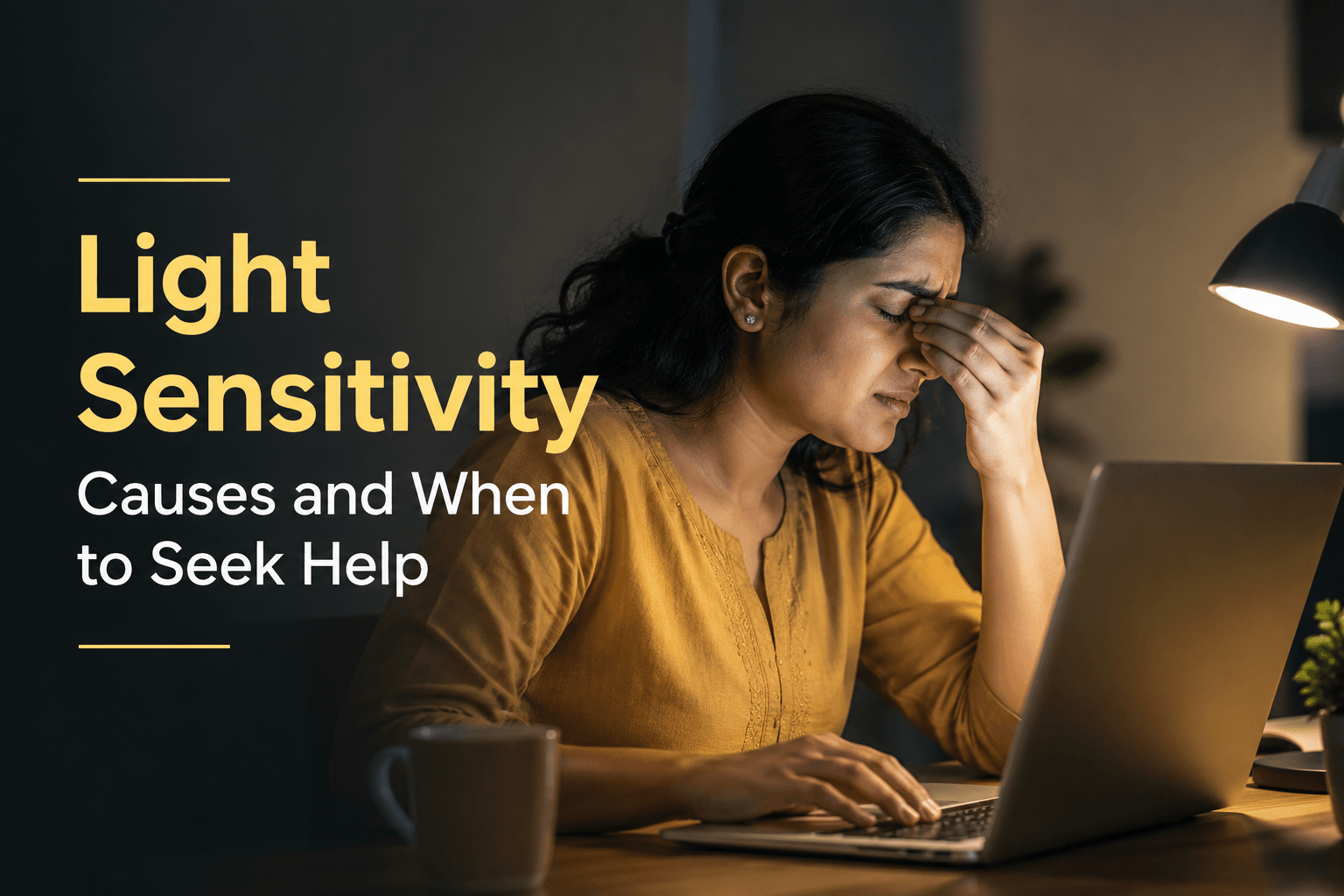
Have you ever stepped outside into bright sunlight and immediately started squinting, tearing up, or feeling discomfort in your eyes? While some light sensitivity is normal, persistent or unusual discomfort can sometimes indicate an underlying eye or health condition.
Known medically as photophobia, light sensitivity means that ordinary levels of light feel uncomfortable or painful to the eyes. It can occur temporarily after certain eye procedures or during eye strain, but it may also accompany conditions affecting the cornea, tear film, retina, optic nerve, or nervous system.
Understanding the light sensitivity causes can help you recognize when the symptom is temporary and when it deserves professional attention.
What Is Light Sensitivity?
Light sensitivity is more than simply disliking bright sunlight. A person with photophobia may feel uncomfortable under sunlight, fluorescent lighting, LED lights, computer screens, or other bright environments. They may frequently squint, blink, close their eyes, or seek darker surroundings.
Light sensitivity in eyes can occur with or without significant pain. Some people notice it alongside watery eyes, redness, blurred vision, headaches, or a burning sensation.
Photophobia itself is usually a symptom rather than a condition. Finding its underlying cause is therefore an important part of appropriate eye care.
Common Light Sensitivity Causes
There are several possible causes of light sensitivity, ranging from everyday eye strain to conditions requiring medical treatment.
1. Dry Eyes
Dry eye is one of the common eye-related conditions associated with photophobia. When the tear film does not adequately protect and lubricate the eye surface, light may feel harsher than usual.
Dryness can also cause burning, irritation, watering, redness, and a gritty sensation. Long periods of screen use may contribute to eye strain and dryness, which can sometimes be accompanied by light sensitivity.
2. Digital Eye Strain
Spending extended periods looking at computers, smartphones, tablets, or other digital screens can contribute to eye fatigue. Symptoms may include tired eyes, blurred vision, dryness, headaches, and sensitivity to light.
If you frequently wonder, “Why are my eyes sensitive to light after using my computer?”, prolonged visual concentration and reduced blinking may be contributing factors. Adjusting screen brightness, taking regular breaks, and maintaining appropriate viewing distance can help reduce strain.
3. Migraine and Headaches
One of the well-known photophobia causes is migraine. People experiencing migraine may become unusually sensitive to light, sound, and other sensory stimuli. Bright or fluorescent lighting may worsen discomfort during an attack.
The connection between light sensitivity and headaches can sometimes be confusing. Light sensitivity may occur during a migraine and, in some people, may even appear before the headache becomes noticeable. Therefore, recurring sensitivity accompanied by throbbing or severe headaches, nausea, or visual symptoms should not automatically be assumed to be an eye problem alone.
4. Corneal Problems
The cornea is the clear front surface of the eye and plays an important role in focusing light. Scratches, inflammation, infections, and other corneal disorders can make light uncomfortable.
A corneal abrasion, for example, may cause pain, watering, redness, and sensitivity to light. Contact lens-related problems can also irritate the cornea and require prompt evaluation if significant discomfort develops.
5. Eye Inflammation and Infections
Conditions such as conjunctivitis and uveitis can be associated with photophobia. Inflammation inside the eye may cause pain, redness, blurred vision, and increased sensitivity to light.
Because some inflammatory eye conditions can potentially affect vision if left untreated, persistent symptoms should be evaluated by an eye-care professional rather than treated only with home remedies.
6. Uncorrected Vision Problems
Refractive errors such as astigmatism can contribute to blurred or uncomfortable vision. When the eyes work harder to focus, some people may experience eye fatigue and associated light sensitivity.
An appropriate eye examination can help determine whether an uncorrected prescription or another visual problem is contributing to the symptoms.
7. Certain Medications and Medical Conditions
Some medications can contribute to abnormal light sensitivity. Photophobia can also occur alongside certain neurological conditions and following head injuries.
This is why identifying the complete pattern of symptoms is important. Your eye specialist may consider your eye health, medications, recent injuries, headaches, and other symptoms when determining the possible cause.
What Does Sudden Light Sensitivity Mean?
Sudden light sensitivity deserves particular attention, especially when it is new or significantly different from your usual experience.
A sudden change may be related to an eye-surface problem, inflammation, infection, migraine, injury, or another condition. If light sensitivity develops alongside significant eye pain, redness, blurred or reduced vision, flashes, new floaters, or other sudden visual changes, seek prompt medical evaluation.
You should also avoid assuming that sunglasses or staying in a dark room will solve the underlying problem. These measures may reduce discomfort temporarily, but they do not identify or treat the cause.
When Should You See an Eye Specialist?
Occasional discomfort from bright sunlight is generally not unusual. However, professional evaluation becomes more important when light sensitivity:
- Develops suddenly or becomes progressively worse
- Is accompanied by eye pain or significant redness
- Causes blurred or reduced vision
- Occurs after an eye injury
- Continues despite rest and reduced screen exposure
- Is associated with recurring headaches or migraine symptoms
- Occurs with excessive watering or discharge
- Makes normal indoor lighting difficult to tolerate
A thorough eye examination can help identify whether the problem is related to the cornea, tear film, inflammation, refractive error, retina, optic nerve, or another underlying cause. Treatment depends on the diagnosis and may include prescription glasses or contact lenses, lubricating drops, medication, or treatment of the underlying condition.
How Can You Reduce Eye Discomfort From Light?
While the appropriate solution depends on the underlying cause, some everyday habits may make light sensitivity more manageable.
Wear suitable sunglasses outdoors and consider a hat or cap in strong sunlight. Keep indoor lighting comfortable rather than excessively bright, and adjust the brightness of digital screens to a level that feels comfortable.
If you spend long hours on digital devices, take regular visual breaks and remember to blink frequently. These habits can help reduce eye strain and dryness.
However, persistent eye sensitivity to light should not simply be managed by continuously avoiding light. Identifying why the sensitivity is occurring is more important for long-term eye health.
Why Professional Eye Evaluation Matters
There is no single treatment for photophobia because the appropriate treatment depends on its cause. For example, sensitivity related to dry eye requires a different approach from sensitivity caused by corneal disease, inflammation, migraine, or a neurological condition.
This makes a detailed eye examination particularly valuable when symptoms are persistent, recurring, or accompanied by other changes in vision.
Get Expert Care for Light Sensitivity at Desai Eye Institute
If you are experiencing persistent light sensitivity in eyes, recurring discomfort, or unexplained changes in your vision, professional evaluation can help identify the underlying problem.
Desai Eye Institute & Eye Hospitals in Vadodara provides comprehensive ophthalmic care across areas including corneal conditions, retina, glaucoma, neuro-ophthalmology, refractive surgery, cataract care, and paediatric ophthalmology. The institute brings together a team of specialists and advanced diagnostic and treatment facilities.
With experienced specialists and a patient-focused approach, Desai Eye Institute aims to provide personalized care for a wide range of eye conditions.
If you are looking for Advanced Eye Care in Vadodara, a Best Eye Doctor in Vadodara, or a Top Eye Specialist in Vadodara, do not ignore persistent or sudden light sensitivity. Understanding the cause is the first step toward protecting your comfort, vision, and long-term eye health.