Protecting Your Vision Starts with a Comprehensive Eye Exam
As the world celebrates International Yoga Day, people are becoming increasingly aware of the importance of holistic wellness. While yoga helps improve physical and mental health, maintaining good eye health is equally important in today’s digital age. Long hours spent on screens, environmental pollution, stress, and age-related changes can silently affect your vision without noticeable symptoms.
Many eye conditions, such as glaucoma, diabetic retinopathy, cataracts, and retinal disorders, develop gradually and may not show warning signs in their early stages. This is why a Comprehensive Eye Exam is one of the most important preventive healthcare measures you can take.
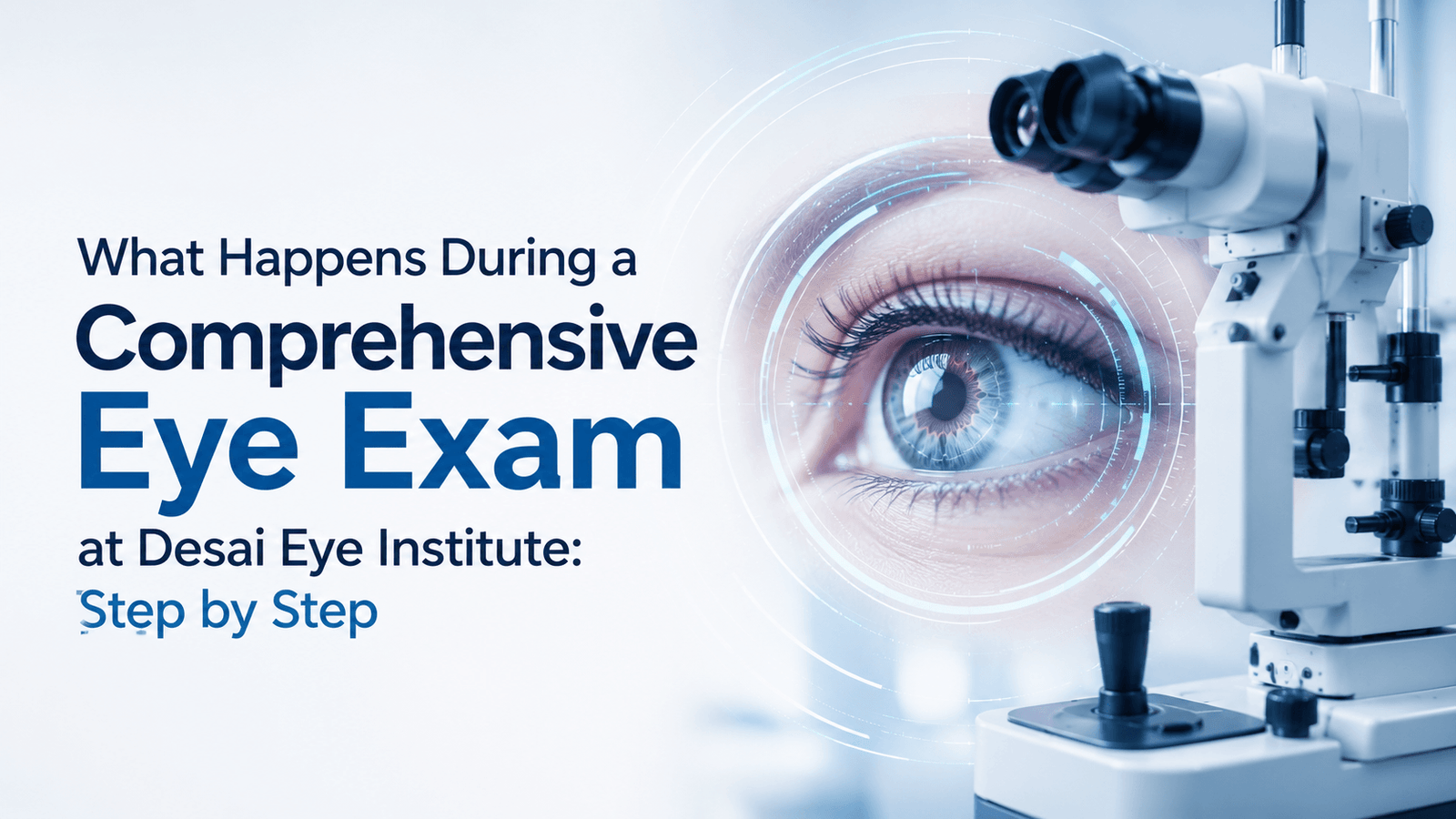
At Desai Eye Institute, patients receive a detailed and personalized eye examination designed to assess both vision quality and overall eye health. If you’re wondering what happens during a comprehensive eye checkup, this step-by-step guide will walk you through the entire process.
Why Is a Comprehensive Eye Exam Important?
A routine vision test checks whether you need glasses or contact lenses. However, a comprehensive vision exam goes much deeper.
A complete eye examination helps:
- Detect vision problems early
- Monitor existing eye conditions
- Identify age-related eye diseases
- Evaluate eye coordination and focusing ability
- Assess retinal and optic nerve health
- Detect signs of systemic diseases such as diabetes and hypertension
Routine eye checkups are essential for maintaining clear vision and protecting long-term eye health.
Step 1: Patient Registration and Medical History Review
The first step in the eye test procedure involves understanding your medical and visual history.
The eye care team may ask questions about:
- Current vision concerns
- Existing eye conditions
- Previous eye surgeries
- Family history of eye diseases
- Diabetes, hypertension, or other health conditions
- Current medications
This information helps the eye specialist understand potential risk factors and customize the examination accordingly.
Step 2: Initial Vision Screening
Once your history is reviewed, the next step is vision screening.
During this process, your visual acuity is measured using an eye chart. This determines how clearly you can see objects at various distances.
The assessment typically evaluates:
- Distance vision
- Near vision
- Reading ability
- Visual clarity with current glasses or contact lenses
Vision screening provides a baseline understanding of your eyesight before further testing begins.
Step 3: Refraction Testing
Refraction testing determines whether you need corrective lenses and identifies the precise prescription required.
During this stage, different lens combinations are placed before your eyes while you read letters on a chart.
This test helps diagnose:
- Nearsightedness (Myopia)
- Farsightedness (Hyperopia)
- Astigmatism
- Presbyopia
Accurate refraction testing ensures that patients receive the most suitable prescription for clear and comfortable vision.
Step 4: Eye Muscle and Alignment Evaluation
Healthy vision depends on both eyes working together properly.
The eye specialist evaluates:
- Eye movement
- Eye coordination
- Focusing ability
- Depth perception
- Alignment of both eyes
This part of the eye health assessment can help identify conditions such as eye strain, lazy eye, double vision, or binocular vision disorders.
Step 5: Intraocular Pressure Testing
One of the most important parts of a comprehensive eye checkup is measuring eye pressure.
This test helps screen for glaucoma, often called the “silent thief of sight” because it can cause permanent vision loss without noticeable symptoms.
Using advanced equipment, the eye care team measures intraocular pressure quickly and comfortably.
Early glaucoma detection significantly improves treatment outcomes and helps preserve vision.
Step 6: Slit-Lamp Examination
A slit lamp is a specialized microscope that allows the eye specialist to examine the structures at the front of the eye in detail.
The slit-lamp examination evaluates:
- Cornea
- Iris
- Lens
- Eyelids
- Conjunctiva
- Tear film
This step helps detect:
- Cataracts
- Corneal infections
- Dry eye disease
- Inflammation
- Eye injuries
The detailed view provided by this technology allows early diagnosis of many eye conditions.
Step 7: Retinal and Optic Nerve Examination
The retina and optic nerve play a critical role in vision.
To assess these structures, the eye specialist may use pupil-dilating drops. Once the pupils are enlarged, the back of the eye can be examined thoroughly.
This examination helps identify:
- Retinal disorders
- Diabetic retinopathy
- Macular degeneration
- Retinal tears
- Optic nerve damage
- Glaucoma-related changes
A retinal examination is one of the most valuable components of a comprehensive vision exam because many serious eye diseases begin in the retina.
Step 8: Advanced Diagnostic Imaging (When Required)
At Desai Eye Institute, advanced diagnostic technologies may be recommended depending on the patient’s condition.
These tests may include:
- Optical Coherence Tomography (OCT)
- Corneal Topography
- Fundus Photography
- Visual Field Testing
These advanced investigations provide highly detailed images of eye structures and support accurate diagnosis and treatment planning.
Patients seeking Advanced Eye Care in Vadodara benefit from access to modern diagnostic equipment that enables precise eye evaluations.
Step 9: Eye Specialist Consultation and Discussion
After all examinations are completed, the patient meets with the eye specialist for a detailed review of the findings.
During this eye specialist consultation, the doctor explains:
- Vision status
- Test results
- Presence of any eye conditions
- Treatment recommendations
- Preventive care measures
- Follow-up schedules
This personalized discussion ensures patients understand their eye health and receive clear guidance for maintaining optimal vision.
Signs You Should Schedule an Eye Examination Immediately
Do not wait for your next routine appointment if you experience:
- Blurred vision
- Frequent headaches
- Eye pain
- Flashes or floaters
- Sudden vision changes
- Difficulty seeing at night
- Excessive eye strain
Prompt evaluation can prevent complications and protect your eyesight.
Experience Trusted Eye Care at Desai Eye Institute
Your eyes deserve expert attention and preventive care. A Comprehensive Eye Exam is more than just a vision test; it is a complete evaluation of your eye health and an important step toward preserving lifelong vision.
With the Desai Eye Institute, patients benefit from experienced specialists, advanced diagnostic technology, personalized treatment plans, and a commitment to delivering exceptional eye care. Whether you need a routine eye checkup, advanced diagnostics, or specialized treatment, the institute strives to provide comprehensive solutions for every stage of eye health.
If you’re looking for Advanced Eye Care in Vadodara, guidance from the Best Eye Doctor in Vadodara, or consultation with a Top Eye Specialist in Vadodara, scheduling a comprehensive eye examination is the ideal place to start.
Your vision is precious. Make regular eye exams a part of your overall wellness journey and take a proactive step toward healthier eyes and clearer vision.