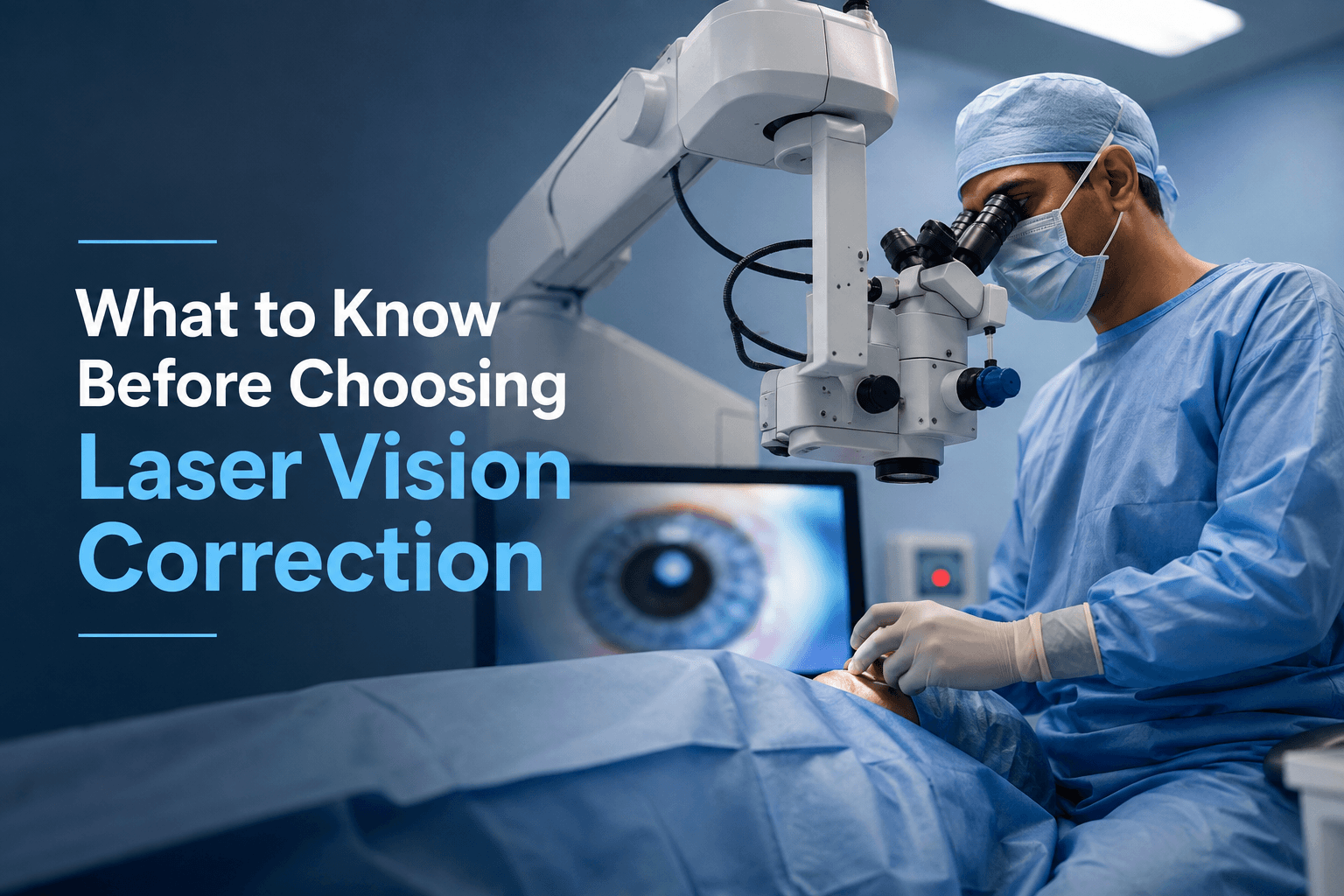
Imagine waking up in the morning and being able to see the alarm clock clearly without reaching for your glasses. For many people, this is one of the reasons Laser Vision Correction is an attractive option. Procedures such as LASIK, PRK and other forms of refractive surgery can reduce dependence on glasses or contact lenses by reshaping the cornea to improve how light focuses on the retina.
However, choosing laser eye surgery should not be based only on convenience or the promise of clear vision. It is an elective procedure, and the right treatment depends on your eye health, prescription, corneal condition, lifestyle and expectations. Understanding the procedure, eligibility, benefits and potential risks can help you make a more informed decision.
What Is Laser Vision Correction?
Laser vision correction is a group of procedures designed to correct refractive errors such as myopia, hyperopia and astigmatism. LASIK eye surgery is one of the most widely known options. During LASIK, a surgeon creates a thin corneal flap and uses an excimer laser to reshape the underlying corneal tissue before repositioning the flap.
Other procedures, including PRK and SMILE, may be considered depending on the patient’s corneal structure and visual needs. Desai Eye Institute provides LASIK and refractive surgery services and describes refractive surgery as an approach that can reduce or eliminate dependence on glasses or contact lenses.
The important point is that laser eye treatment is not one-size-fits-all. A detailed evaluation is needed before deciding which procedure, if any, is appropriate.
Is LASIK Right for Everyone?
One of the most important parts of the decision-making process is understanding laser eye surgery eligibility. Being tired of wearing glasses does not automatically make someone a suitable candidate.
During a preoperative assessment, an eye specialist may evaluate your prescription, corneal shape and thickness, tear film, pupil size and overall eye health. A stable prescription is also important because changes in refractive error can affect the predictability of treatment. Conditions such as keratoconus, significant dry eye, certain corneal disorders and some systemic or ocular conditions may make LASIK unsuitable or require additional consideration.
Age is another consideration. LASIK is generally performed in adults, and the prescription should be sufficiently stable before surgery. Pregnancy and breastfeeding can temporarily affect refraction and the ocular surface, so surgery may be postponed in these situations.
This is why LASIK candidacy should always be determined through a professional eye examination rather than an online eligibility calculator.
What Happens During the Evaluation?
A comprehensive evaluation is more than simply checking whether you can read an eye chart. The goal is to understand whether your eyes can safely undergo corneal reshaping and what visual outcome can realistically be expected.
Your doctor may review your previous prescriptions, examine the cornea, assess tear production and evaluate the overall health of your eyes. Corneal mapping or topography can provide detailed information about corneal shape and help identify abnormalities that may influence treatment decisions.
If you wear contact lenses, your doctor may also ask you to stop wearing them for a period before certain measurements because contact lenses can temporarily alter the shape of the cornea.
These evaluations are an essential part of LASIK eye surgery requirements because accurate measurements help the surgeon determine whether treatment is appropriate and which procedure may provide the safest option.
Understanding the Benefits of Laser Vision Correction
The main goal of LASIK vision correction is to reduce dependence on glasses or contact lenses. For appropriately selected patients, this can provide greater convenience during everyday activities such as exercising, travelling, working or participating in outdoor activities.
Potential laser vision correction benefits include improved uncorrected distance vision, reduced dependence on corrective eyewear and convenience in daily life. Refractive surgery can also provide long-term correction of certain refractive errors when the patient is appropriately selected and the procedure is suitable.
However, “reduced dependence” is a more realistic goal than assuming you will never need glasses again. Some patients may still require glasses for particular activities, while age-related changes in near vision can eventually make reading glasses necessary.
Do Not Ignore the Risks
Every surgical procedure has potential risks, and laser vision correction risks should be discussed openly before treatment. Possible issues can include dry eyes, glare, halos, starbursts, fluctuating vision, undercorrection or overcorrection and, in uncommon cases, more serious complications affecting vision.
Some patients may experience difficulty with night vision, particularly during the period when the eyes are stabilizing. Dry eye symptoms may also occur or worsen following LASIK.
The FDA also emphasizes that LASIK does not guarantee perfect vision and that some patients may continue to need glasses or contact lenses after surgery.
Understanding these possibilities does not mean laser eye surgery is unsafe. It means the decision should be based on an individualized assessment, realistic expectations and informed consent.
Your Lifestyle Matters Too
Your daily activities can influence which refractive procedure is most appropriate. For example, people involved in boxing, martial arts or other activities where the eyes may experience significant trauma may need special consideration when choosing LASIK or an alternative procedure.
Your profession may also matter. People whose careers depend heavily on night vision or who have specific occupational requirements should discuss these considerations with their eye specialist before choosing surgery.
If LASIK is not appropriate, that does not necessarily mean you have no options. Procedures such as PRK may be considered for selected patients. Desai Eye Institute notes that PRK can be an alternative for some people who are not suitable for LASIK, including certain patients with thin corneas or dry eyes.
Choose Your Eye Specialist Carefully
Choosing the right surgeon is just as important as choosing the procedure. Avoid selecting a clinic based solely on the lowest price or promotional claims. The FDA recommends comparing providers, understanding the risks and benefits and asking questions about the surgeon’s experience and expected outcomes.
When looking for Advanced Eye Care in Vadodara, consider whether the centre offers comprehensive diagnostic evaluation, experienced ophthalmologists, modern technology and appropriate follow-up care.
Desai Eye Institute & Eye Hospitals in Vadodara offers LASIK and refractive surgery as part of its comprehensive ophthalmic services. Its team includes Dr. Priya Desai, a Cornea & Refractive Surgeon, along with specialists covering multiple areas of eye care.
Questions to Ask Before Laser Eye Surgery
Before scheduling your procedure, ask your eye doctor:
- Am I a suitable candidate for laser vision correction?
- Which procedure is best for my eyes and lifestyle?
- Are my prescription and corneal measurements stable?
- Could dry eye affect my results?
- What results can I realistically expect?
- What are the possible complications?
- Will I still need glasses for certain activities?
- What will my recovery and follow-up schedule involve?
A thorough discussion can help you understand whether the expected benefits outweigh the potential risks for your individual situation.
Make an Informed Choice for Clearer Vision
Laser Vision Correction can be a life-changing option for suitable patients, but successful treatment starts long before the laser is used. A careful eye examination, accurate measurements, realistic expectations and an experienced surgical team are essential parts of the process.
If you are considering laser vision correction surgery in Vadodara, Desai Eye Institute provides specialized refractive and LASIK care supported by comprehensive ophthalmic expertise. With a focus on advanced technology, personalized treatment planning and patient-centred care, the institute aims to help patients make confident and informed decisions about their vision.
If you are searching for the Best Eye Doctor in Vadodara or a Top Eye Specialist in Vadodara for a laser vision assessment, schedule a consultation with the team at Desai Eye Institute to determine whether laser eye surgery is right for you.