

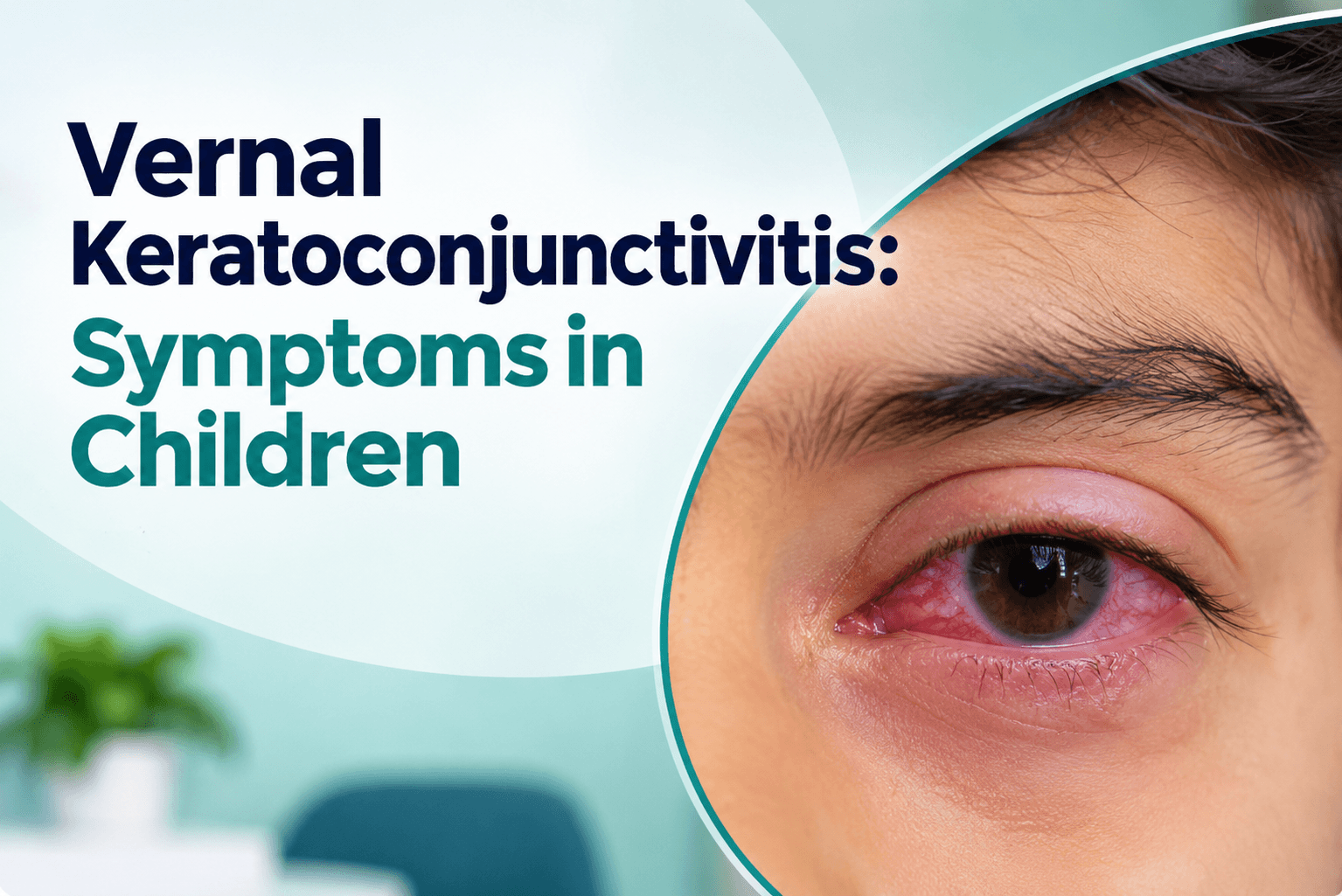
Frequent eye itching, redness, and watering in children may sometimes indicate more than a common eye allergy. One possible cause is vernal keratoconjunctivitis (VKC), a recurring allergic eye condition that can cause significant inflammation and affect the cornea if left untreated.
VKC is more common in children and young adults. Although symptoms may become worse during certain seasons, the condition can persist throughout the year and requires proper eye care.
What Is Vernal Keratoconjunctivitis?
Vernal keratoconjunctivitis is a chronic inflammatory eye condition caused by an exaggerated immune response to allergens and other environmental factors. It usually affects both eyes and is commonly associated with intense itching, redness, watering, and sensitivity to light.
Unlike mild allergic conjunctivitis, VKC can affect the cornea, the transparent front surface of the eye. Severe or untreated cases may lead to corneal damage and vision-related complications.
Causes and Risk Factors of VKC
The exact cause of VKC is not fully understood, but several factors may contribute to its development:
- Environmental allergens: Dust, pollen, and other airborne particles may trigger symptoms.
- Warm weather: Hot and dry conditions can aggravate eye inflammation.
- Allergic tendency: Children with asthma, eczema, or other allergies may have a higher risk.
- Immune response: An exaggerated immune reaction can cause persistent inflammation of the eye surface.
Common Symptoms of Vernal Keratoconjunctivitis
Symptoms may vary depending on the severity of the condition. Common signs include:
- Intense and frequent eye itching
- Redness and swelling around the eyes
- Excessive watering
- Thick or stringy mucus discharge
- Sensitivity to sunlight and bright lights
- A gritty sensation, as if something is inside the eye
- Difficulty opening the eyes, particularly in the morning
Children may rub their eyes frequently because of itching. However, repeated eye rubbing can worsen irritation and increase the risk of corneal complications.
Can VKC Affect Vision?
Yes. In moderate to severe cases, inflammation may affect the cornea and interfere with clear vision. Some children may develop corneal surface damage, shield ulcers, or scarring.
Frequent eye rubbing has also been associated with keratoconus, a condition in which the cornea gradually becomes thinner and changes shape. Early diagnosis and regular monitoring can help reduce the risk of complications.
How Is Vernal Keratoconjunctivitis Diagnosed?
An ophthalmologist examines the eyes using a slit lamp to assess inflammation and identify changes in the conjunctiva and cornea. The doctor may also examine the inner surface of the upper eyelid, where enlarged papillae can be a characteristic sign of VKC.
The examination helps determine the severity of the condition and whether the cornea has been affected.
Treatment Options for VKC
Treatment depends on the severity of symptoms and the extent of inflammation. Common approaches include:
- Lubricating eye drops: Help relieve dryness and irritation.
- Antihistamine drops: Reduce allergic symptoms such as itching and redness.
- Mast cell stabilisers: Help control allergic inflammation and prevent flare-ups.
- Anti-inflammatory medication: Cyclosporine or tacrolimus may be prescribed for persistent or severe cases.
- Corticosteroid eye drops: May be used for short periods during severe flare-ups under strict ophthalmologist supervision.
Steroid eye drops should never be used without medical advice, as prolonged or inappropriate use can increase the risk of glaucoma and cataracts.
What Are the Symptoms of Welding Eye Damage?
Welding eye damage is different from VKC. Exposure to ultraviolet radiation from welding arcs can cause photokeratitis, commonly known as welder’s flash.
Symptoms may appear several hours after exposure and include eye pain, redness, watering, blurred vision, and sensitivity to light. Anyone experiencing these symptoms after welding should seek an eye examination rather than attempting self-treatment.
When Should You Consult an Eye Specialist?
Consult an ophthalmologist if your child experiences persistent itching, recurring redness, excessive watering, light sensitivity, or difficulty opening the eyes. Pain, blurred vision or suspected corneal damage requires prompt medical attention.
Protect Your Child’s Eye Health with Desai Eye Institute
Recurring eye allergies should not be ignored, particularly when symptoms are severe or affect a child’s daily activities. Early diagnosis and appropriate treatment can help manage vernal keratoconjunctivitis and protect long-term eye health.
Desai Eye Institute and Eye Hospitals in Vadodara provide eye care and evaluation for various eye conditions. Consult an eye specialist for persistent allergic symptoms or changes in your