

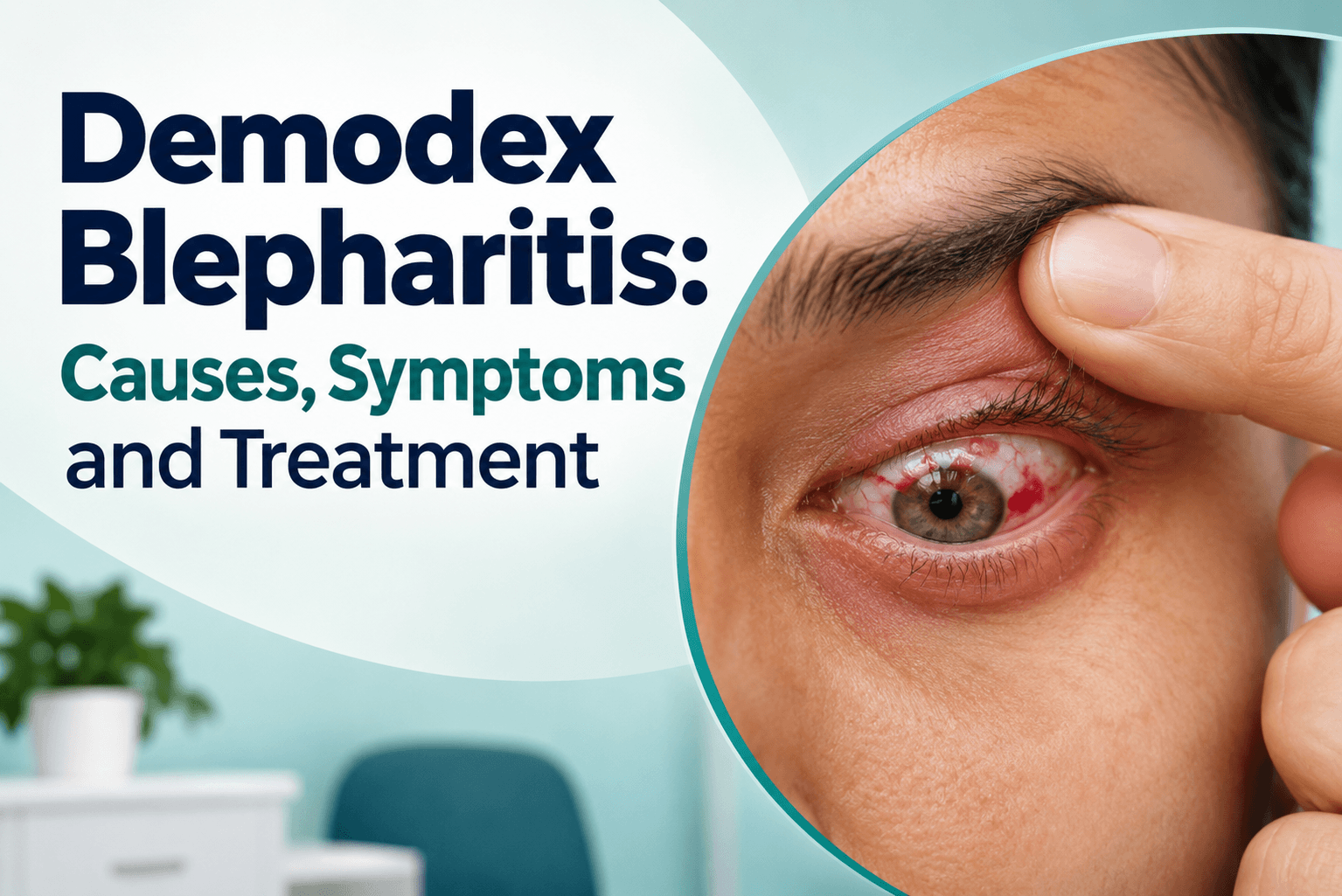
Do your eyelids feel itchy throughout the day? Do you wake up with crusty eyelashes, redness, or irritation around your eyes? These symptoms may indicate blepharitis, an inflammation of the eyelid margins that can sometimes be caused by microscopic mites called Demodex. Demodex blepharitis occurs when Demodex mites contribute to inflammation around the eyelash follicles. Although these mites naturally live on human skin, an increased population can cause persistent itching, redness, and debris around the eyelashes.
Understanding the causes, symptoms, and treatment options can help you manage this condition and protect your eye health.
What Is Demodex Blepharitis?
Blepharitis is inflammation of the eyelids, particularly around the edges where eyelashes grow. It can develop due to bacterial activity, skin conditions, blocked oil glands or Demodex mites.
Two common types of Demodex mites are:
- Demodex folliculorum: Lives mainly in hair follicles, including eyelash follicles.
- Demodex brevis: Lives in oil-producing glands around the eyelids.
Their presence does not always cause problems. However, excessive mite activity can contribute to eyelid irritation and inflammation.
What Causes Blepharitis?
Several factors can contribute to eyelid inflammation:
- Demodex overgrowth: Increased mite populations can cause irritation and debris around eyelash roots.
- Blocked oil glands: Poor functioning of meibomian glands can contribute to inflammation and dry eyes.
- Skin conditions: Rosacea and seborrheic dermatitis may increase blepharitis risk.
- Bacterial activity: Excess bacteria around the eyelid margins can cause irritation and crusting.
- Age-related changes: Demodex mites become more common with increasing age.
Not every case of blepharitis is caused by Demodex mites, so identifying the underlying cause is important.
Common Blepharitis Symptoms You Should Not Ignore
The symptoms of Demodex blepharitis can resemble ordinary eye irritation or dry eye disease.
Common warning signs include:
- Itchy and red eyelids: Persistent itching and redness around the eyelashes.
- Crusty eyelashes: White, waxy deposits around eyelash roots.
- Morning irritation: Eyelids may feel uncomfortable after waking up.
- Burning sensation: A gritty or burning feeling around the eyes.
- Excessive watering: Increased tear production due to irritation.
- Eyelash loss: Long-standing inflammation may affect normal eyelash growth.
If these symptoms keep returning, consult an ophthalmologist for an examination.
How Do Demodex Mites Cause Crusty Eyelashes?
One characteristic sign of Demodex blepharitis is cylindrical dandruff, also called collarettes.
These are small, waxy deposits that form around the base of eyelashes. They develop from accumulated mite-related debris, skin cells, and inflammatory material.
Collarettes are an important clinical sign that helps an eye specialist identify Demodex-associated eyelid inflammation.
How Is Demodex Blepharitis Diagnosed and Treated?
An ophthalmologist may perform a slit-lamp examination to inspect the eyelid margins and eyelashes. In selected cases, microscopic examination of eyelashes may help confirm the presence of mites.
Treatment depends on the severity of inflammation and may include:
- Eyelid hygiene: Doctor-recommended eyelid wipes help remove crusts and debris.
- Warm compresses: Help soften deposits and loosen oils around the eyelids.
- Prescription medication: Specific treatments can target Demodex mites. Lotilaner ophthalmic solution 0.25% is an FDA-approved treatment for Demodex blepharitis in the United States.
- Managing associated conditions: Dry eye disease and other skin or eyelid conditions may also require treatment.
Avoid applying concentrated tea tree oil, household remedies or unprescribed medication directly to your eyelids.
How Can You Prevent Recurring Eyelid Inflammation?
Although Demodex overgrowth cannot always be prevented, good eyelid hygiene can help manage symptoms.
- Clean your eyelids regularly with recommended products.
- Avoid rubbing your eyes.
- Remove eye makeup before sleeping.
- Keep makeup brushes and applicators clean.
- Avoid sharing personal eye makeup.
- Follow your ophthalmologist’s treatment instructions.
When Should You Visit an Eye Specialist?
Persistent itching, redness, swelling, and crusty eyelashes should not be ignored. Seek prompt medical attention if you experience significant pain, sensitivity to light, or changes in vision.
Early diagnosis helps identify the cause of inflammation and allows appropriate treatment before symptoms become more troublesome.
Get Expert Eye Care at Desai Eye Institute, Vadodara
Persistent eyelid irritation can affect your daily comfort and quality of life. At Desai Eye Institute & Eye Hospitals, Vadodara, patients have access to comprehensive eye examinations, advanced diagnostic facilities, and specialised eye care services.
Whether you are experiencing recurring eyelid inflammation, dry eyes, or other eye-related concerns, an experienced ophthalmologist can help identify the problem and recommend suitable treatment.
If you are looking for Advanced Eye Care in Vadodara, the Best Eye Doctor in Vadodara, or a Top Eye Specialist in Vadodara, timely consultation is an important step towards healthier eyes.
Do not let persistent itching and crusty eyelashes affect your everyday life. Schedule an eye examination at Desai Eye Institute.
Contact Desai Eye Institute:
Appointment: 0265-2292266
Location: Subhanpura, Vadodara, Gujarat
Website: https://desaieyeinstitute.com/