
Many people panic the moment they hear the word “surgery” during an eye checkup. At the same time, others continue using eye drops or medications for years without realizing that a surgical procedure could solve the problem more effectively. This is where understanding Surgical vs. Non-Surgical Eye Treatments becomes extremely important.
Modern ophthalmology offers multiple advanced treatment approaches for eye conditions. Some problems can be managed with medications, lifestyle changes, corrective lenses, or therapies, while others require surgical intervention for long-term vision improvement. An experienced eye specialist carefully evaluates several factors before recommending the right treatment plan.
Whether it is cataracts, glaucoma, refractive errors, retinal conditions, or dry eyes, choosing the correct approach depends on the severity of the condition, age, medical history, vision goals, and overall eye health.
In this article, we will understand how eye doctors make treatment decisions and what patients should know before choosing between surgery and non-surgical care.
Understanding Surgical vs. Non-Surgical Eye Treatments
The main difference between surgical and non-surgical eye care lies in how the condition is treated.
What Are Non-Surgical Eye Treatments?
Non-surgical treatments are methods that do not involve an operation or invasive procedure. These are usually recommended during the early stages of an eye condition or when symptoms can be controlled without surgery.
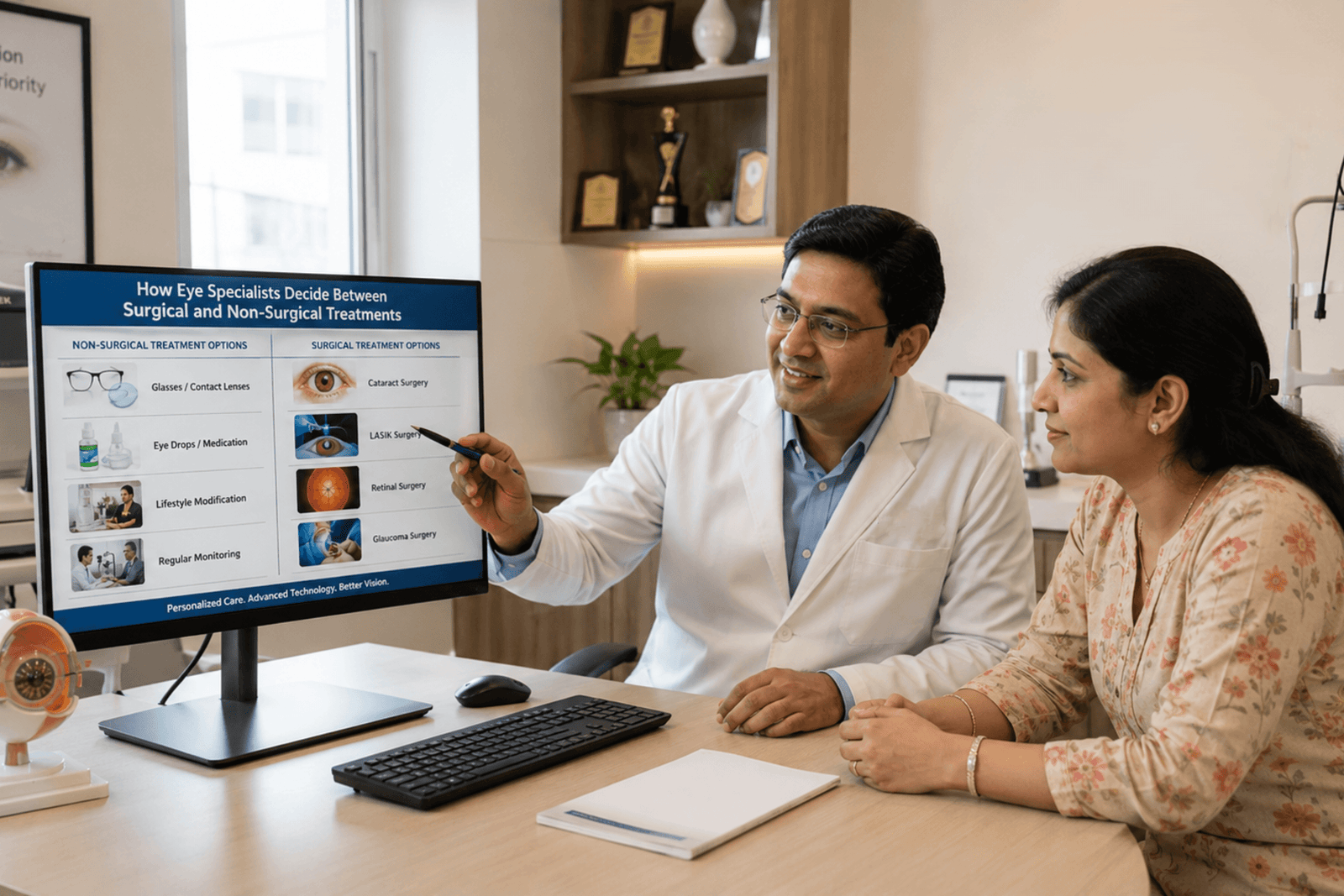
Common Eye Care Treatment Options include:
- Prescription glasses or contact lenses
- Eye drops and medications
- Vision therapy
- Lifestyle and dietary modifications
- Laser-based non-invasive therapies
- Regular monitoring and observation
Many patients looking for Non-Surgical Eye Treatment in Vadodara prefer these options because they are less invasive and often involve minimal recovery time.
What Are Surgical Eye Treatments?
Surgical treatments involve procedures performed to correct, repair, or improve an eye condition that cannot be effectively managed through medications or therapies alone.
Some common surgeries include:
- Cataract surgery
- LASIK surgery
- Retina surgery
- Corneal transplant
- Glaucoma surgery
- Squint correction surgery
These procedures are usually recommended when vision is significantly affected or when delaying treatment may lead to permanent damage.
How Eye Specialists Decide the Best Treatment
An experienced ophthalmologist never recommends surgery unnecessarily. The decision is based on a detailed medical evaluation and diagnostic testing.
1. Severity of the Eye Condition
The first factor doctors consider is the stage and severity of the condition.
For example:
- Mild dry eye syndrome may only require lubricating eye drops
- Early glaucoma may be controlled with medication
- Advanced cataracts usually require surgery
- Severe retinal damage may need immediate surgical intervention
This is one of the most important factors influencing the Ophthalmologist Treatment Decision process.
2. Impact on Daily Life
Eye specialists also assess how much the condition is affecting a patient’s quality of life.
Questions commonly asked during an Eye Surgery Consultation include:
- Are you struggling to drive at night?
- Is reading becoming difficult?
- Are headaches increasing due to vision strain?
- Is blurry vision affecting work performance?
If vision problems interfere with daily activities, surgery may provide better long-term results compared to temporary symptom management.
3. Age and Overall Health
Age plays a major role in choosing the right treatment.
For younger patients:
- Doctors may initially suggest non-surgical correction methods
- Preventive eye care is emphasized
For older adults:
- Conditions like cataracts and age-related retinal issues may require surgery
General health conditions such as diabetes, hypertension, and autoimmune disorders are also considered before recommending any procedure.
Cataract Surgery vs Medication
One of the most common questions patients ask is whether cataracts can be treated with medicines.
The answer is simple: medications may temporarily help manage discomfort or associated symptoms, but cataracts cannot be permanently reversed with eye drops or tablets.
When Medication May Help
In the early stage:
- Better lighting
- Updated glasses
- Anti-glare lenses
- Eye drops for dryness
may temporarily improve comfort.
When Surgery Becomes Necessary
Doctors recommend surgery when:
- Vision becomes cloudy
- Daily activities are affected
- Night driving becomes difficult
- Glasses no longer improve vision
Modern cataract surgery is highly advanced, safe, and minimally invasive. This is why understanding Cataract Surgery vs Medication helps patients avoid unnecessary delays in treatment.
LASIK vs. Non-Surgical Treatment in Vadodara
Many people with glasses wonder whether LASIK is the right choice for them.
Non-Surgical Vision Correction
Non-surgical options include:
- Spectacles
- Contact lenses
- Vision exercises
- Lifestyle management for digital eye strain
These solutions work well for many people and are often recommended for children or patients who are not eligible for surgery.
When LASIK May Be Recommended
Doctors may suggest LASIK when:
- Vision power is stable
- Corneal thickness is adequate
- The patient wants freedom from glasses
- Eye health is otherwise normal
Comparing LASIK vs. Non-Surgical Treatment in Vadodara helps patients make informed choices based on lifestyle and long-term vision goals.
Conditions Usually Managed Without Surgery
Many eye conditions respond well to conservative care.
Common Non-Surgical Treatments
Dry Eye Syndrome
Managed with:
- Artificial tears
- Lifestyle changes
- Screen-time management
- Nutrition support
Allergic Eye Conditions
Treated with:
- Anti-allergy medications
- Lubricants
- Environmental control
Early Glaucoma
Controlled using:
- Eye pressure-lowering drops
- Regular monitoring
Eye Infections
Managed through:
- Antibiotic drops
- Anti-inflammatory medicines
These are common Eye Specialist Treatment Options that help preserve vision without surgery.
Conditions That Often Need Surgery
Some conditions progress beyond the stage where medications alone can help.
Common Surgical Eye Conditions
Cataracts
Surgery is the only permanent treatment.
Retinal Disorders
Conditions like retinal detachment often require urgent surgery.
Advanced Glaucoma
When medications fail, surgery may help control pressure.
Corneal Diseases
Some corneal conditions require transplant procedures.
Refractive Errors
LASIK and other refractive surgeries may reduce dependence on glasses.
Understanding the right Best Treatment for Eye Conditions requires expert diagnosis and timely intervention.
Importance of Regular Eye Examinations
One of the biggest reasons patients end up requiring surgery is delayed diagnosis.
Routine eye checkups help:
- Detect diseases early
- Prevent vision loss
- Reduce complications
- Improve treatment success rates
Searching for an experienced Eye Specialist Vadodara or the Best Eye Doctor in Vadodara can help patients receive early diagnosis and appropriate treatment planning.
Choosing the Right Eye Hospital Matters
Advanced technology, accurate diagnostics, experienced surgeons, and personalized care all play a major role in successful eye treatment.
Patients searching for the Best Eye Hospital Vadodara, reliable Eye Hospitals in Vadodara, or an experienced Eye Specialist Near Me should choose a center that offers both advanced surgical expertise and comprehensive non-surgical care under one roof.
Why Patients Trust Desai Eye Institute
With Desai Eye Institute, patients receive personalized eye care based on detailed diagnosis and evidence-based treatment planning. The institute combines advanced technology with experienced ophthalmologists to provide both surgical and non-surgical solutions for various eye conditions.
From cataract treatment and LASIK evaluations to glaucoma management and retinal care, the team focuses on recommending only the most suitable treatment for each patient’s needs. Whether you need preventive care, advanced diagnostics, or expert surgical consultation, Desai Eye Institute remains a trusted destination for quality eye care in Vadodara.