

A lazy eye diagnosis in childhood can sometimes follow a person into adulthood, affecting vision, depth perception, and daily activities. However, reaching adulthood does not necessarily mean that treatment is no longer worthwhile. With the right evaluation, some adults may improve their vision or address associated eye alignment problems.
Understanding Lazy Eye Treatment in Adults starts with knowing what amblyopia is, which treatments may help, and what results are realistic.
What Is Lazy Eye in Adults?
Lazy eye, medically known as amblyopia, develops when the brain and eyes do not work together properly during childhood visual development. The brain begins relying more heavily on the stronger eye, leaving the weaker eye with reduced vision.
Amblyopia in adults commonly results from untreated childhood vision problems, including unequal refractive errors, crossed or misaligned eyes (strabismus), or conditions such as childhood cataracts.
Unlike ordinary blurry vision, amblyopia cannot always be corrected with glasses alone because the brain’s visual processing is also involved.
Can Lazy Eye Be Treated in Adults?
Yes, lazy eye can sometimes be treated in adults, although outcomes vary. Treatment is generally more effective during childhood, when the visual system is developing rapidly. However, research suggests that some adults can achieve improvements with selected approaches.
The extent of improvement depends on the severity of amblyopia, the underlying cause, previous treatment, and the individual’s response to therapy. Setting realistic expectations with an ophthalmologist is essential before beginning treatment.
Adult Lazy Eye Treatment Options That May Help
The right treatment for amblyopia depends on the person’s visual condition and overall eye health. An eye specialist may recommend one or more of the following approaches.
1. Prescription Glasses or Contact Lenses
Correcting refractive errors is often an important first step. Glasses or contact lenses can improve clarity when nearsightedness, farsightedness, or astigmatism contributes to reduced vision. Although they may not fully reverse established amblyopia, accurate prescriptions help address correctable vision problems.
2. Patching or Medically Supervised Treatment
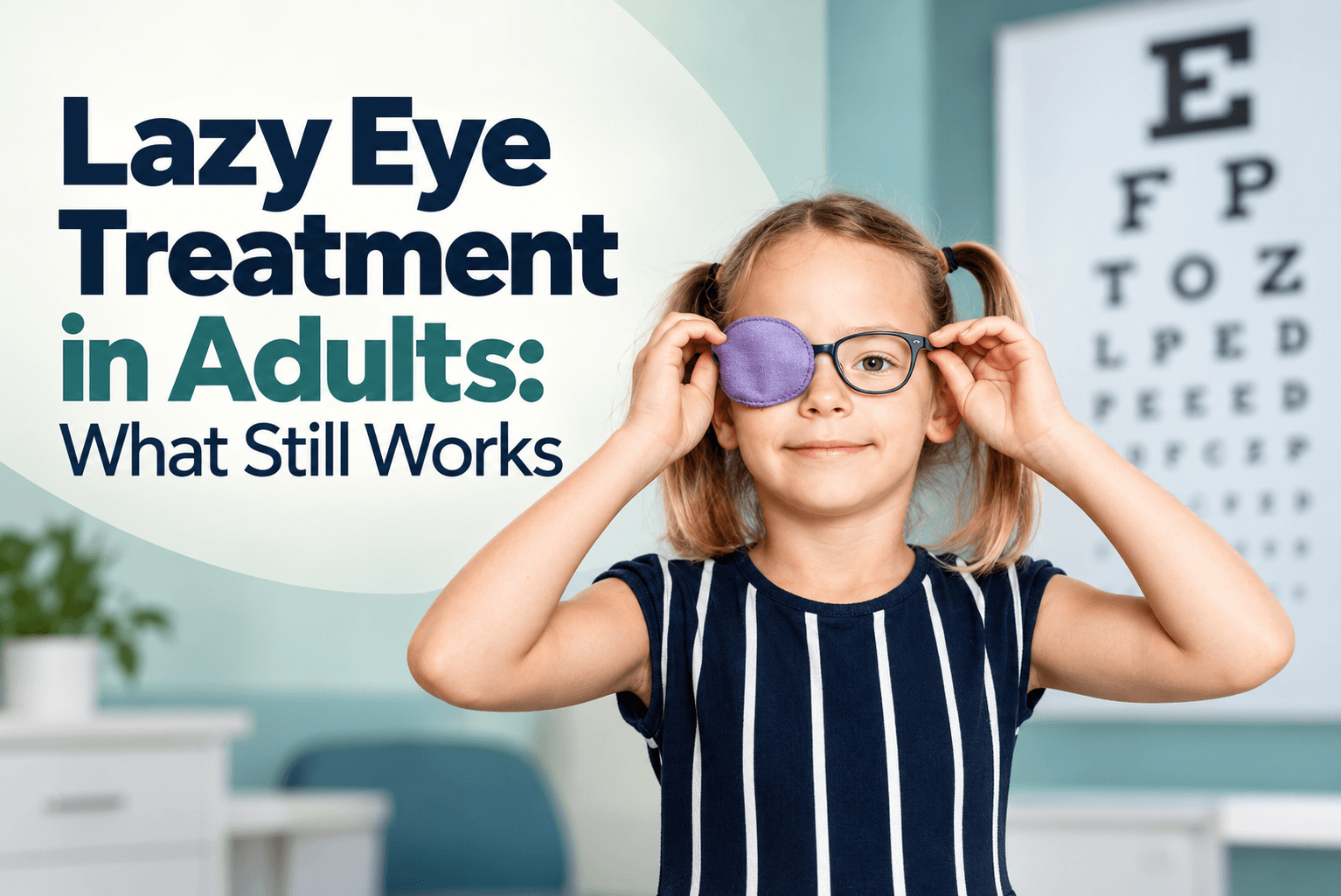
Eye patching encourages the brain to use the weaker eye by temporarily covering the stronger one. While this approach is well established in children, its effectiveness in adults is less predictable. An ophthalmologist must determine whether it is appropriate and prescribe a suitable treatment schedule.
3. Vision Therapy and Binocular Training
Selected vision therapy programmes aim to improve visual coordination and how both eyes work together. Some approaches use structured activities or digital exercises, but evidence supporting their effectiveness in adults remains limited. They should not be considered a guaranteed replacement for established care.
4. Treating Underlying Eye Conditions
If cataracts or another eye condition contributes to reduced vision, treating that problem may improve visual clarity. Adults with eye misalignment may also benefit from an assessment for strabismus treatment. However, correcting eye alignment does not necessarily restore vision lost through amblyopia.
Do Lazy Eye Exercises for Adults Really Work?
Lazy eye exercises for adults may be recommended as part of a supervised vision therapy programme. These activities can focus on visual coordination, focusing skills, or using both eyes together.
However, exercises alone cannot reliably reverse amblyopia, and results vary between individuals. Avoid relying on online exercise routines or unverified treatments without professional guidance. An eye specialist can determine whether structured therapy is suitable for your condition.
Why an Eye Examination Matters
Before choosing lazy eye correction in adults, an ophthalmologist will assess visual acuity, refractive errors, eye alignment, and overall eye health. This examination helps distinguish amblyopia from other causes of reduced vision.
A personalised treatment plan can then address correctable vision problems, identify associated conditions, and establish realistic goals. Even when vision cannot be fully restored, appropriate care can help protect eye health and manage related concerns.
Get Expert Guidance for Lazy Eye Treatment in Vadodara
Living with lazy eye does not mean you should stop exploring your treatment options. Early assessment of any new vision changes is particularly important, as sudden changes may indicate a different eye condition requiring prompt medical attention.
At Desai Eye Institute, patients can access comprehensive eye examinations and specialist consultations to understand their vision concerns and available treatment options. If you are looking for advanced eye care in Vadodara, a professional evaluation can help you make informed decisions about your eye health.
Consult an experienced eye doctor in Vadodara or eye specialist in Vadodara to discuss your symptoms and determine the most appropriate next steps.
Book a consultation at Desai Eye Institute to receive personalised guidance for your vision needs.