

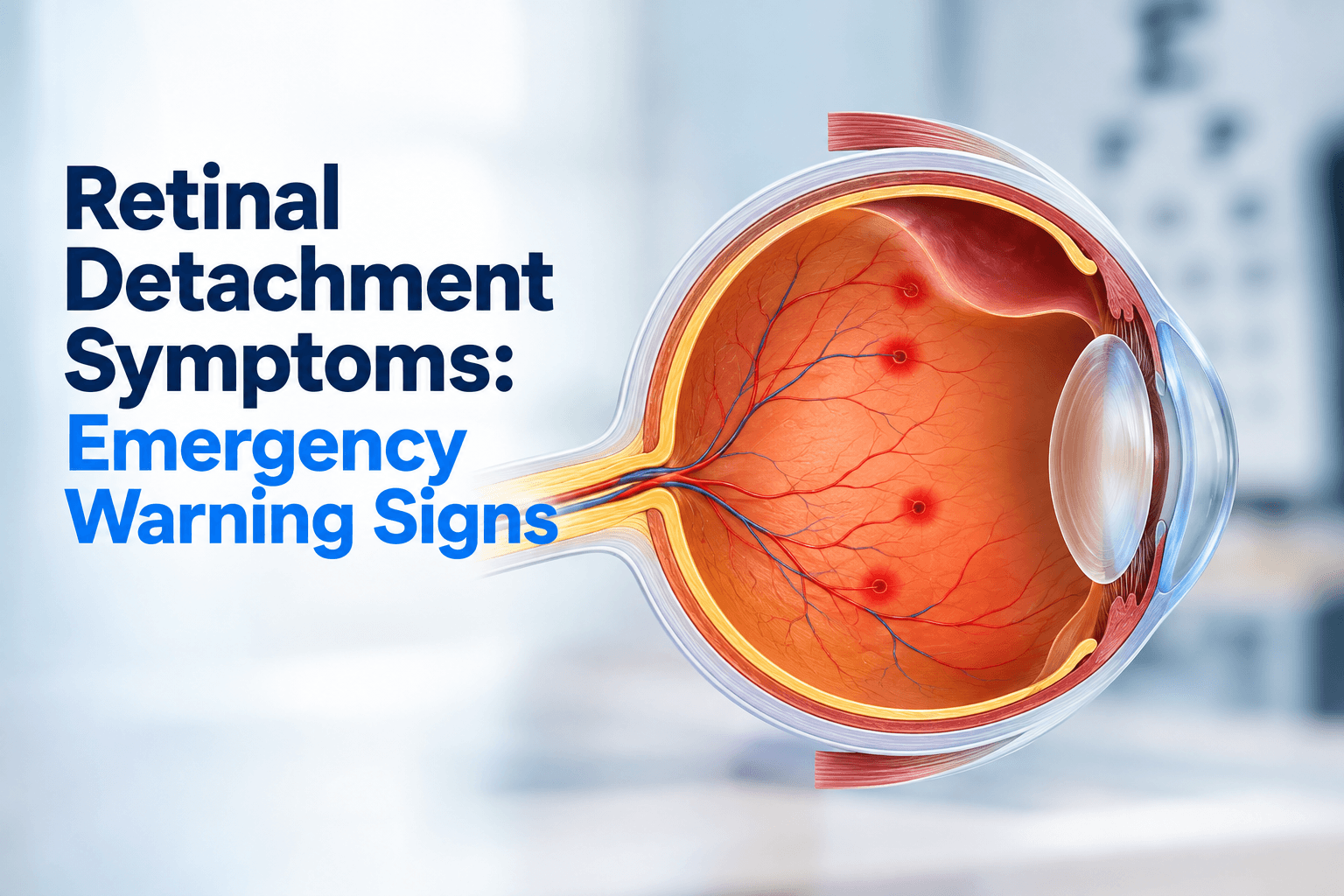
Your vision can change in an instant. A sudden shower of floaters, flashes of light, or a dark shadow moving across your vision may seem like a temporary disturbance, but these can be important retinal detachment symptoms. Retinal detachment is a serious eye condition in which the retina separates from its normal position at the back of the eye. Because untreated retinal detachment can lead to permanent vision loss, recognizing the warning signs and seeking urgent eye care is essential.
What Is Retinal Detachment?
The retina is a thin, light-sensitive layer at the back of the eye. It captures light and sends visual information to the brain. When the retina becomes separated from the tissue beneath it, it can no longer function normally.
There are different types of retinal detachment, including rhegmatogenous, tractional, and exudative detachment. The most common type occurs when a retinal tear or hole allows fluid to pass underneath the retina, causing it to lift away from the back of the eye. Aging-related changes in the vitreous, eye injuries, previous eye surgery, severe nearsightedness, and certain retinal conditions can increase the risk.
The important point is that retinal detachment is an eye emergency. It should not be treated as something that can simply be monitored at home.
Retinal Detachment Symptoms You Should Know
The symptoms of retinal detachment can appear suddenly and may occur without pain. In some cases, warning symptoms can occur before a larger portion of the retina becomes detached. Knowing these changes can help you seek medical attention sooner.
1. A Sudden Increase in Floaters
Floaters are small dots, spots, threads, or cobweb-like shapes that seem to move across your vision. Occasional floaters can be common, particularly with age. However, suddenly seeing many new floaters or experiencing a noticeable increase in them can be one of the early signs of retinal detachment or a retinal tear.
A sudden change should not be dismissed simply because there is no pain.
2. Flashes of Light
Brief flashes, streaks, or flickers of light, especially when they appear suddenly, can indicate that the vitreous is pulling on the retina. Flashes can occur with a posterior vitreous detachment, but they can also be associated with a retinal tear or detachment.
Sudden flashes therefore deserve prompt examination by an eye specialist.
3. A Dark Curtain or Shadow
One of the most recognizable retinal detachment warning signs is the appearance of a dark curtain, veil, or shadow across part of your vision.
This may begin at the side of your visual field and gradually extend inward. If this happens, do not wait to see whether it disappears. A curtain-like shadow can indicate that a significant area of the retina has detached and requires urgent assessment.
4. Sudden Blurred or Reduced Vision
Sudden changes in visual clarity, especially when they affect one eye, can also be among the signs of retinal detachment. You may notice that objects look less clear or that part of your vision seems missing.
Because several eye conditions can cause sudden vision changes, only a comprehensive eye examination can determine the underlying cause.
5. Loss of Peripheral Vision
Retinal detachment can affect side vision. You may feel as though something is blocking part of your visual field even though there is nothing physically in front of you.
A developing blind spot or loss of peripheral vision should be taken seriously, particularly when it occurs alongside flashes or new floaters.
Retinal Tear Symptoms Can Come Before Detachment
A retinal tear and retinal detachment are not exactly the same condition, but a retinal tear can allow fluid to pass underneath the retina and contribute to a detachment.
Possible retinal tear symptoms include sudden floaters and flashes of light. Finding and treating certain retinal tears early can help prevent progression to retinal detachment. Depending on the location and characteristics of the tear, an ophthalmologist may use laser treatment or cryotherapy to seal the affected area.
This is why new flashes or a sudden increase in floaters should not be ignored, even if your vision still appears relatively normal.
Who Is More Likely to Develop Retinal Detachment?
Retinal detachment can happen to anyone, but certain factors can increase the risk. These include:
- Increasing age
- Severe nearsightedness
- Previous retinal detachment
- Family history of retinal detachment
- Previous cataract or other eye surgery
- Significant eye trauma
- Certain retinal conditions
- Diabetic retinopathy and other diseases affecting the retina
If you have one or more of these risk factors, regular comprehensive eye examinations can help identify retinal problems before they progress.
What Happens During a Retinal Examination?
When retinal detachment is suspected, an ophthalmologist generally performs a detailed examination of the retina. A dilated eye examination allows the doctor to examine the back of the eye and look for retinal tears, holes, or detachment.
Depending on the circumstances, additional imaging such as an eye ultrasound or optical coherence tomography may be used to obtain more information about the retina.
The sooner the underlying problem is identified, the sooner appropriate treatment can be considered.
Retinal Detachment Treatment: What Are the Options?
The appropriate retinal detachment treatment depends on the type, location, and extent of the retinal problem.
For a retinal tear or small retinal break, laser photocoagulation or cryotherapy may be used to create a protective seal around the affected area. When the retina has already detached, surgery may be required. Treatment options can include pneumatic retinopexy, scleral buckle surgery, or vitrectomy. In some cases, laser or freezing treatment is also used as part of the surgical procedure.
Desai Eye Institute provides retinal surgical care for conditions including retinal detachment and retinal tears. Its published retinal surgery services include vitrectomy, scleral buckle surgery, pneumatic retinopexy, and retinal laser photocoagulation.
Treatment decisions should always be made after an examination by a qualified ophthalmologist.
When Should You Seek Emergency Eye Care?
Do not wait for symptoms to become severe if you suddenly experience:
- A sudden increase in floaters
- New flashes of light
- A dark curtain or shadow in your vision
- Sudden blurred vision
- Loss of side vision
- Sudden or unexplained vision loss
These are among the key retinal detachment emergency symptoms that require urgent medical attention. Retinal detachment can progress and cause permanent vision loss when treatment is delayed.
If you notice these changes, contact an eye specialist or emergency eye-care service immediately rather than waiting for a routine appointment.
Can Retinal Detachment Be Prevented?
Not every retinal detachment can be prevented, particularly when it is related to natural changes associated with aging. However, protecting your eyes from injury, managing underlying conditions, and attending recommended eye examinations can support overall retinal health.
People at increased risk should discuss an appropriate examination schedule with their ophthalmologist. Regular dilated eye examinations can sometimes identify retinal tears or other changes before a major detachment develops.
Advanced Eye Care in Vadodara for Urgent Retinal Concerns
When sudden vision changes occur, timely evaluation matters. For patients seeking Advanced Eye Care in Vadodara, Desai Eye Institute & Eye Hospitals provides comprehensive ophthalmic services, including retinal treatments and retinal surgery. The institute lists a Vitreo-Retina Surgeon among its specialist team and provides emergency eye-care services.
If you are searching for the Best Eye Doctor in Vadodara or a Top Eye Specialist in Vadodara because of sudden flashes, new floaters, a curtain-like shadow, or unexplained vision changes, do not delay an eye examination.
Protect Your Vision. Act on the Warning Signs.
Your eyes may not always hurt when something serious is happening. Retinal detachment can be painless, which makes recognizing sudden visual changes even more important.
At Desai Eye Institute & Eye Hospitals, patients can access specialized retinal evaluation and treatment supported by dedicated ophthalmic expertise and advanced retinal procedures. If you notice possible retinal detachment symptoms, seek professional eye care promptly. Early evaluation can make an important difference in protecting your vision.