

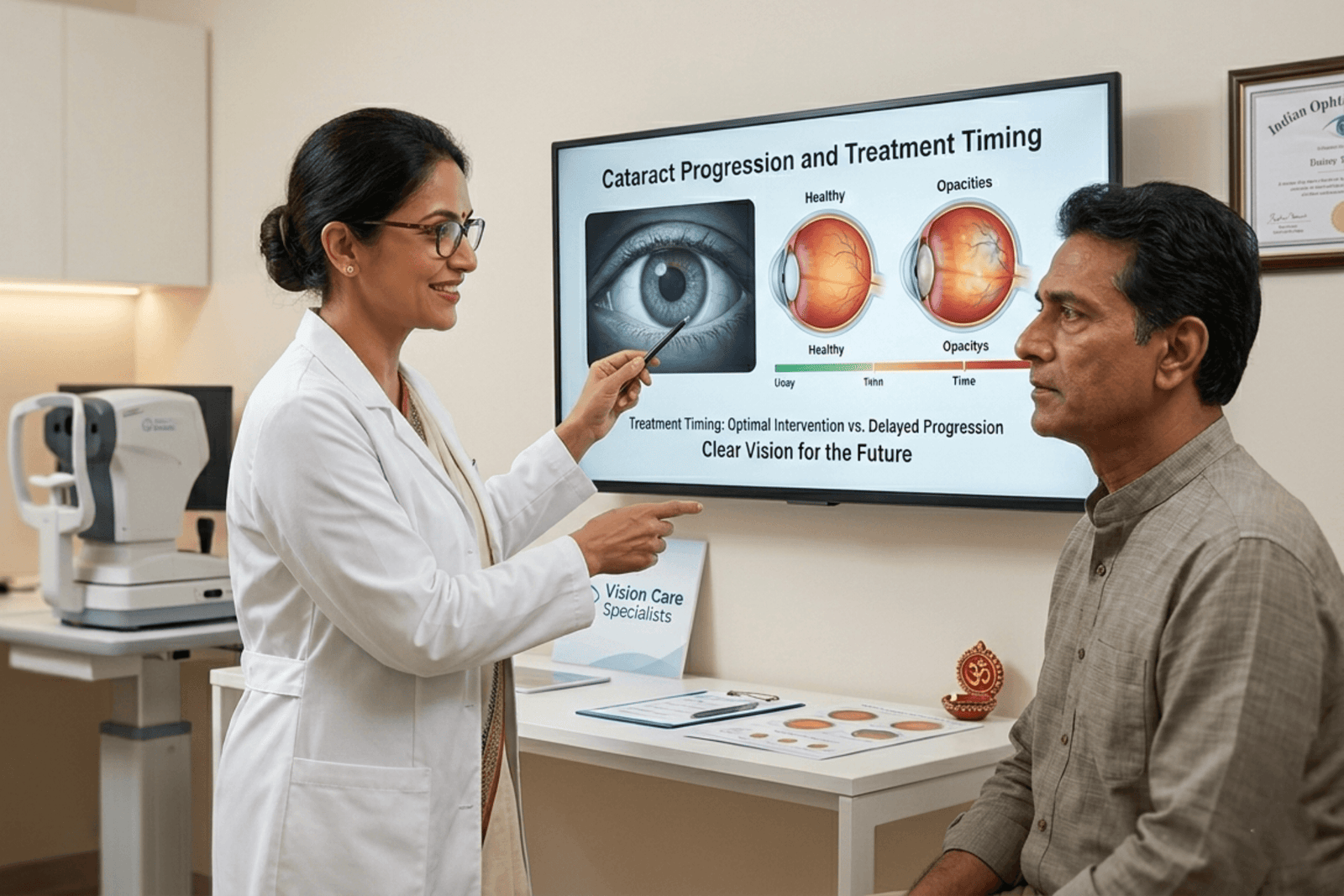
Vision changes caused by cataracts often happen gradually. Many people adjust to blurry vision, glare, difficulty reading, or trouble driving at night without realizing how much their eyesight has changed. While cataracts are common with aging, the timing of treatment can significantly impact long term vision quality and daily comfort.
Understanding the right cataract surgery timing is important because delaying treatment for too long may affect not only visual clarity but also overall eye health and quality of life. Knowing when to move forward with surgery can help patients maintain independence, reduce vision complications, and achieve better long term outcomes.
What Are Cataracts and How Do They Affect Vision?
A cataract occurs when the natural lens of the eye becomes cloudy. This clouding blocks light from passing clearly through the eye, causing progressive vision problems.
Common symptoms include:
- Blurry or cloudy vision
- Difficulty seeing at night
- Increased sensitivity to light and glare
- Faded or dull colors
- Frequent changes in eyeglass prescriptions
- Double vision in one eye
- Trouble reading or recognizing faces
Many people initially believe these symptoms are simply part of normal aging. However, untreated cataracts continue to worsen over time and may eventually interfere with everyday activities.
Why Cataract Surgery Timing Matters
One of the most common questions patients ask is, “When should I get cataract surgery?”
The answer depends on how much the cataract affects vision quality and daily life. Modern cataract surgery is highly advanced and safe, but timing still plays a major role in achieving the best possible results.
Proper cataract surgery timing can help:
- Preserve long-term visual quality
- Improve surgical precision and recovery
- Reduce complications associated with advanced cataracts
- Maintain independence and daily productivity
- Improve night vision and depth perception
Waiting too long can sometimes make surgery more technically difficult because the cataract becomes denser and harder to remove.
Early Signs That It May Be Time for Cataract Surgery
Many patients delay treatment because they can still “manage” their symptoms. However, several signs indicate it may be the best time for cataract surgery.
Difficulty Driving at Night
Glare from headlights and streetlights is one of the earliest warning signs. Night driving becomes stressful and unsafe when cataracts worsen.
Constant Prescription Changes
If glasses no longer provide clear vision despite frequent updates, cataracts may be progressing.
Reduced Work Productivity
Blurred vision can affect reading, computer work, and concentration.
Trouble with Daily Activities
Difficulty cooking, reading medication labels, watching television, or recognizing faces may signal worsening cataract vision problems.
Colors Appear Yellow or Faded
Cataracts can dull the appearance of colors and reduce visual sharpness.
Ignoring these symptoms may increase the risk of delayed treatment and reduced long-term visual satisfaction.
Delayed Cataract Surgery Risks
Many people postpone surgery due to fear or the belief that cataracts must become “fully mature” before treatment. However, modern ophthalmology no longer recommends waiting unnecessarily.
Some important delayed cataract surgery risks include:
Increased Surgical Complexity
Dense cataracts are harder to break apart and remove, which may slightly increase procedure difficulty.
Greater Vision Loss
Long term blurry vision from cataracts may affect mobility, confidence, and mental well being.
Higher Risk of Falls and Injuries
Poor vision significantly increases fall risks, especially in older adults.
Impact on Other Eye Conditions
Cataracts can make it difficult for eye specialists to properly monitor retinal diseases, glaucoma, or diabetic eye problems.
Reduced Quality of Life
Patients often avoid driving, social events, travel, or hobbies because of worsening vision.
Delaying surgery for too long may limit the opportunity to maintain the best possible visual quality over time.
How Cataract Surgery Improves Long Term Vision Quality
Modern cataract surgery not only removes the cloudy lens but also replaces it with an advanced artificial intraocular lens (IOL). This can dramatically improve visual clarity.
Benefits of timely surgery include:
- Sharper vision
- Better contrast sensitivity
- Improved night vision
- Reduced glare
- Enhanced color perception
- Greater visual stability
- Better independence in daily activities
Many patients notice that colors appear brighter and vision feels clearer shortly after recovery.
Proper cataract surgery and vision quality are closely connected because early intervention often allows patients to enjoy better visual performance for many years.
Cataract Treatment Options Available Today
Advancements in eye care have improved modern cataract treatment options significantly.
Depending on the patient’s needs, eye specialists may recommend:
Standard Monofocal Lenses
These lenses improve distance vision and are commonly used in cataract surgery.
Multifocal Lenses
Designed to reduce dependence on glasses for both near and distance vision.
Toric Lenses
Helpful for correcting astigmatism during cataract surgery.
Laser Assisted Cataract Surgery
Advanced technology may improve precision in selected cases.
The right treatment plan depends on lifestyle, vision goals, and overall eye health.
Understanding Cataract Surgery Recovery
Most patients are surprised by how smooth modern cataract surgery recovery can be.
Recovery typically includes mild irritation or blurred vision for a few days, Gradual vision improvement over several weeks, Use of prescribed eye drops, and temporary avoidance of heavy lifting or rubbing the eyes. Most people resume normal activities quickly after surgery. Timely treatment often supports faster visual adaptation and better overall results.
How Eye Specialists Decide the Right Timing
Experienced ophthalmologists evaluate several factors before recommending surgery.
These include:
- Severity of visual symptoms
- Impact on daily life
- Overall eye health
- Presence of other eye conditions
- Driving difficulties
- Reading and work challenges
The decision is highly personalized. Some patients may need surgery earlier due to occupational or lifestyle demands, while others may safely monitor mild cataracts for a period of time.
Consulting an experienced eye specialist in Vadodara can help determine the ideal timing for treatment based on individual needs.
Protecting Long-Term Eye Health
Although cataracts cannot always be prevented completely, certain habits may support overall eye health:
- Wear UV protective sunglasses
- Avoid smoking
- Manage diabetes properly
- Eat antioxidant-rich foods
- Schedule regular eye exams
- Seek treatment when symptoms begin affecting daily life
Routine eye checkups are essential for identifying cataracts early and planning treatment at the right stage.
Choose Expert Cataract Care for Better Vision Outcomes
Choosing the right hospital and surgeon is equally important for long-term results. Patients searching for an eye hospital in Vadodara, or the best eye doctor in Vadodara, often look for experience, advanced technology, and personalized care.
At Desai Eye Institute, patients receive comprehensive cataract evaluations, advanced diagnostic technology, and customized treatment planning designed to improve vision quality and overall comfort. The experienced team focuses on helping patients regain clear vision with modern cataract care and patient-centered support.
If you are experiencing blurry vision from cataracts or noticing difficulty in everyday activities, consulting an experienced eye specialist near me may help you understand the right time to consider surgery and protect your long-term vision quality.