Wearing glasses or contact lenses every day can be inconvenient. If you want clearer vision without depending on corrective lenses, LASIK eye surgery may be an option. However, understanding LASIK eligibility is essential before considering the procedure.
Your age, eye power, corneal thickness, and overall eye health determine whether LASIK is suitable for you. If you are considering laser vision correction in Vadodara, here is what you should know about the eligibility requirements.
What Is LASIK and Who Is Eligible?
LASIK (Laser-Assisted In Situ Keratomileusis) is a refractive surgery that reshapes the cornea to correct nearsightedness, farsightedness, and astigmatism.
Generally, suitable candidates are adults with a stable prescription, healthy eyes, and a cornea that can safely undergo laser treatment. However, only a comprehensive eye examination can confirm individual suitability.
1. LASIK Age Limit: What Is the Ideal Age?
The typical minimum age for LASIK is 18, although many surgeons prefer patients to be at least 21 because their eye power is more likely to have stabilised.
Your prescription should generally remain stable for at least one year before surgery. People whose eye power continues to change may need to postpone treatment.
LASIK can also be considered after 40, but age-related presbyopia may make reading glasses necessary even after successful distance vision correction. Therefore, age alone does not determine LASIK eligibility.
2. LASIK Power Limit: How Much Eye Power Can Be Corrected?
LASIK can correct minus power (myopia), plus power (hyperopia) and cylindrical power (astigmatism). However, the treatable range depends on the laser system, corneal measurements and individual eye health.
There is no single LASIK power limit suitable for everyone. Higher prescriptions may require more corneal tissue removal, which can affect surgical safety.
Your ophthalmologist will evaluate your prescription, corneal thickness and expected remaining tissue before recommending treatment. If LASIK is unsuitable, alternatives such as PRK or implantable lenses may be considered.
3. Minimum Corneal Thickness for LASIK
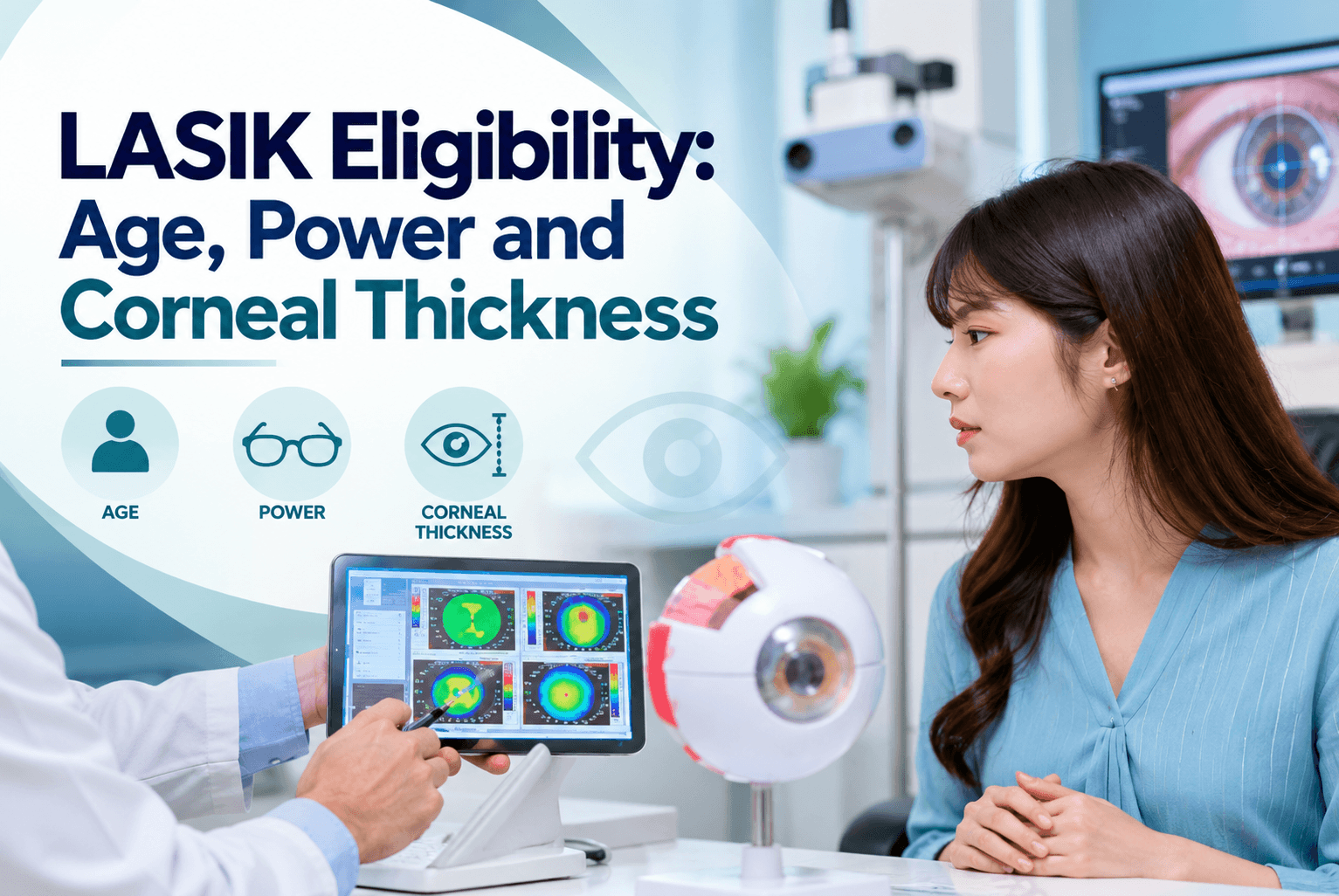
Corneal thickness is a crucial part of the LASIK Procedure eligibility criteria because the procedure reshapes the cornea by removing a calculated amount of tissue.
A central corneal thickness of around 500 micrometres (µm) is often referenced as a general benchmark, but it is not a universal minimum requirement. Corneal shape, the amount of tissue removed, and the remaining stromal bed also influence safety.
People with thin or irregular corneas may not be suitable for LASIK. Conditions such as keratoconus can increase the risk of complications, even when corneal thickness appears adequate.
Your surgeon may recommend alternative treatments depending on your examination results.
4. Other LASIK Requirements You Should Know
Apart from age, power, and corneal thickness, other LASIK requirements include:
- Stable prescription: Your eye power should not have changed significantly recently.
- Healthy eyes: Conditions such as severe dry eye, corneal disease or cataracts may affect suitability.
- General health: Certain uncontrolled medical conditions can interfere with healing.
- Realistic expectations: LASIK can reduce dependence on glasses but cannot prevent age-related vision changes.
A preoperative examination may include refraction testing, corneal pachymetry, corneal mapping, tear film assessment, eye pressure measurement and a retinal examination.
5. What If You Are Not Eligible for LASIK?
Not qualifying for LASIK does not necessarily mean that vision correction is impossible. Depending on your prescription and eye health, your ophthalmologist may discuss PRK, SMILE or implantable lenses.
Each procedure has different eligibility requirements. A personalised assessment helps identify the safest option for your eyes.
Where to Get a LASIK Eligibility Assessment in Vadodara?
Choosing an experienced eye care team is an important step towards making an informed decision about vision correction.
At Desai Eye Institute, patients can seek professional guidance about their vision concerns and available treatment options. If you are looking for advanced eye care in Vadodara or consulting a eye specialist in Vadodara, a comprehensive evaluation can help you understand whether LASIK is suitable for you.
Consult the eye care team at Desai Eye Institute to discuss your eye power, corneal measurements, and treatment options before proceeding with surgery.
Conclusion: LASIK eligibility depends on your age, eye power, corneal thickness, and overall eye health. A professional evaluation at Desai Eye Institute can help you understand your options and make an informed decision about vision correction.