

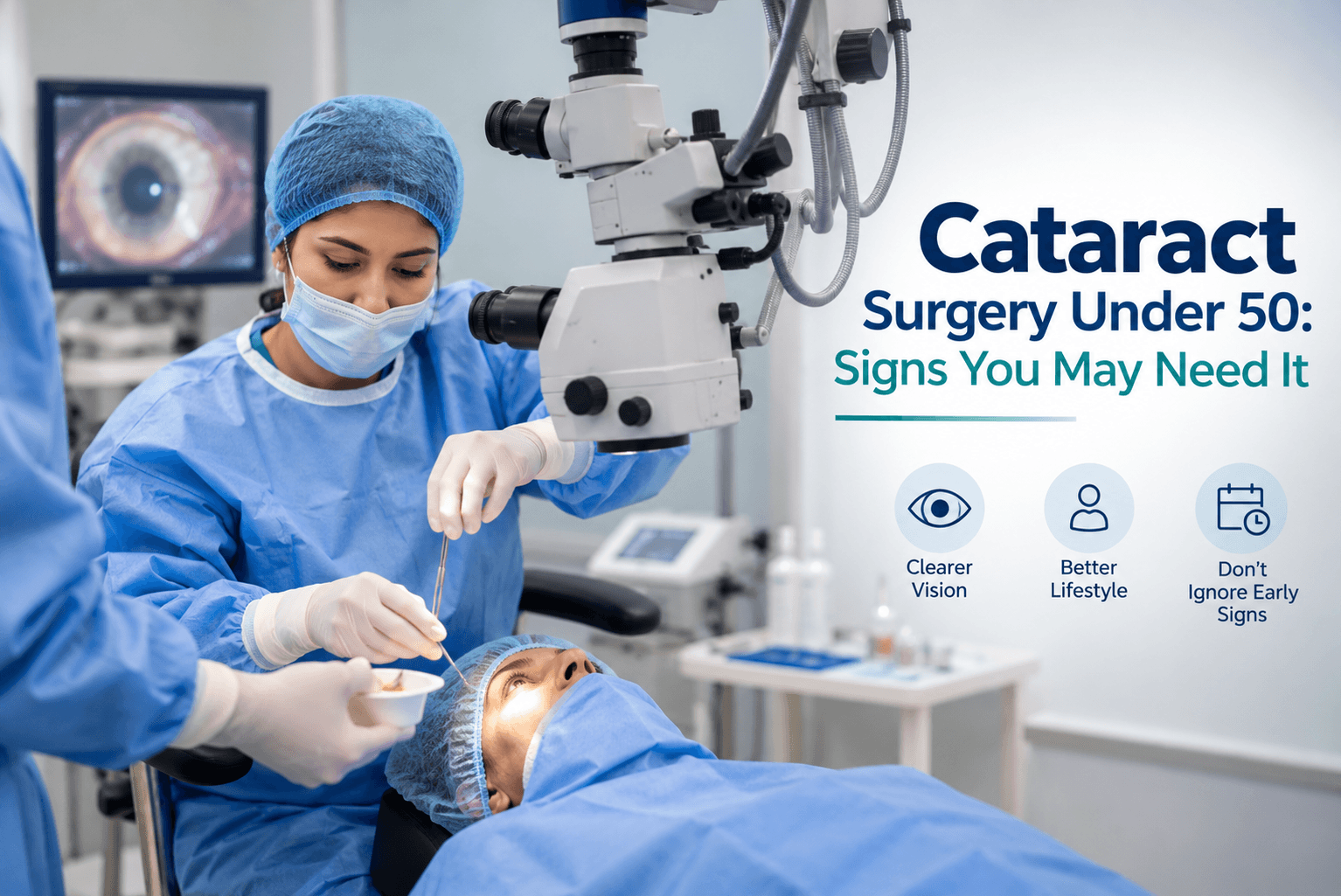
When you think about cataracts, you may picture an older adult struggling with cloudy vision. But cataracts are not exclusively an age-related problem. While they become more common with age, cataracts can also develop in younger adults due to factors such as diabetes, eye injuries, previous eye surgery, steroid use, radiation exposure, smoking, and family history.
This means that cataract surgery under 50 is sometimes necessary when a cataract begins to interfere with clear vision and everyday activities.
The important question is not simply how old you are. It is how significantly the cataract is affecting your vision and quality of life.
Can You Develop Cataracts Before 50?
Yes. Cataracts under 50 are less typical than age-related cataracts in older adults, but they can occur.
A cataract develops when the normally clear lens inside the eye becomes cloudy. As the lens becomes less transparent, light cannot pass through it normally, which can lead to blurry or hazy vision, faded colors, glare, halos around lights, and difficulty seeing at night.
Some younger adults may develop cataracts because of underlying health conditions or other risk factors. Diabetes, previous eye trauma or surgery, long-term steroid use, radiation exposure, smoking, and a family history of cataracts can increase the risk.
That is why persistent vision changes should not automatically be dismissed as an issue with your glasses, screen use, or tired eyes.
Early Cataract Symptoms You Should Not Ignore
Cataracts can develop gradually, and early symptoms may be subtle. You may initially notice small changes rather than a dramatic loss of vision.
Some common early cataract symptoms include:
1. Blurry or Cloudy Vision
One of the most common signs is vision that gradually becomes blurry, hazy, or cloudy. You may feel that your glasses are no longer giving you the same clarity they once did.
If you experience persistent blurry vision due to cataracts, changing your prescription repeatedly may not completely solve the problem.
2. Increasing Sensitivity to Light
Bright sunlight, headlights, or indoor lights may begin to feel unusually uncomfortable. Glare can make certain situations, particularly driving at night, more challenging.
3. Halos Around Lights
Seeing rings or halos around headlights, streetlights, or other bright sources can be another symptom of a developing cataract.
This can be especially noticeable in darker environments.
4. Difficulty Seeing at Night
Night vision may become progressively more difficult. You might find yourself avoiding night-time driving because headlights appear excessively bright or your surroundings seem less clear.
5. Colors Look Less Bright
A cataract can cause colors to appear faded or less vibrant. Whites may look slightly yellowish or dull compared with how you remember them.
6. Frequent Changes in Your Glasses Prescription
If you need to change your glasses or contact lens prescription more frequently than usual but still do not achieve consistently clear vision, an eye examination is important.
A changing prescription does not necessarily mean you have cataracts, but it can be one reason to have your eyes evaluated.
What Causes Early-Onset Cataracts?
The term early onset cataracts generally refers to cataracts developing earlier than expected. Several factors can contribute to their development.
These include:
- Diabetes and certain other health conditions
- Previous eye injuries
- Previous eye surgery
- Long-term use of steroid medications
- Radiation exposure
- Smoking
- Excessive alcohol consumption
- Family history of cataracts
- Significant exposure to sunlight and UV radiation
However, having a risk factor does not mean you will definitely develop a cataract. Likewise, younger people without obvious risk factors can still develop cataracts.
This is why professional evaluation matters when you experience unexplained or progressive changes in vision.
When Is Cataract Surgery Needed?
Not everyone with a cataract needs surgery immediately.
In many cases, an eye doctor may monitor a mild cataract and recommend practical measures such as better lighting, anti-glare eyewear, or an updated glasses prescription.
So, whether cataract surgery is needed depends largely on how much the cataract affects your vision and daily life.
Your eye doctor may discuss surgery when you are having difficulty with activities such as:
- Reading
- Driving, particularly at night
- Working on a computer
- Watching television
- Recognizing faces
- Performing household or professional tasks
- Managing other activities that require clear vision
The National Eye Institute notes that cataract surgery is generally considered when vision loss interferes with everyday activities.
Therefore, being under 50 does not automatically mean you should wait until a particular age.
Cataract Surgery Under 50: Is Age the Deciding Factor?
Age is one factor doctors consider, but it is not the only factor.
For younger adults, the decision about cataract surgery for younger adults should involve a detailed eye examination and discussion about symptoms, lifestyle, eye health, and the expected benefits and risks of treatment.
If a cataract is significantly affecting your ability to work, drive safely, read, or perform everyday activities, surgery may be discussed even when you are well below the age typically associated with cataracts.
In some cases, cataract removal may also be considered when the cataract makes it difficult for an eye specialist to properly examine or manage another condition inside the eye.
What Happens During Cataract Surgery?
Cataract surgery involves removing the cloudy natural lens and replacing it with an artificial lens called an intraocular lens, or IOL.
Before surgery, your eye doctor performs measurements and examinations to assess your eye and help determine the appropriate intraocular lens.
The procedure is commonly performed using numbing medication, and the cloudy lens is removed before the artificial lens is placed inside the eye. Your ophthalmologist will also provide instructions for postoperative eye drops, activity restrictions, and follow-up appointments.
Cataract surgery is considered a common and generally safe procedure, but, like any surgery, it has potential risks. Your eye specialist should explain the expected benefits, alternatives, and possible complications before treatment.
Don’t Ignore Cataract Surgery Signs Just Because You’re Young
One of the biggest misconceptions about cataracts is that they only affect older adults.
If you are under 50 and experiencing persistent blurry vision, glare, halos, faded colors, difficulty seeing at night, or frequent prescription changes, do not assume that age rules out cataracts.
These symptoms can have many different causes, and some may be unrelated to cataracts. A comprehensive eye examination is the best way to determine what is affecting your vision.
The right treatment also depends on the individual. Some people with early cataracts can manage their symptoms for a period of time with updated prescriptions and lifestyle adjustments, while others may eventually need surgery because their vision has become disruptive.
Get Your Vision Evaluated at Desai Eye Institute
Clear vision should not be taken for granted, especially when changes begin to interfere with your work, driving, reading, or everyday life.
With Desai Eye Institute, patients can receive comprehensive evaluation and personalized guidance for cataracts and other eye conditions. If you are looking for Advanced Eye Care in Vadodara, a detailed eye examination can help identify the cause of your vision changes and determine whether monitoring, prescription changes, or cataract treatment may be appropriate.
If you are searching for the Best Eye Doctor in Vadodara or a Top Eye Specialist in Vadodara, speak with an experienced ophthalmologist about persistent changes in your vision. Early evaluation can help you understand what is happening with your eyes and make informed decisions about your treatment.
Your age should not be the only thing that determines how seriously you take changes in your vision. If you are experiencing possible cataract symptoms, schedule an eye examination and get the clarity you need about your eye health.