

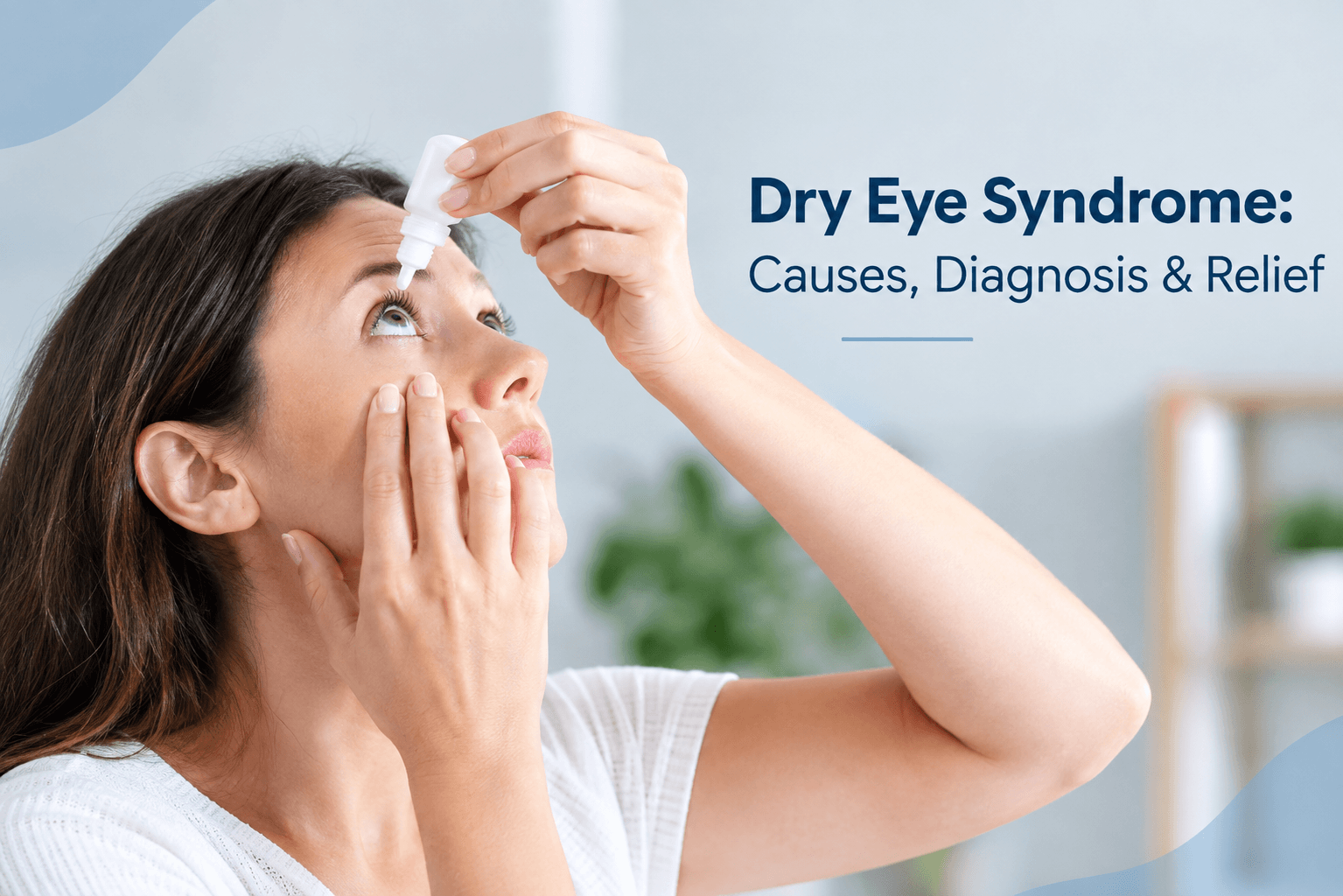
Dry, irritated eyes are often dismissed as a temporary discomfort caused by screen time, lack of sleep, or weather. However, when burning, grittiness, redness, watering, or blurred vision keep returning, they may indicate Dry Eye Syndrome, a common ocular surface condition that deserves proper evaluation.
Dry eye is more than simply having fewer tears. It can develop when the eyes do not produce enough tears, when tears evaporate too quickly, or when the tear film does not function properly. Modern understanding also recognizes dry eye disease as a multifactorial condition involving tear-film instability, inflammation, ocular surface changes, and other factors.
For people experiencing persistent symptoms, understanding the dry eye syndrome causes, recognizing dry eye symptoms, and getting an appropriate dry eye diagnosis and treatment plan can help protect eye comfort and visual quality over the long term.
What Is Dry Eye Syndrome?
Dry Eye Syndrome, also called dry eye disease, occurs when the tear film cannot adequately maintain a healthy, comfortable surface on the eye.
Healthy tears do much more than keep the eyes wet. They help nourish and protect the cornea, provide a smooth optical surface, and wash away small particles. When the quantity or quality of tears is disrupted, the tear film can become unstable.
According to the TFOS DEWS II consensus, dry eye is a multifactorial disease involving loss of tear-film homeostasis, ocular symptoms, tear-film instability, hyperosmolarity, inflammation, ocular surface damage, and neurosensory abnormalities.
This is why two people with dry eyes may experience very different symptoms and may require different approaches to treatment.
Dry Eye Syndrome Causes: Why Do Dry Eyes Happen?
There is rarely one single explanation for dry eyes. The causes of dry eyes can involve tear production, tear evaporation, eyelid function, medications, health conditions, lifestyle, and environmental factors.
1. Reduced Tear Production
Some people do not produce enough tears to maintain adequate moisture on the ocular surface. The risk can increase with age, and certain medical conditions can also affect tear production.
2. Excessive Tear Evaporation
Tears can evaporate too quickly when the protective outer layer of the tear film is not functioning effectively. Meibomian gland dysfunction can contribute to evaporative dry eye by affecting the oily component that helps slow tear evaporation. TFOS DEWS II notes that evaporative and aqueous-deficient mechanisms frequently overlap rather than occurring as completely separate conditions.
3. Prolonged Screen Use
Extended computer, tablet, or smartphone use can contribute to dry eyes because people tend to blink less frequently while concentrating on screens.
4. Environmental Conditions
Wind, smoke, dry air, air conditioning, and other environmental factors can increase tear evaporation and aggravate symptoms.
5. Medications and Health Conditions
Certain medications, including some used for allergies, colds, depression, and high blood pressure, may contribute to dry eye. Conditions such as diabetes, thyroid disorders, and autoimmune diseases can also be associated with dry eye.
Contact lens use, previous laser eye surgery, hormonal changes, and eyelid-related problems may also play a role in some individuals.
Recognizing Common Dry Eye Symptoms
Dry eye does not always feel like dryness. In fact, some people with dry eyes experience excessive watering because irritation can trigger reflex tearing.
Common dry eye symptoms include:
- Burning or stinging
- Scratchy or gritty sensation
- Feeling as though something is stuck in the eye
- Redness
- Increased sensitivity to light
- Intermittent blurred vision
- Eye fatigue or discomfort
- Excessive watering
- Difficulty wearing contact lenses
- Symptoms that become worse during prolonged screen use
The National Eye Institute identifies dryness, scratchiness, burning, redness, light sensitivity, and blurred vision among common symptoms.
Persistent symptoms should not simply be managed with repeated self-medication. A detailed eye examination can help determine whether dry eye is actually responsible and whether another eye condition is contributing to the discomfort.
How Is Dry Eye Diagnosed?
A proper dry eye diagnosis begins with understanding your symptoms, medical history, medications, screen habits, contact lens use, and environmental exposure. Your eye specialist may then examine the tear film, eyelids, and ocular surface.
Several tests may be used depending on the individual’s symptoms.
Slit-Lamp Examination
A slit-lamp examination allows the eye doctor to closely examine the cornea, conjunctiva, eyelids, and tear film.
Schirmer’s Test
This test measures tear production using a small strip of paper placed near the lower eyelid. It can help determine whether the eyes are producing an adequate amount of tears.
Tear Break-Up Time
Tear break-up time, or TBUT, evaluates how long the tear film remains stable between blinks. A shorter break-up time can indicate tear-film instability.
Additional Ocular Surface Assessment
Depending on the clinical situation, an eye specialist may evaluate the eyelid margins, meibomian glands, tear quality, and ocular surface for signs that help identify the underlying mechanism.
The goal of diagnosis is not simply to confirm that the eyes are dry. It is to understand why they are dry so that treatment can be appropriately tailored. TFOS DEWS II emphasizes identifying the underlying contributors because dry eye can involve different overlapping mechanisms.
Dry Eye Treatment: What Can Help?
There is no single dry eye treatment that works for every patient. Management depends on the severity of symptoms, the underlying cause, and the condition of the ocular surface.
For mild symptoms, an eye specialist may recommend measures such as artificial tears and lifestyle or environmental modifications. The National Eye Institute notes that artificial tears are commonly used for mild dry eye, while prescription treatments and other interventions may be considered depending on the cause and severity.
Treatment may include:
- Lubricating eye drops
- Moisturizing gels or ointments when appropriate
- Managing eyelid or meibomian gland problems
- Prescription medications when inflammation or other factors require medical treatment
- Adjustments to screen habits and environmental exposure
- Treatment of an underlying medical condition when relevant
- Other procedures or interventions for selected patients
Because dry eye is multifactorial, treatment is often progressive rather than one-size-fits-all. TFOS DEWS II recommends a staged approach based on disease characteristics and severity.
Long-Term Dry Eyes Relief: Everyday Habits Matter
For people with chronic dry eye, treatment does not always end when symptoms improve. Long-term management can help reduce recurring discomfort.
Simple habits may include taking regular breaks during prolonged screen use, consciously blinking more frequently, avoiding direct exposure to fans or air-conditioning, and reducing exposure to smoke or excessively dry environments.
Adequate sleep and following the eye specialist’s recommended treatment schedule can also support ongoing eye comfort.
However, home measures should complement, not replace, professional evaluation when symptoms are persistent, severe, or affecting vision.
Can Untreated Dry Eye Cause Problems?
Occasional dryness may be temporary, but persistent or severe dry eye should not be ignored. Chronic ocular surface irritation can affect comfort and visual function. In severe cases, untreated dry eye may damage the cornea, the clear front surface of the eye.
This is why early evaluation can be valuable, particularly when symptoms are recurring or interfering with reading, driving, computer work, contact lens use, or daily activities.
When Should You See an Eye Specialist?
Consider scheduling an eye examination if your dry eye symptoms:
- Keep returning despite using lubricating drops
- Interfere with work or everyday activities
- Cause persistent redness or discomfort
- Are accompanied by blurred or fluctuating vision
- Make contact lens wear uncomfortable
- Have become progressively more bothersome
A professional dry eye diagnosis and treatment plan can identify the underlying cause and determine the most appropriate way to manage the condition.
Get Comprehensive Dry Eye Care at Desai Eye Institute
Persistent dry eyes deserve more than temporary relief. At Desai Eye Institute, patients can receive a comprehensive evaluation of their eye health and personalized guidance based on their symptoms and clinical findings.
If you are looking for Advanced Eye Care in Vadodara, consulting an experienced eye specialist can help you understand the reason behind recurring dryness and identify appropriate treatment options. With a focus on comprehensive ophthalmic care, Desai Eye Institute aims to support long-term ocular health and comfortable vision.
If burning, irritation, watering, or blurred vision has become part of your everyday routine, do not simply accept it as normal. A timely eye examination can be the first step toward better dry eyes relief and healthier eyes.