

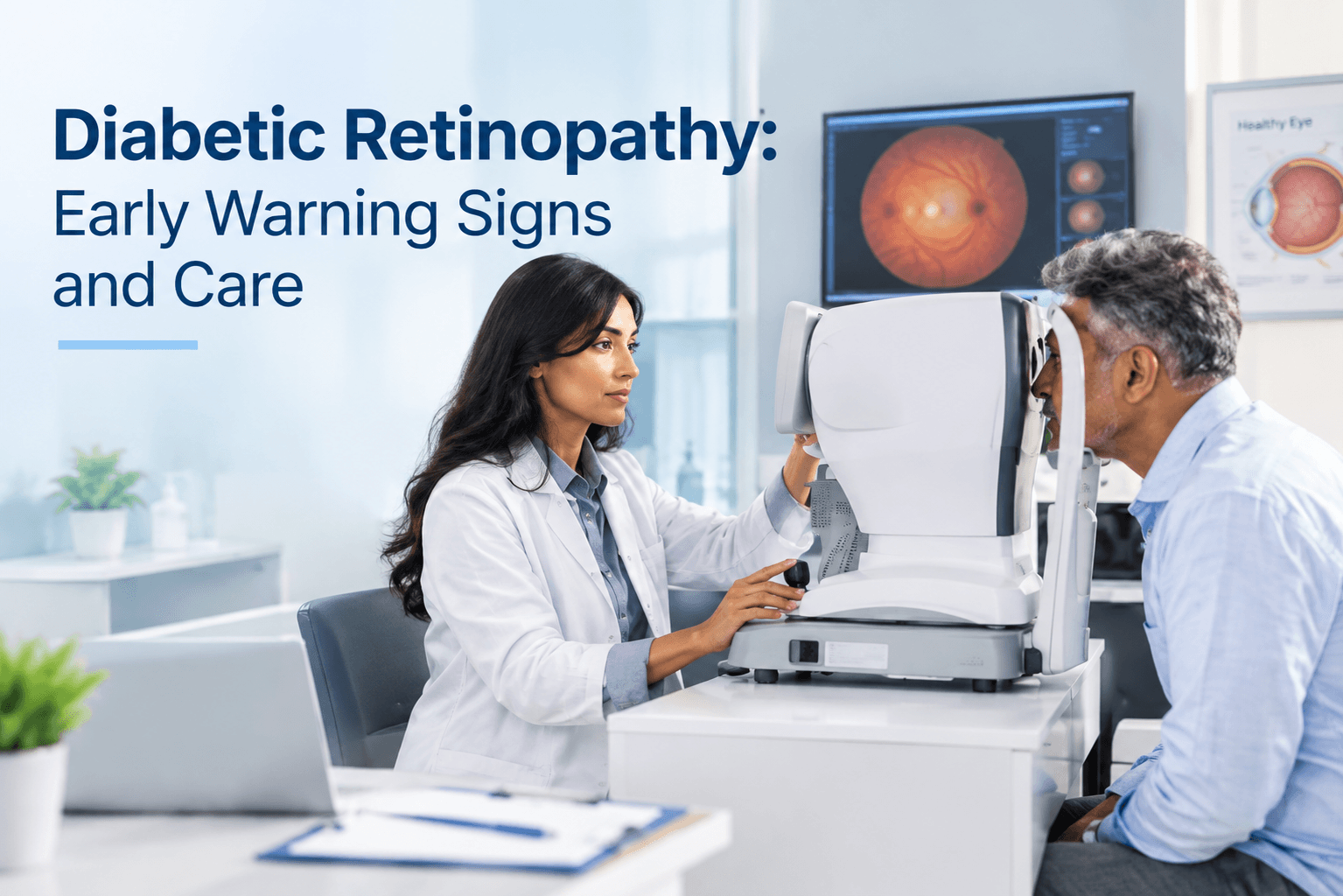
Diabetes can affect much more than blood sugar levels. Over time, high blood sugar can damage the tiny blood vessels that supply the retina, the light-sensitive tissue at the back of the eye. This condition is known as diabetic retinopathy, and it can gradually threaten vision if it is not detected and managed in time.
What makes diabetic retinopathy particularly concerning is that it may develop without noticeable symptoms in its early stages. A person can have retinal damage while their vision still feels normal. Regular eye examinations therefore play an important role in protecting long-term vision.
Understanding the early signs of diabetic retinopathy, knowing the risk factors, and getting appropriate eye care can help people with diabetes take action before serious vision problems develop.
What Is Diabetic Retinopathy?
Diabetic retinopathy is a diabetes-related eye condition caused by damage to the blood vessels in the retina. Persistently high blood sugar can weaken these vessels, causing them to leak fluid or blood. As the disease progresses, some blood vessels may become blocked, while abnormal new vessels can develop and bleed.
Diabetic retinopathy is one of the most important forms of diabetic eye disease. Diabetes can also increase the risk of other eye conditions, including cataracts, glaucoma, and diabetic macular edema.
The longer a person has diabetes, the greater the risk of developing diabetic retinopathy. Poor control of blood sugar, blood pressure, and cholesterol can further increase the risk.
Why Diabetic Retinopathy Can Be Difficult to Notice
One of the biggest challenges with diabetic retinopathy is that it may not cause obvious symptoms at first.
In the early stages, retinal changes can occur without affecting everyday vision. This means waiting until your eyesight becomes blurry is not a reliable way to know whether your eyes are healthy.
A comprehensive dilated eye examination allows an eye specialist to examine the retina and identify changes that may not yet be noticeable to you. The National Eye Institute recommends regular comprehensive dilated eye examinations for people with diabetes.
Diabetic Retinopathy Symptoms You Should Not Ignore
As diabetic retinopathy progresses, certain diabetic retinopathy symptoms may become noticeable. These symptoms can also occur with other eye conditions, so they should be evaluated by an eye care professional rather than self-diagnosed.
1. Blurred or Hazy Vision
Blurred vision can occur when diabetes-related changes affect the retina or when fluid accumulates around the macula, the part of the retina responsible for sharp central vision.
If your vision becomes repeatedly blurry, particularly when the change is new or persistent, schedule an eye examination.
2. Spots or Floaters
Seeing dark spots, floating shapes, or cobweb-like patterns can occur when blood leaks into the vitreous, the gel-like substance inside the eye.
New or sudden floaters should not be ignored, particularly if you have diabetes.
3. Dark or Empty Areas in Your Vision
Some people with diabetic eye problems may notice dark patches, shadows, or areas where vision appears missing.
These changes can indicate that the retina is being affected and require prompt professional evaluation.
4. Difficulty Reading or Seeing Fine Details
Changes in central vision can make reading, using a phone, recognising faces, or performing detailed work more difficult.
Even gradual changes deserve attention, especially if you have had diabetes for several years.
5. Difficulty Seeing Colours
Diabetic retinal damage can sometimes affect how clearly colours are perceived. A noticeable change in colour vision should be discussed with an eye specialist.
6. Sudden Changes in Vision
Sudden blurring, new floaters, flashes, blind spots, distortion, or significant vision loss require prompt eye evaluation. These can be signs of a more advanced retinal problem or another urgent eye condition.
What Causes Diabetic Retinopathy?
The primary cause of diabetic retinopathy is prolonged high blood sugar associated with diabetes.
Over time, elevated blood glucose can damage the small blood vessels supplying the retina. The damaged vessels may leak, swell, or become blocked. In more advanced disease, the retina may respond by developing abnormal new blood vessels. These vessels are fragile and can bleed into the eye.
Several factors can increase the risk of diabetic retinopathy, including:
- Long duration of diabetes
- Poorly controlled blood sugar
- High blood pressure
- High cholesterol
- Smoking
- Pregnancy in people with diabetes
Managing these health factors can help reduce the risk of diabetes-related vision complications.
Understanding the Diabetic Retinopathy Stages
Knowing the diabetic retinopathy stages can help explain how the disease progresses.
Mild Non-Proliferative Diabetic Retinopathy
Small areas of swelling or weakness can develop in retinal blood vessels. These early changes may not cause noticeable symptoms.
Moderate Non-Proliferative Diabetic Retinopathy
As retinal blood vessel damage progresses, some vessels may become blocked, reducing the blood supply to parts of the retina.
Severe Non-Proliferative Diabetic Retinopathy
More retinal blood vessels can become blocked. The retina may respond by releasing signals that encourage the formation of new blood vessels.
Proliferative Diabetic Retinopathy
This is the advanced stage of the disease. Fragile abnormal blood vessels can grow and bleed into the vitreous. Scar tissue may also develop and, in severe cases, contribute to tractional retinal detachment.
Diabetic macular edema can occur alongside diabetic retinopathy at different stages. It develops when damaged blood vessels leak fluid into the macula and can lead to blurry or distorted central vision.
How Is Diabetic Retinopathy Diagnosed?
Because early diabetic retinopathy may have no symptoms, an eye examination is essential.
A comprehensive dilated eye examination allows the ophthalmologist to examine the retina and its blood vessels. Depending on the patient’s condition, additional retinal imaging may be recommended.
Optical Coherence Tomography (OCT), for example, creates detailed cross-sectional images of the retina and can help detect and monitor conditions such as diabetic retinopathy and diabetic macular edema. Desai Eye Institute provides OCT as part of its retinal diagnostic services.
Fundus photography can also capture detailed images of the retina and blood vessels, helping specialists document retinal changes and monitor disease progression.
Diabetic Retinopathy Treatment Options
The appropriate diabetic retinopathy treatment depends on the stage of disease, the presence of macular edema, and other individual factors.
Treatment may include:
Anti-VEGF Injections
Anti-VEGF medicines can help reduce abnormal blood vessel growth and leakage associated with diabetic retinal disease. They may also be used for diabetic macular edema.
Laser Treatment
Laser treatment may be recommended for certain advanced retinal conditions. Retinal laser photocoagulation can help target abnormal or leaking blood vessels and reduce the risk of further vision-threatening complications.
Desai Eye Institute provides retinal laser photocoagulation for conditions including diabetic retinopathy.
Vitrectomy
In advanced cases involving significant bleeding or scar tissue, a vitrectomy may be considered. This is a surgical procedure used to remove the vitreous gel and address certain complications affecting the retina.
Not every person with diabetic retinopathy requires immediate treatment. Some early cases may simply require regular monitoring and careful management of diabetes and other risk factors.
How Can You Protect Your Eyes If You Have Diabetes?
Protecting your eyesight begins with managing the factors that contribute to diabetic eye disease.
Follow your diabetes treatment plan and work with your healthcare team to maintain appropriate blood sugar levels. Blood pressure and cholesterol management are also important. Regular physical activity, a balanced diet, taking prescribed medicines, and avoiding smoking can support overall health and reduce the risk of diabetes-related complications.
Most importantly, do not wait for signs of diabetic eye problems before scheduling an eye examination. Regular screening can identify retinal changes before vision is noticeably affected.
When Should You See an Eye Specialist?
If you have diabetes, routine retinal examinations should be part of your healthcare plan. If you experience sudden changes in vision, new floaters, flashes, blind spots, distortion, or significant vision loss, seek prompt professional evaluation.
Early diagnosis gives your eye specialist an opportunity to monitor the condition and recommend appropriate treatment when necessary.
Advanced Eye Care for Diabetic Retinopathy in Vadodara
Diabetic eye health requires specialised evaluation because retinal changes can develop silently. At Desai Eye Institute & Eye Hospitals, Vadodara, patients have access to comprehensive eye care, retinal evaluation, advanced diagnostic technology, and retinal treatment services.
The institute offers retina care and advanced diagnostic procedures such as OCT and fundus photography. Its team includes Dr. Sujit Desai, Vitreo-Retina Surgeon, along with specialists across different areas of ophthalmology.
If you are looking for a Best Eye Doctor in Vadodara, a Top Eye Specialist in Vadodara, or Advanced Eye Care in Vadodara for diabetes-related eye concerns, timely professional evaluation can help you understand your retinal health and determine the appropriate next steps.
Protect Your Vision Before Symptoms Progress
Diabetic retinopathy does not always announce itself with obvious warning signs. By the time noticeable vision changes appear, the condition may already have progressed.
Regular eye examinations, diabetes management, and timely treatment are important steps toward protecting your vision. If you have diabetes or have noticed changes in your eyesight, consider scheduling a comprehensive eye examination with an experienced eye specialist.
Your vision is worth protecting. Do not wait for diabetic retinopathy symptoms to become severe before taking action.