

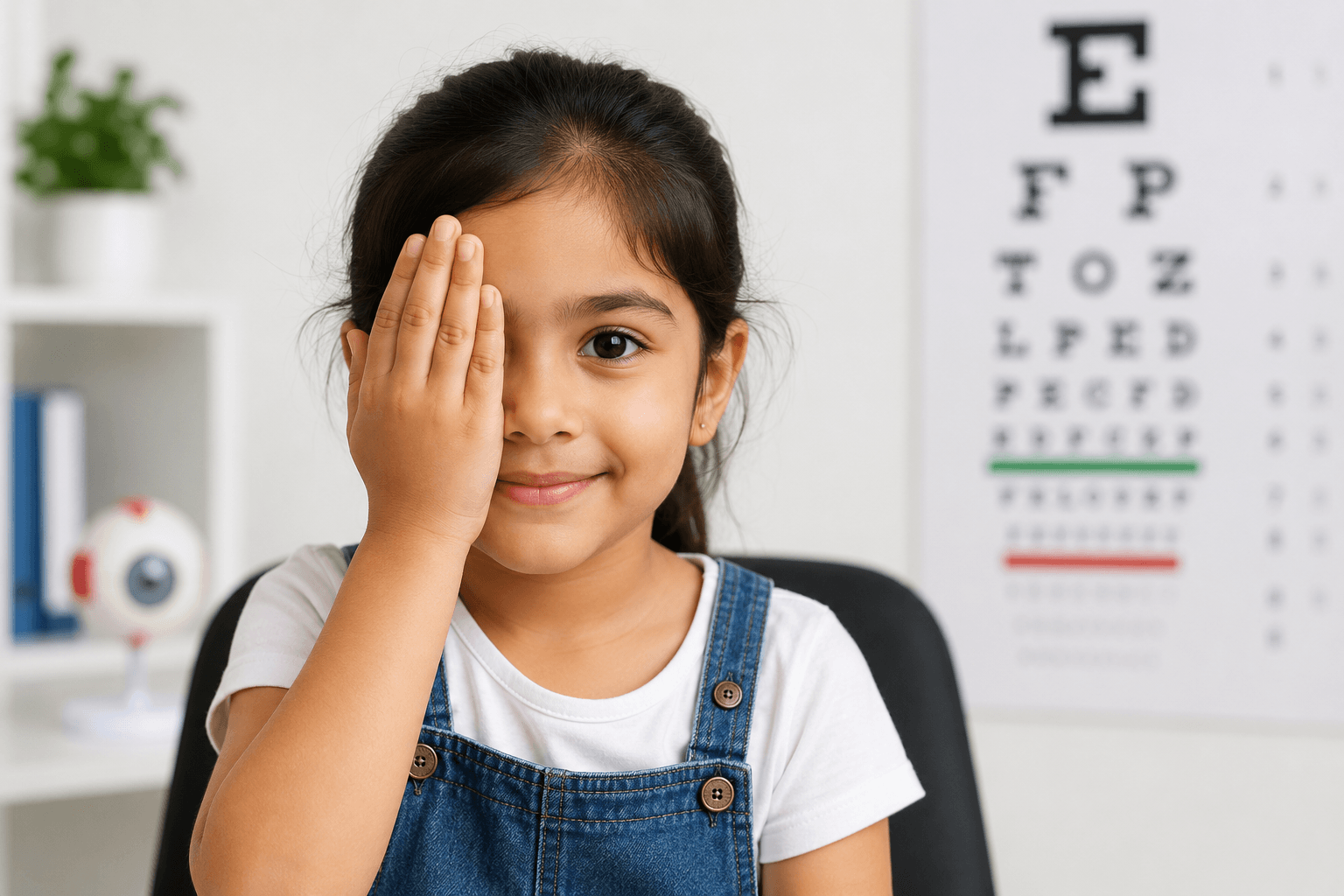
Children experience rapid visual development during their first few years of life. While many parents focus on milestones such as walking and talking, healthy vision is equally important. Unfortunately, some eye conditions develop silently without causing obvious symptoms. One of the most common is lazy eye in children, medically known as amblyopia in children.
When detected early, amblyopia can often be treated successfully. However, delaying diagnosis may lead to permanent vision loss in one eye. This is why experts recommend regular children’s eye screening and a comprehensive pediatric eye exam before the age of six.
In this guide, we’ll explain what amblyopia is, why early screening matters, and how timely treatment can help your child enjoy healthy vision for life.
What Is Lazy Eye in Children?
Lazy eye in children, or amblyopia, is a condition where one eye develops weaker vision than the other because the brain favors the stronger eye. Although the eye itself may appear normal, the communication between the brain and the weaker eye does not develop properly.
Unlike many other eye disorders, amblyopia usually develops during infancy or early childhood, when the visual system is still forming. If left untreated, the brain may permanently ignore signals from the weaker eye.
The encouraging news is that early diagnosis can significantly improve outcomes.
Why Does Amblyopia Develop?
Several childhood eye conditions can lead to amblyopia in children.
Refractive Errors
A significant difference in prescription between both eyes can cause the brain to rely on the clearer eye while ignoring the blurry one.
Eye Misalignment
Also known as strabismus, crossed or wandering eyes prevent both eyes from working together properly.
Blocked Vision
Conditions such as congenital cataracts, drooping eyelids, or corneal problems can block clear images from reaching the brain.
Premature Birth and Family History
Children born prematurely or those with a family history of amblyopia or other childhood vision problems have a higher risk of developing a lazy eye.
Why Screening Before Age 6 Is So Important
The first six years of life are considered the most critical period for visual development. During this time, the brain learns how to process visual information from both eyes.
If amblyopia is detected during this stage, treatment is often highly successful because the brain remains flexible and responsive.
After the age of six or seven, the visual pathways become more established, making treatment more difficult and sometimes less effective.
That is why vision screening for children is not simply a routine health check. It plays a vital role in protecting lifelong eyesight.
Signs Parents Should Never Ignore
One challenge with lazy eye is that many children do not realize they have a vision problem. Since one eye sees well, they often adapt without complaining.
Parents should watch for signs such as:
- One eye that turns inward or outward
- Frequent squinting
- Tilting the head while focusing
- Closing one eye in bright sunlight
- Difficulty judging distances
- Poor reading performance
- Frequent eye rubbing
- Complaints of blurred vision
- Reduced interest in activities requiring detailed vision
Even if none of these symptoms are present, regular children’s eye screening is still recommended because amblyopia can develop without noticeable warning signs.
When Should Children Have Their Eyes Examined?
Vision should be evaluated at different stages of childhood.
Infancy
A basic eye examination should be performed soon after birth to rule out major eye abnormalities.
Preschool Years
A comprehensive early eye exam for kids between ages three and five helps detect amblyopia before permanent vision loss develops.
Before Starting School
Every child should undergo a detailed pediatric eye exam before entering school to ensure healthy vision and proper eye alignment.
Children with a family history of eye disease or developmental concerns may require earlier and more frequent evaluations by a pediatric ophthalmologist.
How Is Amblyopia Diagnosed?
A comprehensive pediatric eye exam includes more than simply reading letters on an eye chart.
Your eye specialist will evaluate:
- Visual acuity in each eye
- Eye alignment
- Eye movement coordination
- Refractive errors
- Depth perception
- Overall eye health after pupil dilation
Modern diagnostic equipment allows early detection, even in children who are too young to describe vision problems.
Lazy Eye Treatment Options
The goal of lazy eye treatment is to strengthen the weaker eye while encouraging the brain to use both eyes equally.
Treatment may include:
Prescription Glasses
Corrective lenses address refractive errors and often improve vision significantly.
Eye Patching
Covering the stronger eye encourages the weaker eye to work harder and develop stronger visual connections.
Atropine Eye Drops
In some cases, medicated eye drops temporarily blur vision in the stronger eye, producing results similar to patching.
Vision Therapy
Specialized visual exercises may improve eye coordination, focusing ability, and binocular vision.
Surgery
If strabismus, cataracts, or other structural issues are causing amblyopia, surgery may be recommended before additional treatment.
The earlier lazy eye treatment begins, the greater the chance of restoring normal vision.
How Untreated Amblyopia Can Affect a Child
Ignoring lazy eye can impact more than eyesight.
Untreated amblyopia may lead to:
- Permanent reduction in vision
- Poor depth perception
- Difficulty in sports
- Reading challenges
- Reduced academic performance
- Lower confidence
- Limited career opportunities in adulthood that require excellent vision
Early diagnosis can prevent many of these long-term complications.
Tips for Parents to Support Healthy Vision
Parents can help protect their child’s eyesight by making eye care part of routine healthcare.
Simple habits include:
- Scheduling regular vision screening for children
- Watching for changes in eye alignment
- Limiting excessive screen time
- Encouraging outdoor activities
- Providing a balanced diet rich in Vitamin A, Omega-3 fatty acids, and leafy vegetables
- Following the prescribed treatment plan consistently if amblyopia is diagnosed
Consistency is one of the biggest factors influencing successful recovery.
Trust Desai Eye Institute for Advanced Pediatric Eye Care
Early diagnosis can make a lifelong difference in your child’s vision. At Desai Eye Institute, our experienced specialists provide comprehensive children’s eye screening, detailed pediatric eye exams, and personalized treatment plans for amblyopia in children using modern diagnostic technology.
Recognized for Advanced Eye Care in Vadodara, our team is committed to helping children achieve healthy visual development through timely diagnosis and expert care. Whether your child needs a routine eye examination or specialized lazy eye treatment, our experienced specialists are here to guide you every step of the way.
If you are searching for the Best Eye Doctor in Vadodara, the Top Eye Specialist in Vadodara, or a trusted eye doctor for children, schedule your child’s comprehensive eye examination at Desai Eye Institute today. Early care today can protect your child’s vision for a lifetime.