
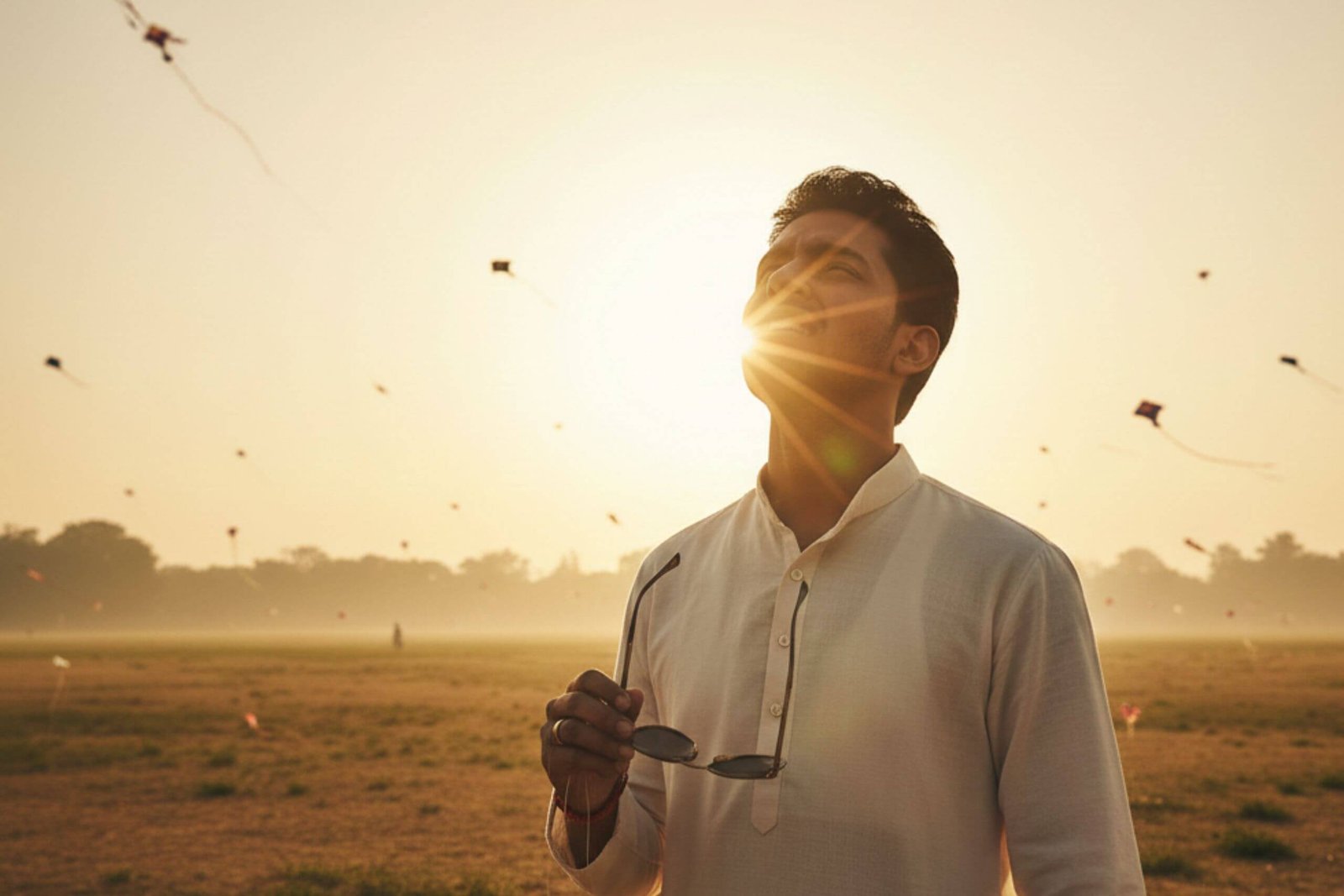
One such important festival is Sankranti, considered to be one of the happiest festivals in the country because of the vibrant kite festival that fills the skies with colorful kites and the tops of houses with merriment and laughter. However, Sankranti is also accompanied by another important health issue, ‘Eye strain during festivals’.
It is crucial to understand the scientific principles underpinning sun glare to get to enjoy the festival without harming your eyesight.
Why Sun Glare Feels Worse During Makar Sankranti
In January, the sun sits lower in the sky. This causes light rays to enter the eyes at sharper angles, producing intense glare. When you continuously look upward while tracking fast-moving kites, your eyes struggle to adjust between bright sky, moving objects and rooftop shadows.
This constant adjustment leads to eye fatigue during kite flying, dryness and irritation. Over time, repeated exposure contributes to eye strain during festivals, making your eyes feel heavy, watery and uncomfortable by evening.
How Prolonged Kite Flying Affects Your Vision
Kite flying may look effortless, but your eyes are doing complex work:
- Continuous focusing and refocusing
- Exposure to strong ultraviolet rays
- Reduced blinking due to intense concentration
- Increased tear evaporation in dry winter air
All of this accelerates eye strain during festivals and can trigger headaches, blurred vision and burning sensations.
This is where proper outdoor eye care becomes essential, particularly for children and older adults whose eyes are more sensitive.
The Role of UV Rays and Reflection
White rooftops, metal terraces, and glass buildings cause sunlight reflections that increase glare. Without eye protection, these reflections add to increased retinal stress and further contribute to eye fatigue during kite flying.
Quality sunglasses that block out UV rays greatly reduce glare and form the basis of any effective outdoor eye care.
Essential Outdoor Eye Care Tips for Kite Days
To reduce eye strain during festivals, follow these simple precautions:
- Wear UV-protective sunglasses at all times
- Use lubricating eye drops before and after outdoor activity
- Take short visual breaks every 30 minutes
- Avoid rubbing tired eyes
- Stay well hydrated
Consistent outdoor eye care protects your vision not only during Makar Sankranti but throughout the winter season.
When to Seek Professional Help
If you experience persistent dryness, headaches, blurred vision or excessive watering even after the festival, it may indicate deeper visual stress requiring professional assessment. Clinics offering advance eye care Vadodara provide detailed diagnostics to detect early damage from UV exposure and digital strain.
Facilities providing advance eye care Vadodara focus on both prevention and correction, while those offering advanced eye treatment in Vadodara manage more complex concerns such as photokeratitis, retinal sensitivity and corneal damage.
Residents seeking advance eye care Vadodara benefit from modern technology and personalised treatment plans. Many patients turn to centres known for advanced eye treatment in Vadodara when home remedies fail to relieve ongoing discomfort.
With access to reliable advance eye care Vadodara and specialised advanced eye treatment in Vadodara, festival-related vision issues can be detected early and managed effectively.
Conclusion
Makar Sankranti should be remembered for its joy, not for uncomfortable vision. Understanding the science of glare and practising proper outdoor eye care significantly reduces eye strain during festivals and prevents long-term damage. For those experiencing lingering symptoms, seeking professional consultation from trusted centres providing advance eye care Vadodara and advanced eye treatment in Vadodara ensures complete visual protection. For comprehensive diagnosis and expert treatment, Desai Eye Institute remains committed to safeguarding your vision every festive season and beyond.