

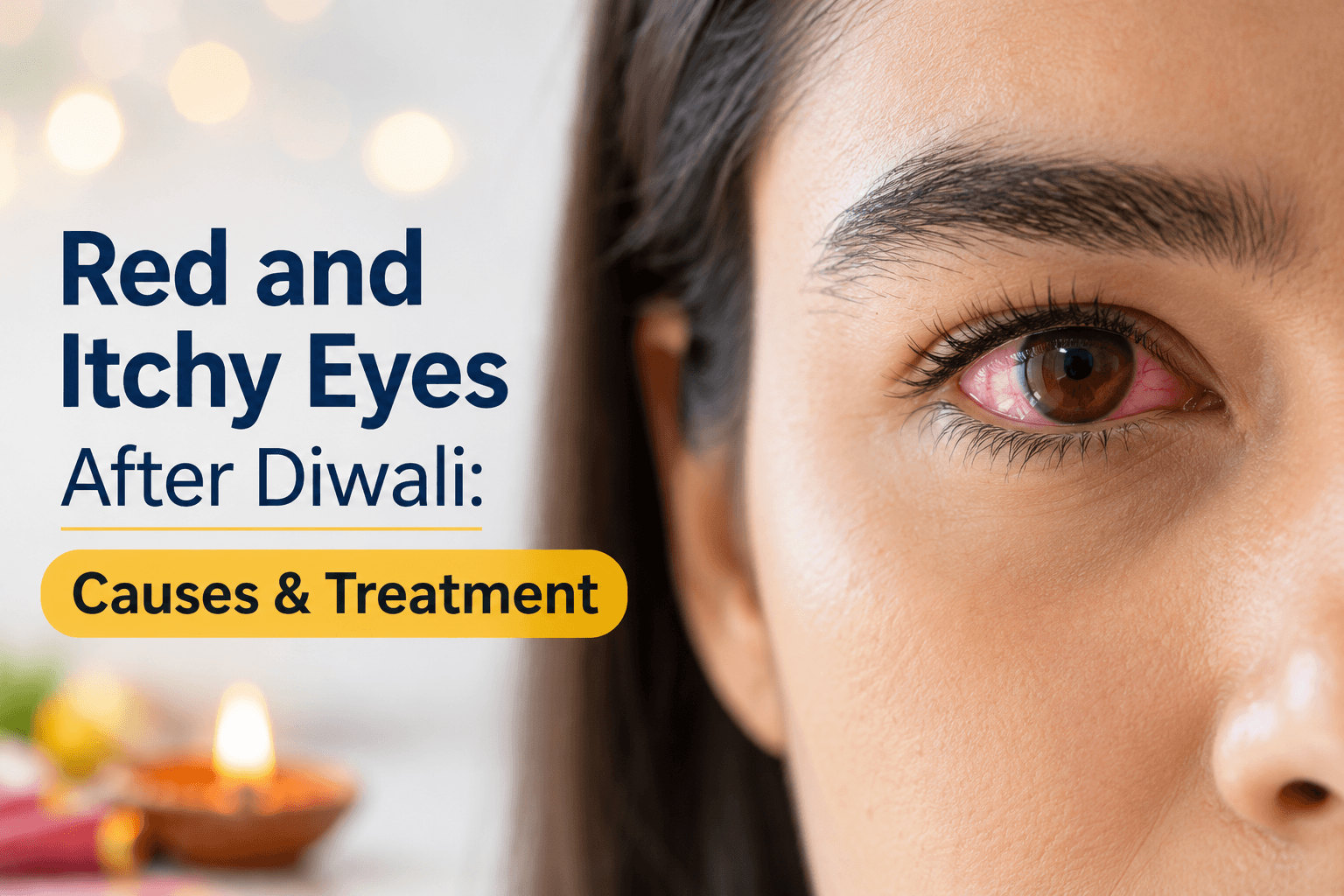
Diwali celebrations bring lights, fireworks, sweets, and family gatherings. However, after the festivities, many people experience red, itchy, watery, or irritated eyes. While these symptoms may seem temporary, prolonged exposure to firecracker smoke, dust, and airborne pollutants can affect the delicate surface of the eyes.
Red and itchy eyes after Diwali are commonly associated with environmental irritation and allergic reactions. Firecracker smoke, tiny airborne particles, and chemical residues can trigger discomfort, especially in people with sensitive eyes or existing eye conditions.
But how do you know whether it is simple irritation or something that needs medical attention? Understanding the causes and appropriate treatment can help protect your eyesight.
Why Do Eyes Become Red and Itchy After Diwali?
During Diwali, fireworks release smoke, fine particles, and chemical substances into the surrounding air. These pollutants can come into contact with the eye’s surface, irritating the conjunctiva, the thin membrane covering the white part of the eye and the inner eyelids.
This can cause inflammation and make tiny blood vessels more visible, resulting in redness.
Here are five common reasons behind eye irritation after Diwali.
1. Firecracker Smoke and Air Pollution
Firecracker smoke contains fine particulate matter and irritating substances that can affect the eyes. Exposure may disturb the natural tear film, causing dryness, burning, and watering.
This is one of the common reasons for firecracker smoke eye irritation, even among people who do not personally light crackers.
2. Allergic Conjunctivitis
Dust, smoke, and other airborne particles can trigger an allergic reaction in sensitive individuals. The body releases histamine, which causes inflammation of the conjunctiva.
Common symptoms include:
- Persistent itching
- Redness in both eyes
- Excessive watering
- Swollen eyelids
- Burning sensations
Itching is often a prominent symptom of allergic conjunctivitis.
3. Dry Eyes
Smoke and polluted air can disturb the tear film that keeps the eyes moist and comfortable. When the tear film becomes unstable, the eyes may feel dry, irritated or gritty.
People who already experience dry eye symptoms may notice increased discomfort after Diwali.
4. Dust and Chemical Residues
Dust, ash, and residue from fireworks can settle on the face, eyelashes, and surrounding skin. When these particles enter the eyes, they may cause redness, irritation, and excessive watering.
Touching the eyes without washing your hands can make the irritation worse.
5. Eye Infections
Not every case of redness is caused by pollution or allergies. Viral or bacterial conjunctivitis can also cause red eyes, watering, and irritation.
Sticky discharge, eyelids sticking together, and increased discomfort may indicate an infection that requires medical evaluation.
Common Symptoms of Red Eyes After Diwali
The symptoms can vary depending on the underlying cause. Watch for these common signs:
- Redness in one or both eyes
- Frequent itching or rubbing
- Burning or stinging sensations
- Excessive watering
- Dryness or a gritty feeling
- Mild eyelid swelling
- Sensitivity to light
If symptoms persist, worsen, or interfere with daily activities, consult an ophthalmologist instead of relying on home remedies.
How to Treat Itchy Eyes After Diwali?
The right treatment depends on whether the irritation is caused by smoke exposure, dryness, allergies, or an infection.
For mild irritation, the following precautions may provide relief.
1. Rinse Away Irritants
If loose dust or smoke particles have entered your eyes, gently rinse them with clean water or sterile saline. Avoid rubbing the eyes.
2. Use a Cold Compress
Place a clean, cool, damp cloth over your closed eyelids for a few minutes. This may help soothe itching and reduce mild swelling.
3. Use Preservative-Free Artificial Tears
Lubricating eye drops can help restore moisture and wash away some irritants. Ask an eye specialist or pharmacist for an appropriate product.
4. Avoid Smoke and Dust Exposure
Stay indoors when pollution levels are high. Keep windows closed when necessary and consider using an air purifier to reduce indoor airborne particles.
5. Avoid Rubbing Your Eyes
Rubbing can increase inflammation and potentially damage the eye’s surface. Wash your hands regularly and avoid touching your eyes unnecessarily.
Important: Do not use rose water, kajal, homemade eye washes, or steroid eye drops without medical advice. Avoid self-medicating with redness-relieving drops.
When Should You Visit an Eye Doctor?
Mild irritation may improve after avoiding exposure to smoke and dust. However, certain symptoms require professional attention.
Consult an eye specialist immediately if you experience:
- Severe eye pain
- Sudden blurred or reduced vision
- Significant light sensitivity
- Thick or unusual eye discharge
- Severe swelling
- Persistent redness or worsening irritation
- A suspected chemical injury or firecracker-related eye injury
An ophthalmologist may examine the eye using a slit lamp to identify inflammation, corneal damage, dryness, or infection. Treatment may include lubricating drops, anti-allergy medication, or other prescribed eye treatments depending on the diagnosis.
Protect Your Eyes from Diwali Pollution
A few simple precautions can reduce the risk of eye irritation during future celebrations:
- Avoid standing close to firecracker explosions.
- Wear protective glasses when outdoors in smoky conditions.
- Wash your face and hands after exposure to fireworks.
- Avoid touching your eyes with unwashed hands.
- Remove contact lenses if irritation develops.
- Keep indoor spaces well protected from smoke and dust.
Get Expert Eye Care at Desai Eye Institute, Vadodara
Redness and itching after Diwali should not always be ignored. Persistent irritation may indicate an underlying eye condition that requires proper diagnosis and treatment.
At Desai Eye Institute & Eye Hospitals, Vadodara, patients have access to comprehensive eye care, experienced ophthalmologists, and advanced diagnostic facilities.
Whether you are looking for Advanced Eye Care in Vadodara, the Best Eye Doctor in Vadodara, or a Top Eye Specialist in Vadodara, timely consultation can help identify the cause of your symptoms and protect your vision.
Do not let post-Diwali eye irritation affect your everyday life. Consult an eye specialist and give your eyes the care they deserve.