

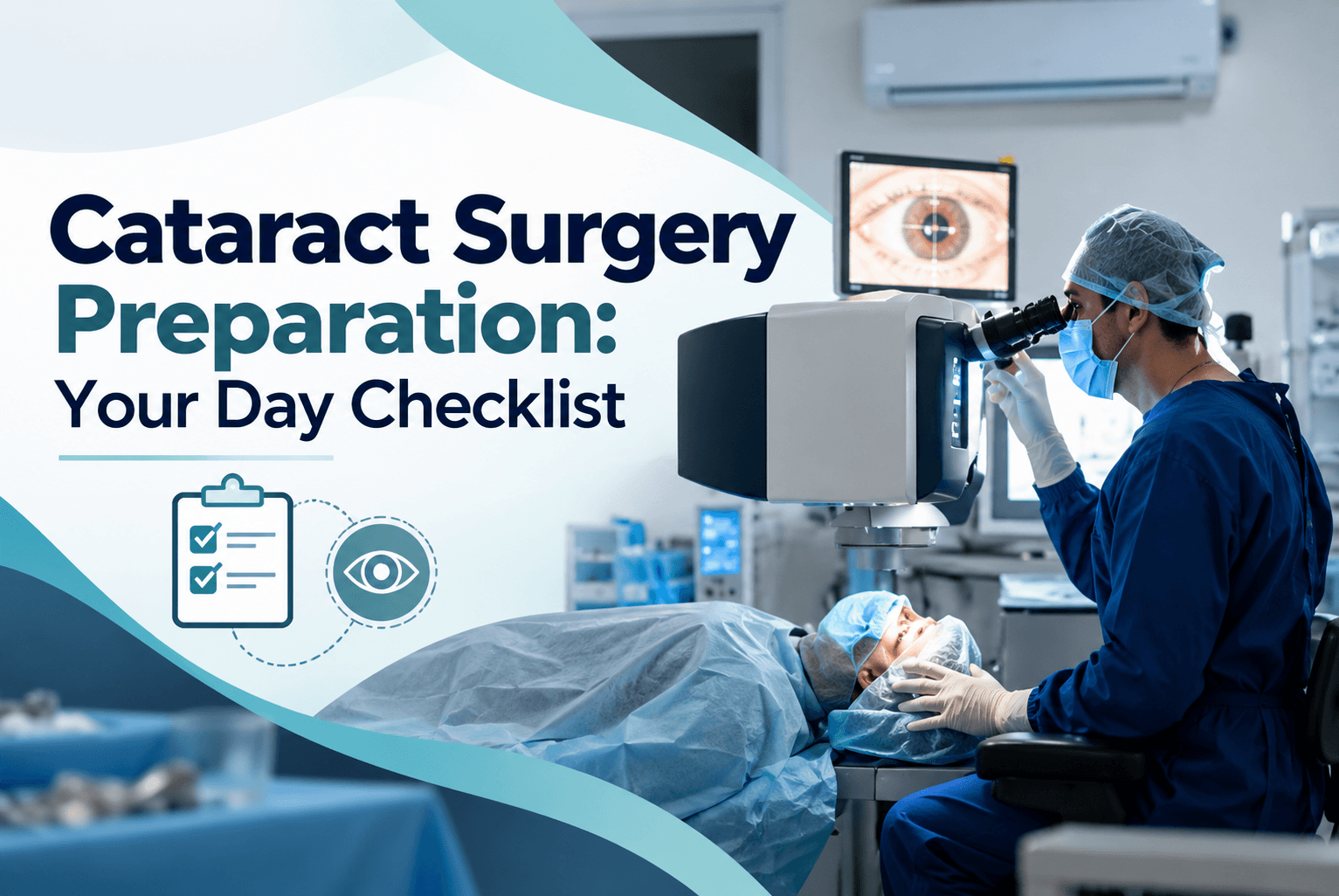
Preparing for cataract surgery can feel overwhelming, especially if it is your first eye procedure. You may have questions about what to eat, which medicines to take, what to pack, and how to get ready for the big day. The good news is that a little planning can make your experience more comfortable and help you follow your doctor’s instructions with confidence.
Cataract surgery preparation involves more than reaching the hospital on time. It includes following your surgeon’s instructions, arranging transportation, preparing your essentials, and understanding the precautions to take before the procedure. This practical guide covers everything you need to check the night before and the morning of your surgery.
Why Is Cataract Surgery Preparation Important?
A cataract develops when the natural lens of the eye becomes cloudy, causing blurred vision, glare, and difficulty seeing clearly. During cataract surgery, the cloudy lens is removed and replaced with an artificial intraocular lens (IOL).
Although cataract surgery is a commonly performed procedure, every patient has individual medical needs. Proper preparation helps the surgical team plan your care, reduces avoidable delays, and ensures you understand what to expect.
Following the correct cataract surgery preoperative instructions is particularly important if you have diabetes, high blood pressure, allergies, or other medical conditions. Your surgeon may provide specific guidance depending on your health, medications, and planned procedure.
Your Cataract Surgery Checklist for the Night Before
The night before surgery is the ideal time to organise your belongings, confirm your arrangements, and review your doctor’s instructions. Completing these steps early can help you feel calmer the following morning.
1. Confirm Your Appointment and Hospital Instructions
Check your appointment time, hospital address, reporting time, and any instructions provided by your surgical team. Keep the hospital’s contact number accessible in case you need clarification.
Review all instructions regarding fasting, medicines, eye drops, and personal care. If anything is unclear, contact your hospital instead of relying on general advice from the internet.
2. Follow Your Doctor’s Instructions About Food and Water
One of the most important steps when preparing for cataract surgery the night before is understanding whether you need to stop eating or drinking before the procedure.
Fasting requirements depend on the type of anaesthesia or sedation planned and your medical circumstances. Do not assume that you can eat breakfast as usual, but do not unnecessarily fast for longer than instructed either.
Follow the exact timing provided by your surgical team. If you have diabetes or take medication that can affect blood sugar, ask your doctor how to manage your meals and medicines safely.
3. Review Your Regular Medications
Make a list of the medicines you take, including prescription drugs, over-the-counter products, and supplements.
Some patients may need specific instructions regarding blood thinners, diabetes medicines, or other treatments. Never stop, skip, or change a prescribed medication on your own. Your surgeon or prescribing doctor should tell you what to continue and what, if anything, needs adjusting.
If you have been prescribed preoperative eye drops, confirm when and how to use them. Use only the drops recommended by your doctor.
4. Get a Good Night’s Sleep
Try to maintain your usual bedtime and allow yourself enough time to rest. Preparing your clothes, documents, and transportation arrangements beforehand can reduce last-minute stress.
Choose comfortable clothing that is easy to put on and remove. Avoid applying makeup, face cream, perfume, or other cosmetic products around your eyes on the day of surgery unless your care team advises otherwise.
5. Arrange a Responsible Companion
Even if the procedure is expected to be brief, arrange for someone to accompany you and take you home.
Your vision may be temporarily blurry after surgery, and medication or sedation may affect your ability to travel safely. Do not plan to drive yourself home. Ask your hospital whether your companion needs to remain with you during the appointment or recovery period.
Cataract Surgery Precautions You Should Not Ignore
Following basic cataract surgery precautions before the procedure helps your team provide appropriate care.
Keep these points in mind:
- Do not self-medicate: Avoid taking additional medicines or supplements without checking with your doctor.
- Report illness: Inform the hospital if you develop a fever, an eye infection, unusual redness, or another new health problem before surgery.
- Disclose medical conditions: Share relevant information about diabetes, blood pressure, allergies, previous eye procedures, and other health conditions.
- Follow fasting instructions: Do not guess about when to stop eating or drinking.
- Avoid driving: Arrange suitable transportation to and from the hospital.
- Follow eye-drop instructions: Use only the medication and dosage prescribed for you.
These precautions are general guidance rather than a replacement for individual medical advice. Your surgeon’s instructions should always take priority.
What Happens When You Arrive for Cataract Surgery?
Once you reach the hospital, the team will usually verify your details, review your medical history, and confirm which eye is being treated. Additional checks may be performed according to your clinical needs.
Your eye may be prepared with prescribed drops, and the surgical team will explain the next steps. The procedure generally involves removing the cloudy natural lens and placing an artificial lens inside the eye.
Many cataract procedures are performed using local or topical anaesthesia. The exact approach depends on your condition and the surgeon’s assessment.
After surgery, the team will provide instructions about eye protection, prescribed drops, daily activities, and follow-up visits. Make sure you understand these instructions before leaving the hospital.
Prepare With Confidence at Desai Eye Institute
A well-planned surgery day starts with clear instructions and the right eye care team. At Desai Eye Institute and Eye Hospitals, Vadodara, patients have access to comprehensive ophthalmic services, cataract surgery, and personalised care designed around their eye health needs.
If you are looking for advanced eye care in Vadodara, an experienced eye doctor in Vadodara, or an eye specialist in Vadodara to evaluate your cataract, a professional consultation can help you understand your treatment options and prepare for the procedure.
Contact Desai Eye Institute to schedule a consultation, discuss your concerns, and receive guidance tailored to your condition. With the right preparation and follow-up care, you can approach your cataract surgery day feeling informed, supported, and ready for the next step towards clearer vision.
Disclaimer: This article provides general educational information and is not a substitute for personalised medical advice. Always follow the instructions given by your treating ophthalmologist and surgical team.