

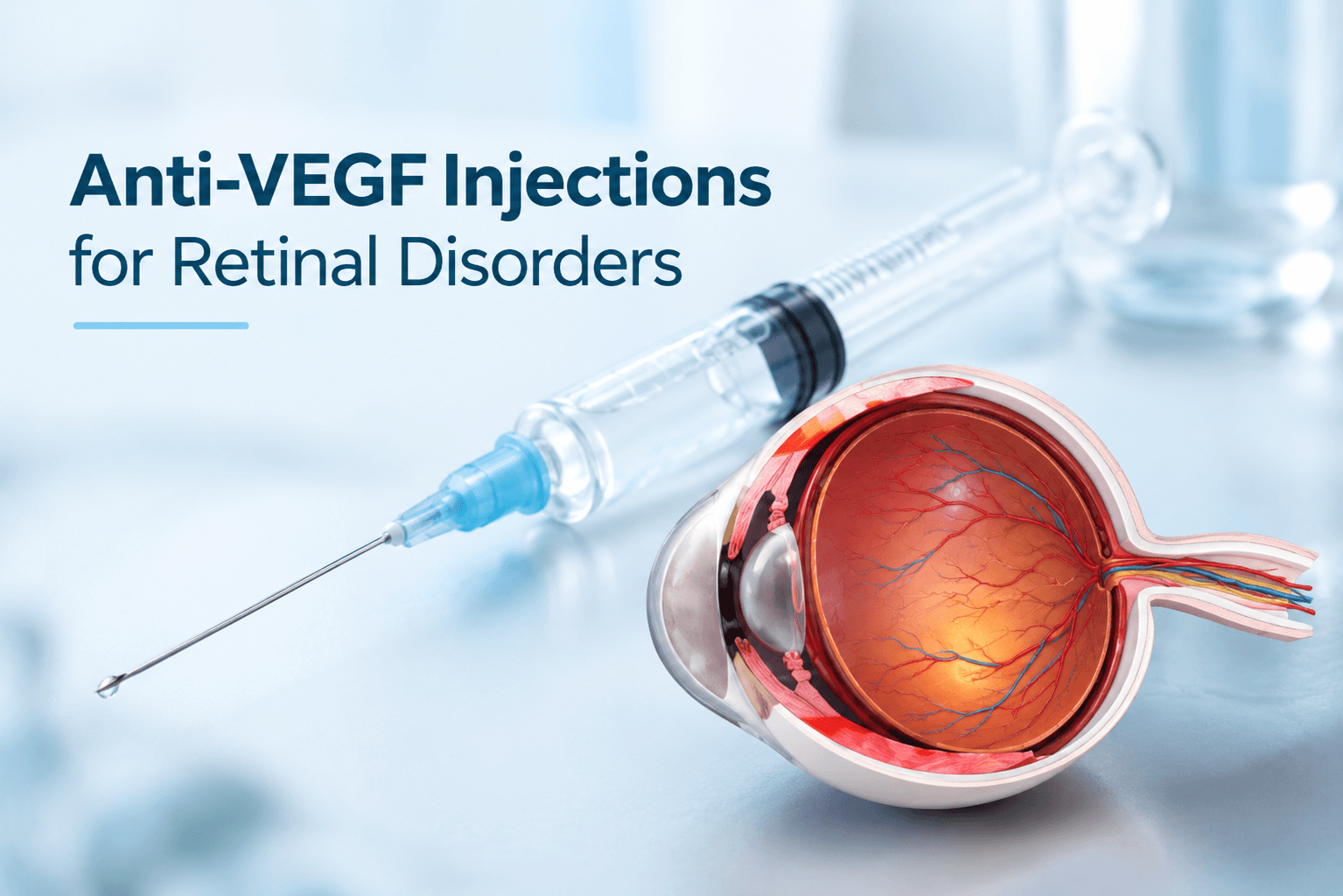
When a retinal disorder begins affecting your vision, timely diagnosis and appropriate treatment can make an important difference. Many retinal conditions cause swelling, fluid leakage, bleeding, or abnormal blood vessel growth inside the eye. One of the most widely used treatments for these problems is Anti-VEGF Injections.
Anti-VEGF treatment has transformed the management of several retinal diseases. It works by blocking vascular endothelial growth factor, commonly called VEGF, a protein that can encourage abnormal blood vessel growth and leakage in the retina. By reducing this activity, anti-VEGF medicines can help control retinal swelling and protect or improve vision in appropriately selected patients.
If your eye specialist has recommended a retinal injection treatment, understanding why it is needed, what happens during the procedure, and what to expect afterward can make the experience much less stressful.
What Are Anti-VEGF Injections?
Anti-VEGF injections are medicines delivered directly into the eye through a carefully performed intravitreal injection. VEGF is naturally present in the body, but excessive VEGF activity in certain retinal conditions can contribute to abnormal blood vessel growth and fluid leakage.
When these blood vessels leak fluid into or around the retina, swelling can develop and central vision may become blurred or distorted. Anti-VEGF medicines work by blocking VEGF activity, helping reduce abnormal leakage and blood vessel growth.
Several anti-VEGF medicines are used in retinal care, including bevacizumab, ranibizumab, aflibercept, brolucizumab, and faricimab. The medicine selected depends on the retinal condition, clinical findings, previous treatment, and the treating ophthalmologist’s assessment.
How Do Anti-VEGF Injections Work?
Think of VEGF as a signal that can encourage abnormal blood vessels to grow or become leaky. In certain retinal disorders, excessive VEGF activity contributes to swelling or bleeding that can interfere with vision.
Anti-VEGF therapy for eyes blocks this signal. This can help:
- Reduce fluid accumulation in the retina
- Control abnormal blood vessel growth
- Reduce leakage from abnormal retinal blood vessels
- Manage retinal swelling
- Slow or prevent further vision loss in certain conditions
- Improve vision in some appropriately treated patients
The goal is not simply to give an injection. The larger objective is to control the underlying retinal activity and preserve useful vision over time.
Which Retina Disorders May Need Anti-VEGF Treatment?
Anti-VEGF injections for retinal diseases are commonly used for several conditions affecting the retina and macula.
1. Wet Age-Related Macular Degeneration
Wet or neovascular AMD occurs when abnormal blood vessels develop beneath or around the macula and leak fluid or blood. Anti-VEGF injections are a major treatment for wet AMD and can help slow vision loss.
2. Diabetic Retinopathy and Diabetic Macular Edema
Diabetes can damage retinal blood vessels. In some patients, leakage causes diabetic macular edema, which can affect central vision. Anti-VEGF medicines may help reduce retinal swelling and manage vision-threatening diabetic eye disease.
3. Retinal Vein Occlusion
A retinal vein occlusion can interfere with blood flow through the retina and may lead to increased VEGF activity and macular edema. Anti-VEGF injections can reduce swelling and may help improve or stabilize vision.
4. Other Retinal Conditions
Anti-VEGF medicines may also be used for selected retinal conditions involving abnormal blood vessels or retinal swelling. Your retina specialist will determine whether this treatment is appropriate after examining the retina and reviewing imaging results.
What Happens During the Anti-VEGF Injection Procedure?
Many patients feel nervous when they first hear that medicine will be injected into the eye. However, the procedure is generally brief and performed using careful sterile techniques.
During the anti-VEGF injection procedure, your eye doctor typically:
- Examines your eye and reviews relevant retinal imaging.
- Uses numbing medicine to make the procedure more comfortable.
- Cleans the eye carefully to reduce the risk of infection.
- Uses a very small needle to deliver the medication into the vitreous, the gel-like substance inside the eye.
- Checks the eye after the injection and provides post-treatment instructions.
The National Eye Institute notes that most patients can return to normal activities immediately after treatment, although temporary irritation or floaters may occur.
Are Anti-VEGF Eye Injections Painful?
This is one of the most common concerns patients have.
Because numbing medicine is used before the injection, most patients experience pressure, mild discomfort, or a brief sensation rather than significant pain. The actual injection is usually very quick.
You may notice some irritation afterward, particularly from the antiseptic used during preparation. Small air bubbles or temporary floaters can also sometimes be visible. These symptoms generally settle within a short period.
If you experience significant pain, increasing redness, or worsening vision after an injection, contact your eye doctor promptly because these symptoms can indicate a complication requiring attention.
How Often Are Anti-VEGF Injections Needed?
There is no single injection schedule that works for every patient.
Some people initially receive injections at relatively frequent intervals, often around once a month. As the retina responds, the treatment interval may be extended depending on the disease and the doctor’s treatment strategy. Some patients require long-term injections, while others may eventually need treatment less frequently.
This is why follow-up appointments are an important part of anti-VEGF therapy for eyes. Your specialist may use vision testing and retinal imaging, such as optical coherence tomography (OCT), to determine whether fluid or swelling remains and whether additional treatment is needed.
Benefits and Limitations of Anti-VEGF Treatment
For suitable patients, anti-VEGF treatment can provide important benefits. It may reduce retinal swelling, control abnormal blood vessel activity, and help preserve or improve vision.
However, it is important to understand that anti-VEGF therapy is not a permanent cure for every retinal disorder. Some conditions require repeated treatment and long-term monitoring. The response can also vary between patients.
For example, retinal vein occlusion may require multiple injections, and patients may continue to need monitoring even when vision improves.
Following the recommended treatment schedule is therefore important. Missing follow-up visits can make it harder for your doctor to detect recurrent retinal swelling or disease activity at the appropriate time.
Are There Side Effects or Risks?
Like any medical procedure, anti-VEGF eye injections carry potential risks, although serious complications are uncommon.
Temporary effects can include:
- Mild irritation
- Redness
- Temporary discomfort
- Small floaters or air bubbles
- A temporary change in how the eye feels
More serious complications can occur and require prompt medical attention. Seek immediate advice from your eye specialist if you develop significant or worsening eye pain, increasing redness, sudden vision deterioration, or other concerning symptoms after an injection.
Your ophthalmologist will discuss the potential benefits and risks of treatment based on your specific retinal condition.
What Should You Do After a Retinal Injection?
After retinal injection treatment, follow the instructions provided by your ophthalmologist.
It is particularly important to:
- Attend scheduled follow-up appointments.
- Report worsening pain or vision promptly.
- Follow prescribed medication instructions.
- Continue managing underlying conditions such as diabetes and high blood pressure when applicable.
- Avoid skipping recommended retinal monitoring.
For people with diabetic eye disease, managing blood sugar, blood pressure, and cholesterol is also an important part of protecting eye health.
Why Regular Retina Follow-Up Matters
Anti-VEGF treatment is only one part of comprehensive retinal care. Regular examinations allow your eye specialist to monitor changes in the retina and determine whether treatment is working.
OCT imaging can provide detailed views of retinal layers and help identify fluid or swelling that may not be obvious from symptoms alone. In conditions such as retinal vein occlusion, OCT may also be used during follow-up to assess retinal swelling and treatment response.
This is especially important because retinal diseases can sometimes progress without causing dramatic symptoms in the early stages.
Advanced Eye Care in Vadodara for Retinal Conditions
If you have been diagnosed with a retinal disorder or have been advised to consider Anti-VEGF Injections, choosing an eye care centre with appropriate retinal evaluation and treatment facilities is important.
At Desai Eye Institute, patients can seek comprehensive eye evaluation and specialized care for a range of retinal and eye conditions. With a focus on modern diagnostic and treatment approaches, the institute aims to provide personalized care based on each patient’s condition.
If you are looking for Advanced Eye Care in Vadodara, have been advised to undergo anti-VEGF treatment, or want to understand your retinal condition better, a consultation with an experienced ophthalmologist can help you understand your available treatment options.
Patients searching for the Best Eye Doctor in Vadodara or a Top Eye Specialist in Vadodara should consider factors such as retinal expertise, diagnostic facilities, treatment options, follow-up care, and an individualized approach to treatment rather than choosing based on a single factor.
Final Thoughts
Anti-VEGF Injections have become an important part of modern retinal treatment. By reducing the effects of excessive VEGF, these medicines can help manage abnormal blood vessel growth and retinal swelling associated with conditions such as wet AMD, diabetic macular edema, and retinal vein occlusion.
If your doctor has recommended anti-VEGF injections, do not hesitate to ask why the treatment is needed, how frequently you may require injections, what results can reasonably be expected, and which warning signs require immediate attention.
At Desai Eye Institute, the focus is on informed diagnosis, appropriate treatment planning, and ongoing eye care. If you are experiencing vision changes or have been diagnosed with a retinal disorder, schedule an eye evaluation to understand the next steps for protecting your vision.