

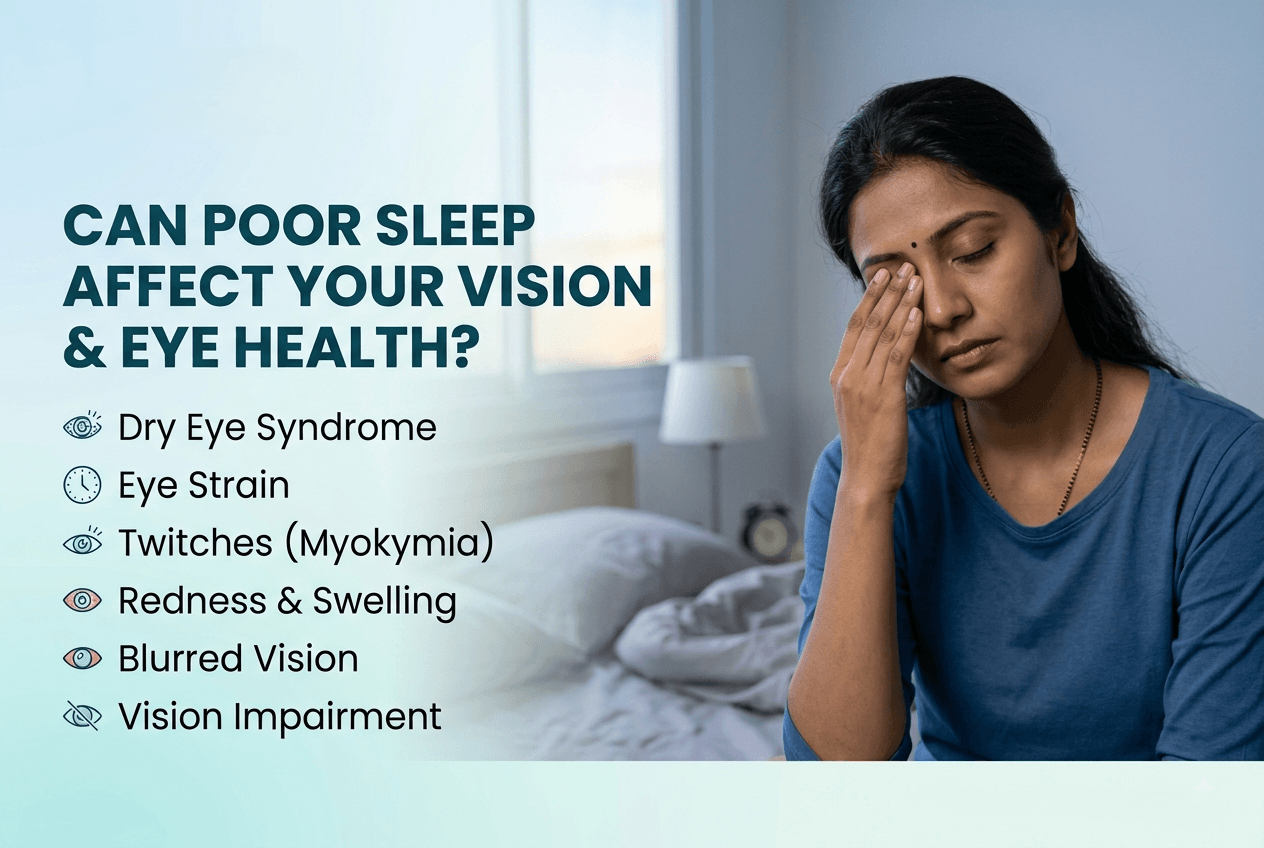
Sleep is essential for the body and mind, but its role in maintaining healthy eyes is often overlooked. While one sleepless night may leave you with tired, irritated eyes, consistently poor sleep can have a greater impact on the ocular surface and visual comfort. Research has found connections between sleep quality and several eye health concerns, particularly dry eye symptoms and certain ocular conditions.
So, can poor sleep affect your vision? The answer is yes, particularly when inadequate or disrupted sleep becomes a regular pattern. Understanding the connection between Sleep and Eye Health can help you recognize symptoms early and make healthier choices for your eyes.
Understanding the Connection Between Sleep and Eye Health
Your eyes need recovery time just like the rest of your body. During sleep, your body carries out important restorative processes that support normal tissue function. The tear film covering the eyes also needs to remain healthy to provide lubrication and protect the corneal surface.
When sleep is consistently interrupted or insufficient, these processes may be affected. Studies examining sleep deprivation have reported reduced tear secretion and changes in tear film stability, which can contribute to ocular surface discomfort.
This is why how sleep affects eye health is more than simply feeling tired after staying up late. Sleep quality can influence how comfortable your eyes feel and how clearly you see throughout the day.
How Lack of Sleep Can Affect Your Eyes
1. Dry and Irritated Eyes
One of the most common connections between lack of sleep and eye health is dry eye symptoms. People who do not sleep well may experience burning, itching, redness, a gritty sensation, or increased sensitivity.
Research has shown that sleep deprivation can reduce tear secretion and alter tear film stability. These changes can make the ocular surface less comfortable and may worsen symptoms in people who already have dry eye disease.
This explains why lack of sleep eye problems can sometimes feel particularly noticeable after a late night or several nights of poor sleep.
2. Blurry or Fluctuating Vision
Can poor sleep and eyesight be connected? Poor sleep may contribute to temporary visual discomfort and fluctuating clarity, especially when dry eyes develop.
A stable tear film is important for a clear optical surface. When the tear film becomes unstable, vision can temporarily appear less sharp or fluctuate with blinking. Therefore, poor sleep blurry vision may sometimes be related to ocular surface dryness rather than a permanent change in prescription.
However, persistent blurry vision should not automatically be attributed to tiredness. It can also be a symptom of refractive errors, cataracts, retinal conditions, glaucoma, diabetes, or other eye problems. An eye examination is important if blurred vision continues or repeatedly occurs.
3. Eye Strain and Light Sensitivity
After insufficient sleep, the eyes may feel tired more quickly, particularly during prolonged screen use. You may notice difficulty focusing, discomfort around bright lights, or a feeling of heaviness around the eyes.
This can become more noticeable when long screen sessions are combined with inadequate sleep. Taking regular screen breaks, maintaining an appropriate viewing distance, and getting sufficient rest can help reduce everyday visual strain.
4. Redness and Puffy Eyes
Red eyes and puffiness are familiar signs after a poor night’s sleep. Reduced rest can make the eyes appear tired and may make existing irritation more noticeable.
Although occasional redness is usually temporary, frequent redness, pain, discharge or significant sensitivity to light should be evaluated by an eye specialist rather than being dismissed as simple fatigue.
What Are Sleep Deprivation Eye Problems?
The effects of sleep deprivation are not identical for everyone. Some people may primarily notice dryness and irritation, while others experience eye fatigue or fluctuating vision.
Research has demonstrated that experimentally induced sleep deprivation can reduce tear secretion and impair tear film quality. Another study found that sleep disorders were associated with ocular conditions including dry eye and glaucoma, although associations do not necessarily mean that poor sleep directly causes these diseases.
There is also research investigating relationships between sleep patterns and glaucoma. One population-based study found associations between abnormal sleep parameters and glaucoma or visual field defects, highlighting why sleep patterns may be relevant when considering overall eye health.
Importantly, current evidence does not mean that every person who sleeps poorly will develop a serious eye disease. Eye health depends on many factors, including age, genetics, medical conditions, medications, lifestyle, and existing ocular problems.
Can Lack of Sleep Cause Permanent Vision Loss?
This is an important distinction. Occasional lack of sleep can cause temporary symptoms such as tired eyes, dryness and fluctuating visual comfort, but it should not be assumed to cause permanent vision loss by itself.
Long-term relationships between sleep duration and major eye diseases are still being studied. A systematic review found that short sleep was associated with a higher risk of cataract, while associations with glaucoma, diabetic retinopathy and other major eye disorders were less consistent.
Therefore, sleep deprivation and vision should be viewed as part of a broader approach to eye health rather than as a single cause of serious vision problems.
How to Support Better Sleep and Healthier Eyes
Improving sleep habits can be a simple part of protecting overall well-being and visual comfort. Try to maintain a consistent sleep schedule and aim for sufficient, good-quality sleep. Reduce unnecessary screen exposure before bedtime and avoid working on bright screens for extended periods without breaks.
If you experience dry eyes, remember to blink regularly during prolonged screen use. Keep your eyes hydrated as recommended by your eye care professional and avoid using eye drops unnecessarily without understanding the cause of your symptoms.
People with persistent sleep difficulties should also discuss them with an appropriate healthcare professional. Conditions such as sleep apnea can affect overall health and have been investigated in relation to ocular conditions.
When Should You See an Eye Specialist?
Occasional tiredness after a late night is generally different from persistent visual symptoms. You should consider an eye examination if you experience ongoing blurred vision, recurrent dryness, unexplained redness, eye pain, flashes, new floaters, reduced peripheral vision or sudden changes in sight.
Regular eye examinations are especially important if you have diabetes, glaucoma risk factors, a family history of eye disease, or an existing eye condition.
Early assessment can help identify whether symptoms are related to dry eye or another underlying condition that requires treatment.
Protect Your Vision With Advanced Eye Care
Good sleep is one part of a healthy lifestyle, but it should not replace professional eye care. If you are experiencing persistent lack of sleep affecting vision, dryness, or unexplained changes in eyesight, an appropriate eye examination can help determine the underlying cause.
Desai Eye Institute & Eye Hospitals provides comprehensive and Advanced Eye Care in Vadodara, with services covering cataract, glaucoma, retina, cornea, refractive surgery, neuro-ophthalmology, and other specialized areas of ophthalmology. The institute has a team of specialists and advanced diagnostic facilities for evaluating a wide range of eye conditions.
If you are searching for the Best Eye Doctor in Vadodara or a Top Eye Specialist in Vadodara, professional evaluation is the right step when visual symptoms persist. Desai Eye Institute focuses on evidence-based, personalized eye care designed to help patients maintain clearer, healthier vision.