

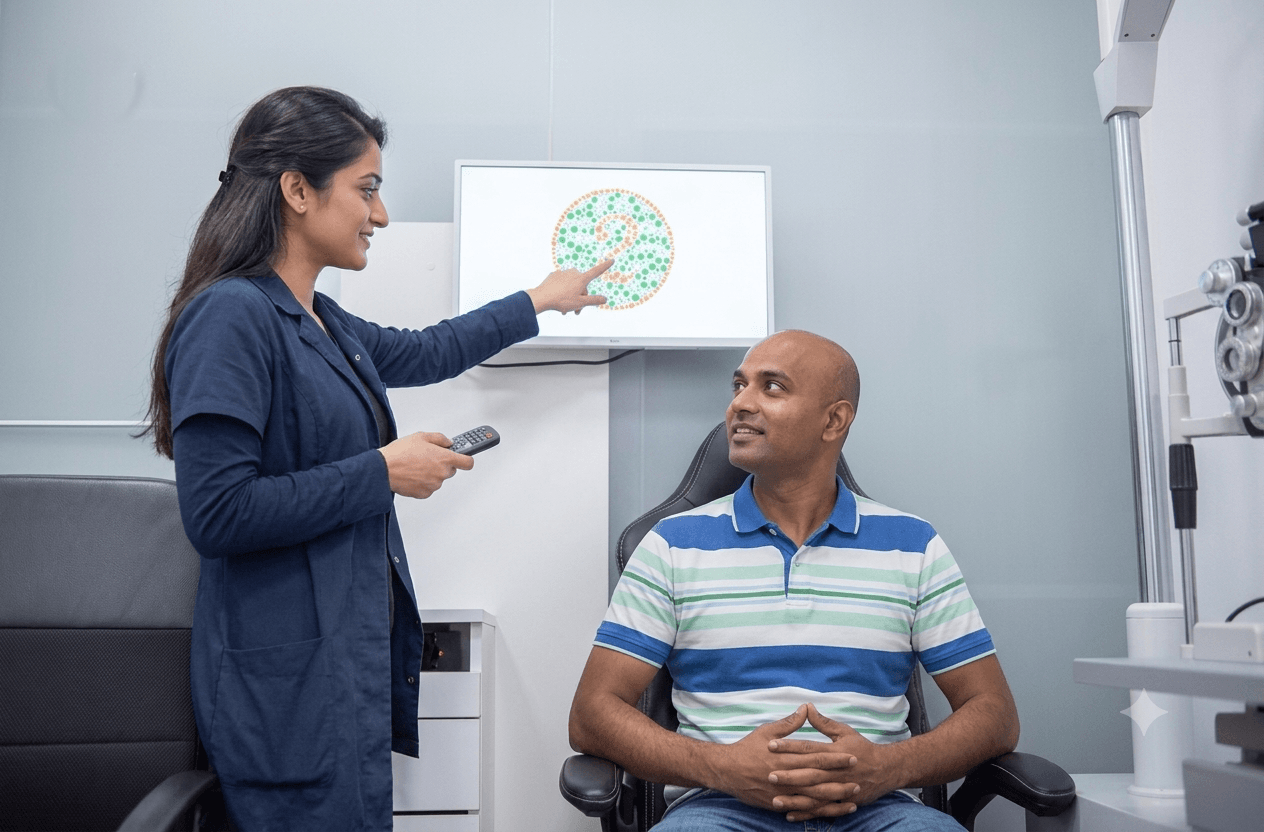
Colors play an important role in everyday life, from recognizing traffic lights and reading maps to choosing clothes and enjoying nature. However, not everyone sees colors the same way. For some people, distinguishing certain shades can be challenging due to color blindness, also known as color vision deficiency. Many individuals are born with this condition and may not realize it until they undergo a color blindness test.
A color vision test is a simple yet effective way to evaluate how accurately your eyes perceive colors. It helps identify different forms of color blindness and can also detect vision changes caused by certain eye diseases. Understanding your results allows you to make informed decisions about your eye health and daily activities.
What Is Color Blindness?
Color blindness is a condition in which the eyes cannot distinguish certain colors correctly because the cone cells in the retina do not function normally. Most people with color blindness do not see the world in black and white. Instead, they have difficulty telling specific colors apart.
The condition can be inherited or develop later in life due to eye diseases, aging, injuries, or certain medications. Since many people adapt to their vision over time, a professional color vision test is often the only way to confirm the condition.
Common Color Blindness Symptoms
The symptoms of color blindness vary depending on its type and severity. Some people experience only mild difficulty, while others notice significant challenges in daily life.
Common color blindness symptoms include:
- Confusing red and green shades
- Difficulty distinguishing blue and yellow colors
- Colors appearing dull or less vibrant
- Trouble reading color-coded charts and graphs
- Difficulty matching clothing or identifying colored objects
- Problems recognizing traffic signals or warning lights
Children with color vision deficiency may also struggle with school activities that rely on color recognition, making early testing beneficial.
Types of Color Blindness
There are several types of color blindness, each affecting color perception differently.
Red Green Color Blindness
Red green color blindness is the most common type and is usually inherited. People with this condition have difficulty distinguishing between red, green, brown, and orange shades. It affects males more frequently than females because of its genetic inheritance pattern.
Blue Yellow Color Blindness
Blue yellow color blindness is less common and affects the ability to differentiate blue from green or yellow from violet. Unlike red green color blindness, it affects both men and women equally and may develop due to inherited factors or certain eye conditions.
Complete Color Blindness
Complete color blindness is extremely rare. People with this condition see the world mainly in shades of gray and often experience poor vision and sensitivity to bright light.
Causes of Color Blindness
Understanding the causes of color blindness helps determine whether the condition is inherited or acquired.
The most common causes include:
- Genetic inheritance
- Aging-related changes in the eye
- Eye diseases such as glaucoma, diabetic retinopathy, or macular degeneration
- Optic nerve disorders
- Eye injuries
- Certain medications that affect color perception
If color vision changes suddenly, it should never be ignored, as it may indicate an underlying eye condition requiring immediate attention.
What Is a Color Blindness Test?
A color blindness test evaluates your ability to recognize and distinguish different colors. It is painless, quick, and usually completed within a few minutes during a routine eye examination.
Eye specialists may perform different types of color vision tests depending on your symptoms, age, and medical history. These tests help identify the type and severity of color vision deficiency while ruling out other eye conditions.
Ishihara Color Test
The Ishihara color test is the most widely used screening test for detecting red green color blindness. It consists of multiple circular plates filled with colored dots that form hidden numbers or patterns.
People with normal color vision can easily identify the numbers, while individuals with color blindness may see different numbers or none at all. Although the Ishihara test is highly effective for detecting inherited red green color blindness, additional tests may be recommended if further evaluation is needed.
What Do Your Test Results Mean?
Your color blindness test results help your eye specialist determine whether your color vision is normal or affected.
A normal result indicates healthy color perception. Mild color vision deficiency means you may struggle only with certain shades, while moderate or severe deficiency can make distinguishing colors more challenging in everyday situations.
If the test suggests acquired color blindness, your ophthalmologist may recommend additional examinations to identify any underlying eye disease affecting your vision.
Can Color Blindness Be Treated?
There is currently no permanent cure for inherited color blindness. However, many people adapt successfully using practical solutions such as color identification apps, color-filtering glasses, and lifestyle adjustments.
If color vision deficiency develops because of another eye condition, treating the underlying cause may improve color perception. Regular eye examinations are essential for monitoring vision changes and maintaining overall eye health.
When Should You Have a Color Vision Test?
A color vision test is recommended if you frequently confuse colors, have a family history of color blindness, notice sudden changes in color perception, or require accurate color recognition for your profession. Children should also undergo comprehensive eye examinations to detect color vision problems early and support their learning.
Protect Your Vision with Expert Eye Care
A color blindness test is more than a screening tool. It helps detect color vision deficiency, identifies the types of color blindness, and may even reveal underlying eye diseases before noticeable symptoms appear. Early diagnosis allows timely guidance and appropriate care to preserve long-term vision.
With Desai Eye Institute, we provide comprehensive eye examinations using advanced diagnostic technology to accurately assess color vision and overall eye health. Whether you need an Ishihara color test, evaluation for color blindness symptoms, or treatment for other eye conditions, our experienced specialists offer personalized care for patients of all ages. Trusted for advanced eye care in Vadodara, our team is dedicated to helping you achieve the best possible vision. If you are looking for the Best Eye Doctor in Vadodara or a Top Eye Specialist in Vadodara, schedule your eye examination with Desai Eye Institute today.