Every year, thousands of people in India lose their vision due to corneal blindness. While modern medicine has made corneal transplant surgery highly successful, the biggest challenge remains the shortage of donated corneas. Countless patients continue to wait for a chance to see again because not enough people choose eye donation in India.
Unfortunately, many families hesitate due to misinformation, fear, or cultural misconceptions. The truth is that eye donation is one of the most meaningful gifts a person can leave behind. It has the power to restore someone’s vision, improve their quality of life, and bring hope to an entire family.
In this article, we’ll uncover the most common eye donation myths, share verified eye donation facts, explain the eye donation process, and show how you can become part of this life-changing mission.
What Is Eye Donation?
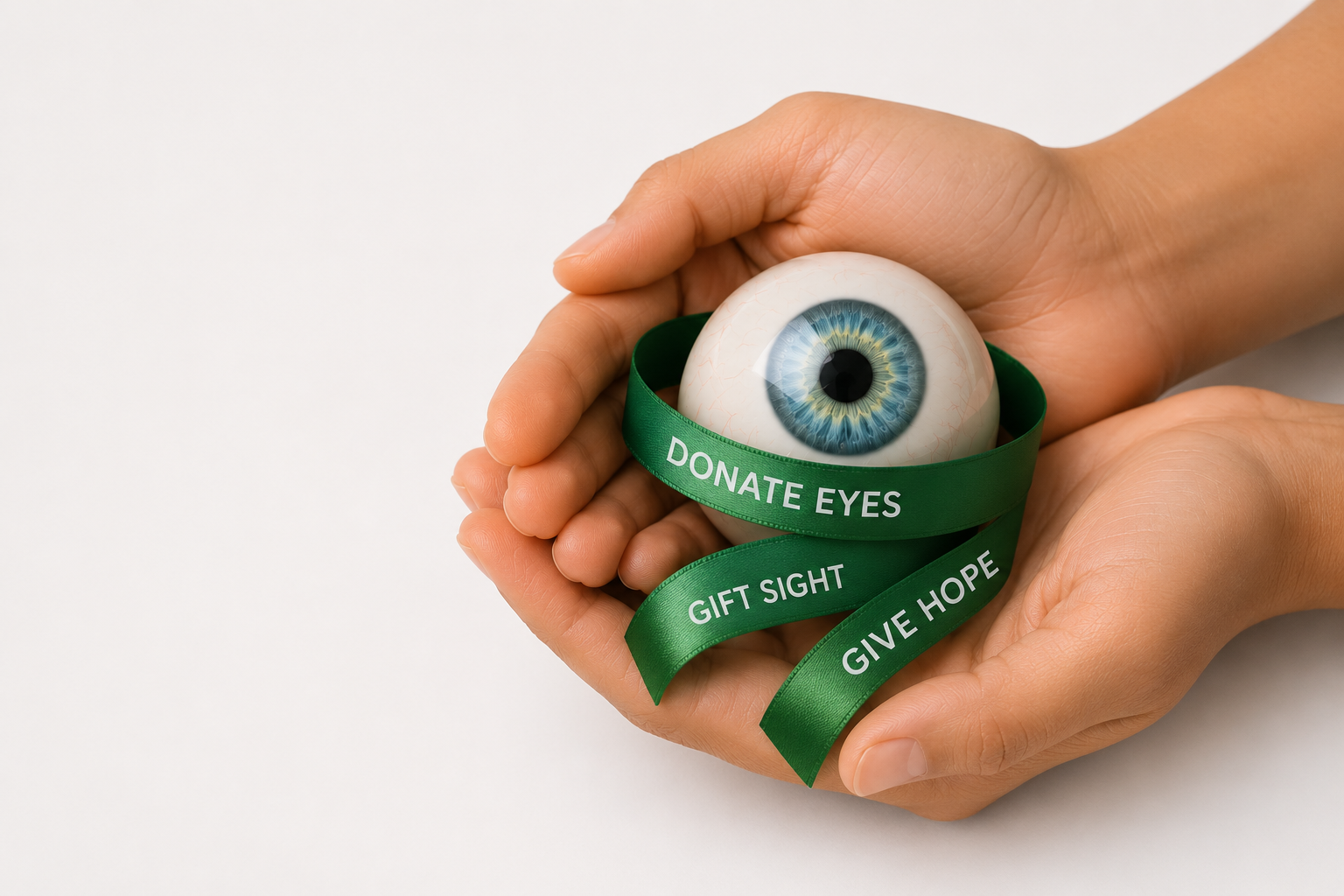
Eye donation is the voluntary donation of the cornea after a person’s death. The cornea is the transparent front layer of the eye that allows light to enter and helps us see clearly.
Contrary to popular belief, doctors usually transplant only the healthy corneal tissue rather than the entire eye. This donated tissue is used during a corneal transplant to help individuals suffering from corneal diseases, injuries, infections, or congenital conditions regain their vision.
Increasing eye donation awareness across India is essential because a single donor can help restore sight to more than one person through successful cornea donation.
Why Eye Donation in India Matters
India has one of the largest populations affected by corneal blindness. Road accidents, infections, birth defects, injuries, and corneal disorders leave thousands of people visually impaired every year.
Although many people support organ donation India initiatives, awareness specifically about eye donation in India remains relatively low.
Greater participation can help:
- Reduce the waiting list for corneal transplants.
- Restore independence to visually impaired individuals.
- Improve educational and employment opportunities for recipients.
- Enhance the overall quality of life for patients suffering from corneal blindness.
With better awareness and community participation, thousands more people could receive the gift of sight every year.
Common Eye Donation Myths and the Truth Behind Them
Myth 1. Only young people can donate eyes.
Fact: Age is rarely a deciding factor. People of almost any age can become eye donors. Medical professionals evaluate the health of the cornea after donation to determine whether it is suitable for transplantation.
Myth 2. People who wear spectacles cannot donate.
Fact: Wearing glasses, contact lenses, or having a history of cataract surgery does not automatically disqualify someone from cornea donation. In many cases, the corneas remain healthy and can still be used.
Myth 3. Eye donation causes facial disfigurement.
Fact: This is one of the most common eye donation myths. During the donation procedure, trained professionals carefully remove the corneal tissue while preserving the natural appearance of the face. Families can still conduct traditional funeral ceremonies without any visible difference.
Myth 4. Eye donation delays funeral arrangements.
Fact: The eye donation process is quick and usually completed within 20 to 30 minutes. It rarely interferes with funeral plans.
Myth 5. People with medical conditions cannot donate.
Fact: Many common medical conditions do not prevent eye donation. The medical team evaluates each case individually. Only certain infectious diseases or specific medical conditions may make the tissue unsuitable.
Myth 6. Religion does not allow eye donation.
Fact: Most major religions support organ and tissue donation as an act of compassion, generosity, and service to humanity. Eye donation is widely recognized as a noble humanitarian act.
Eye Donation Facts Everyone Should Know
Understanding the truth encourages more people to register as donors. Here are some important eye donation facts:
- Eye donation is performed only after a person’s natural death.
- Corneas should ideally be collected within six hours after death.
- There is no cost to the donor’s family.
- Donation does not affect funeral rituals.
- One donor can help restore vision to multiple individuals.
- Donated corneas are preserved and distributed through authorized Eye Bank India networks.
- Every successful corneal transplant gives someone a second chance at seeing the world.
These facts highlight why increasing eye donation awareness is so important across the country.
Understanding the Eye Donation Process
Many families feel uncertain simply because they do not know how the procedure works. The eye donation process is straightforward and handled with great care.
Step 1. Register Your Wish
Individuals can pledge to become eye donors during their lifetime. More importantly, inform your family about your decision because they provide consent after death.
Step 2. Contact an Eye Bank
After death, family members should immediately contact an authorized Eye Bank India or the nearest hospital that facilitates eye donation.
Step 3. Tissue Retrieval
A trained medical team visits the location and carefully retrieves the corneal tissue in a respectful manner.
Step 4. Evaluation and Preservation
The donated corneas undergo medical examination to ensure they are healthy and suitable for transplantation.
Step 5. Corneal Transplant
The healthy corneas are transplanted into patients waiting for vision-restoring surgery.
This entire process follows strict medical guidelines to ensure safety and successful outcomes.
Restoring Sight Through Compassion
Vision is one of life’s greatest gifts. For someone living with corneal blindness, receiving donated corneal tissue can mean returning to work, continuing education, recognizing loved ones, and living independently once again.
Choosing eye donation in India is not just a medical decision. It is a powerful act of kindness that continues to create hope even after life has ended. By replacing misconceptions with facts, we can build a future where no patient waits unnecessarily for a sight-restoring corneal transplant.
Advanced Eye Care at Desai Eye Institute
With Desai Eye Institute, we believe that awareness is the first step toward preventing avoidable blindness and restoring vision wherever possible. Our experienced specialists are committed to providing comprehensive eye care, advanced diagnostic services, and modern treatment options for a wide range of eye conditions.
If you are looking for Advanced Eye Care in Vadodara, our dedicated team combines advanced technology with compassionate care to deliver the best possible outcomes. Whether you need expert guidance on corneal health, treatment for vision problems, or consultation with the Best Eye Doctor in Vadodara, we are here to help.
Our experienced ophthalmologists are recognized among the Top Eye Specialists in Vadodara, offering personalized treatment plans focused on preserving and improving vision. Together, through greater awareness and quality eye care, we can help create a future where more people have the opportunity to see the world clearly.