

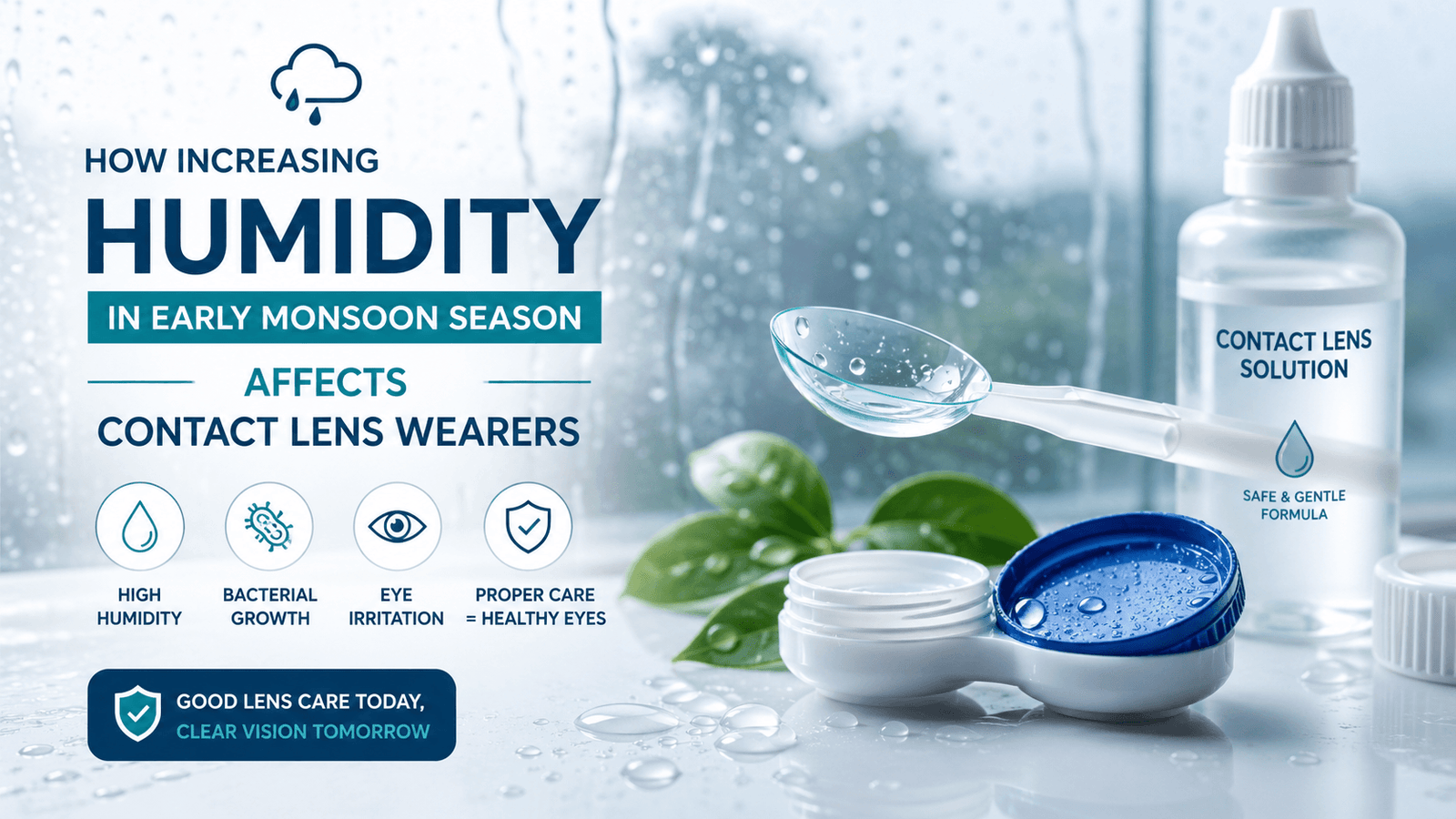
The arrival of the monsoon season brings welcome relief from intense summer heat, but it also introduces new challenges for eye health. Rising humidity levels, increased exposure to moisture, and a higher risk of bacterial and fungal growth can significantly affect people who wear contact lenses regularly.
While many assume that humid weather is beneficial for the eyes, excessive moisture in the environment can create conditions that increase lens discomfort and the likelihood of infections. Understanding the connection between humidity and contact lenses is essential for maintaining clear vision and healthy eyes throughout the rainy season.
For contact lens users, proper hygiene and preventive care become even more important during monsoon months. By following the right practices and recognizing early warning signs of eye problems, you can continue wearing your lenses safely and comfortably despite changing weather conditions.
Understanding Contact Lenses in Humid Weather
The monsoon season creates a unique environment for contact lens wearers. Unlike dry summer months, the rainy season is characterized by increased humidity levels, fluctuating temperatures, and higher concentrations of airborne pollutants and microorganisms.
While humid air may initially seem beneficial for preventing dry eyes, excessive moisture can create conditions that encourage bacterial and fungal growth. These microbes can accumulate on contact lenses and lens cases, increasing the risk of eye infections.
Many people experience symptoms such as:
- Blurred vision
- Eye irritation
- Redness
- Excessive tearing
- Itching and discomfort
- Sensitivity to light
These issues are particularly common among individuals using contact lenses in humid weather without following proper hygiene practices.
How Humidity Affects Contact Lens Comfort
One of the biggest concerns during the monsoon season is how increased humidity changes the eye’s natural environment.
1. Increased Lens Deposits
Humidity promotes the accumulation of protein deposits, dirt particles, and environmental pollutants on contact lenses. These deposits can reduce oxygen flow to the cornea and make lenses feel uncomfortable throughout the day.
2. Greater Exposure to Allergens
The rainy season often increases exposure to pollen, mold spores, and dust mites. These allergens can stick to contact lenses, causing irritation and allergic reactions.
3. Reduced Lens Stability
Changes in temperature and moisture levels may affect the way lenses sit on the eye. Some wearers report fluctuating vision quality and lens discomfort during prolonged outdoor exposure.
4. Higher Risk of Contamination
Wet hands, damp storage cases, and exposure to rainwater can introduce harmful microorganisms onto lenses, making eye infections from contact lenses more likely.
Why Monsoon Eye Infections Are More Common
The combination of moisture and warmth creates an ideal breeding ground for bacteria and fungi. As a result, monsoon eye infections become more prevalent during this season.
Contact lens wearers face a higher risk because lenses can trap microorganisms against the eye’s surface for extended periods.
Common infections include:
Conjunctivitis (Pink Eye)
Characterized by redness, itching, discharge, and irritation, conjunctivitis spreads easily during humid weather.
Keratitis
This is a serious corneal infection that can develop when bacteria or fungi contaminate contact lenses. Symptoms may include severe pain, blurred vision, and light sensitivity. Early diagnosis through a Corneal Sensitivity Test can help detect nerve damage and guide effective treatment.
Allergic Eye Reactions
Humidity can worsen seasonal allergies, leading to swollen, itchy, and watery eyes.
Many cases of eye infections from contact lenses occur because users continue wearing lenses despite experiencing irritation or fail to maintain proper lens hygiene.
Essential Contact Lens Care During Monsoon
Practicing proper Contact Lens Care During Monsoon can help protect your eyes and ensure comfortable lens wear throughout the rainy season.
Wash and Dry Hands Thoroughly
Always wash your hands with soap and water before touching your lenses. More importantly, dry them completely using a clean towel before handling lenses.
Avoid Contact with Rainwater
Rainwater may contain pollutants, bacteria, and other contaminants. If your lenses come into contact with rainwater, remove and clean them immediately.
Clean Lenses Regularly
Use only the recommended lens solution for cleaning and storing lenses. Never use tap water or homemade solutions.
Replace Lens Cases Frequently
Lens cases can become breeding grounds for microorganisms. Replace them every three months or according to your eye specialist’s recommendations.
Limit Lens Wearing Time
During periods of eye irritation or allergies, consider reducing contact lens wear time or switching to glasses temporarily.
Never Sleep with Contact Lenses
Sleeping with lenses increases the risk of infections, especially during humid weather conditions.
Signs That Your Eyes Need Immediate Attention
Contact lens wearers should never ignore symptoms that persist beyond a few hours.
Seek professional eye care if you experience:
- Persistent redness
- Eye pain
- Blurred vision
- Excessive tearing
- Sensitivity to light
- Discharge from the eyes
- Swelling around the eyelids
Early diagnosis and treatment can prevent minor irritation from developing into a serious eye condition.
Monsoon Eye Care Tips Beyond Contact Lenses
Good Monsoon eye care involves more than just lens maintenance.
Stay Hydrated
Proper hydration supports healthy tear production and helps maintain eye comfort.
Avoid Touching Your Eyes
Frequent touching can transfer germs and increase the risk of infection.
Wear Protective Eyewear
When riding a bike or walking in heavy rain, protective glasses can help prevent exposure to dust and contaminated water.
Maintain a Healthy Diet
Foods rich in Vitamin A, Omega-3 fatty acids, and antioxidants support overall eye health.
Schedule Regular Eye Checkups
Routine eye examinations can identify potential problems before they become serious. Book a comprehensive check-up at our Advanced Eye Care center in Vadodara today.
When to Visit an Eye Specialist
Many people assume that mild eye irritation during the monsoon is normal. However, recurring discomfort may indicate an underlying issue with lens fit, lens material, allergies, or infection.
Regular consultations with a Best Eye Doctor in Vadodara can ensure your contact lenses remain safe and suitable for your eyes throughout the changing seasons. If you experience any signs of corneal damage, a Corneal Transplant Surgery evaluation may also be recommended depending on the severity of the condition.
Protect Your Vision This Monsoon with Desai Eye Institute
Your eyes deserve extra care during the rainy season. Whether you’re experiencing discomfort while wearing contact lenses or looking for expert guidance on seasonal eye health, Desai Eye Institute is committed to providing comprehensive eye care solutions.
Recognized for delivering Advanced Eye Care in Vadodara, the institute offers modern diagnostic technology, personalized treatment plans, and expert consultations for a wide range of eye conditions. If you’re searching for the Best Eye Doctor in Vadodara or a Top Eye Specialist in Vadodara, our experienced team is dedicated to helping you maintain clear, healthy vision throughout every season.
This monsoon, don’t let humidity compromise your eye health. Schedule a professional eye examination and ensure your contact lenses remain safe, comfortable, and infection-free.