

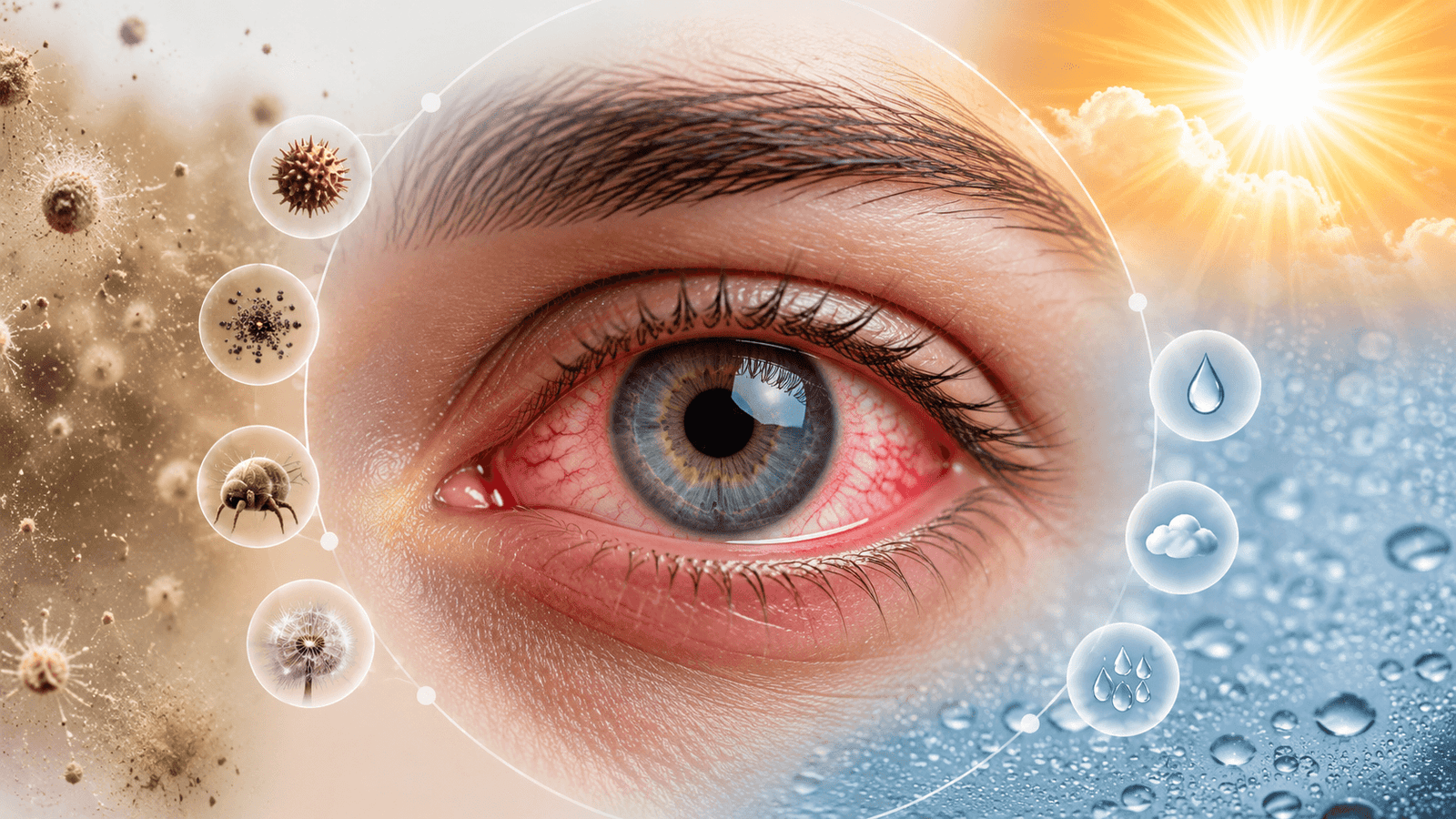
Have your eyes ever felt unbearably itchy, red, or watery during the hot summer months or after the arrival of monsoon rains? You’re not alone. Many people experience worsening eye allergies during seasonal weather changes, especially in regions where dust, heat, and humidity levels fluctuate dramatically.
One of the most common eye allergy conditions is allergic conjunctivitis, a condition that affects millions of people every year. Understanding how environmental factors contribute to eye allergies can help you take preventive measures and seek timely Allergic Conjunctivitis Treatment before symptoms interfere with your daily life.
What Is Allergic Conjunctivitis?
Allergic conjunctivitis occurs when the conjunctiva, the thin transparent membrane covering the white part of the eye and inner eyelids, reacts to allergens such as dust, pollen, mold spores, pet dander, or pollution.
When these allergens come into contact with your eyes, the body’s immune system releases histamines, triggering inflammation and irritation. If left unaddressed, this can overlap with conditions like Dry Eye, further aggravating discomfort.
Common Allergic Conjunctivitis Symptoms
Recognizing symptoms early can help prevent complications and discomfort.
Some of the most common allergic conjunctivitis symptoms include:
- Persistent eye itching
- Redness in the eyes
- Excessive tearing or watery eyes
- Burning sensation
- Puffy or swollen eyelids
- Sensitivity to light
- Mucous discharge in some cases
Many patients complain primarily of eye itching and redness, which often become more severe during certain seasons. If symptoms resemble a potential eye infection, professional diagnosis is essential to determine the correct cause and treatment.
Why Summer Makes Eye Allergies Worse
1. Increased Dust Exposure
Summer often brings dry weather conditions that allow dust particles to remain suspended in the air for longer periods. Construction activities, vehicle movement, and strong winds can further increase airborne dust.
For individuals with allergies, dust allergy affecting eyes is a major trigger. When microscopic dust particles settle on the eye surface, they can provoke an allergic reaction, causing irritation and inflammation.
2. High Temperatures Intensify Irritation
Heat can dry out the tear film that protects the eye surface. When tears evaporate more quickly, the eyes become more vulnerable to allergens and environmental irritants.
This is one reason why many people experience an eye allergy in summer, especially during peak afternoon temperatures.
3. Increased Outdoor Activities
Summer vacations, sports, and outdoor gatherings expose people to more pollen, dust, and pollution. Extended outdoor exposure increases the likelihood of allergens coming into contact with the eyes, resulting in flare-ups.
How Humidity Affects Eye Allergies
Many people assume humidity should soothe the eyes, but the relationship between humidity and eye allergies is more complicated.
Humidity Encourages Mold Growth
High moisture levels create ideal conditions for mold growth in homes, offices, and public spaces. Mold spores are powerful allergens that can trigger allergic conjunctivitis and worsen existing symptoms.
Increased Airborne Allergens
Humid conditions can also increase the concentration of allergens in the environment. Dust mites thrive in moist conditions and become more active, contributing to allergy flare-ups.
As a result, individuals sensitive to allergens may notice worsening symptoms when humidity levels rise.
Why Monsoon Season Triggers Eye Allergies
While monsoon rains help settle dust in the atmosphere, they also create conditions that encourage allergy-causing organisms.
Rise in Mold and Fungal Spores
Damp environments allow mold and fungal spores to multiply rapidly. These spores can become airborne and irritate the eyes.
This is one of the leading reasons behind monsoon eye allergies.
Increased Bacterial and Environmental Irritants
Monsoon weather often leads to stagnant water and increased microbial growth. Combined with fluctuating humidity levels, these factors can aggravate eye discomfort and allergic reactions.
Indoor Allergen Build-Up
People tend to spend more time indoors during rainy weather. Unfortunately, indoor allergens such as dust mites, mold, and pet dander can accumulate, worsening allergy symptoms.
Why Dust, Heat, and Humidity Trigger Eye Allergies
Many eye specialists observe a spike in eye allergies because this month often marks the transition between intense summer heat and the onset of monsoon conditions.
During June:
- Dust levels may remain high
- Temperatures continue to be elevated
- Humidity begins increasing
- Mold growth starts accelerating
This combination creates a perfect storm for allergy sufferers, leading to more frequent episodes of allergic conjunctivitis.
Effective Allergic Conjunctivitis Treatment Options
The good news is that allergic conjunctivitis can be managed successfully with timely diagnosis and proper care.
Avoid Allergy Triggers
The first step in treatment is identifying and minimizing exposure to triggers.
Helpful measures include:
- Wearing sunglasses outdoors
- Avoiding dusty environments
- Keeping windows closed during high pollen days
- Using air purifiers indoors
- Washing hands frequently
- Avoiding rubbing your eyes
Cold Compress Therapy
Applying a clean cold compress can reduce inflammation and provide temporary relief from itching and redness.
Lubricating Eye Drops
Artificial tears help wash away allergens from the eye surface and maintain moisture, reducing irritation. For persistent dryness, a structured Dry Eye treatment plan may be recommended alongside allergy management.
Prescription Medications
Depending on symptom severity, eye specialists may recommend:
- Antihistamine eye drops
- Mast cell stabilizers
- Anti-inflammatory medications
- Combination allergy eye drops
A personalized seasonal eye allergy treatment plan can significantly improve comfort and prevent recurrent flare-ups.
When Should You Visit an Eye Specialist?
Many people mistake allergic conjunctivitis for a simple eye infection and attempt self-treatment. However, persistent symptoms should never be ignored.
Seek professional evaluation if you experience:
- Severe redness
- Persistent itching
- Swelling around the eyes
- Blurred vision
- Symptoms lasting more than a few days
- Frequent seasonal recurrence
An experienced eye specialist can accurately diagnose the condition and recommend the most effective treatment approach.
Protect Your Eyes Through Every Season
Dust, heat, and humidity can significantly increase the risk and severity of allergic conjunctivitis. Whether you’re dealing with an eye allergy in summer, struggling with monsoon eye allergies, or experiencing recurring eye itching and redness, early intervention is essential for protecting your vision and comfort.
With the Desai Eye Institute, patients receive comprehensive diagnosis and advanced care for eye allergies and other ophthalmic conditions. If you’re searching for Advanced Eye Care in Vadodara, consulting the Best Eye Doctor in Vadodara can help you identify allergy triggers and receive personalized treatment. Our team of experienced specialists is committed to delivering high-quality eye care using modern diagnostic and treatment technologies. For expert guidance from a Top Eye Specialist in Vadodara, schedule a consultation and take the first step toward healthier, more comfortable eyes.
Conclusion
Seasonal changes bring more than just weather fluctuations. They also create conditions that can worsen allergic conjunctivitis. Understanding the impact of dust, heat, and humidity on eye health allows you to take preventive action and seek timely treatment. With proper care and expert medical guidance, you can keep your eyes healthy and allergy-free throughout the year.