

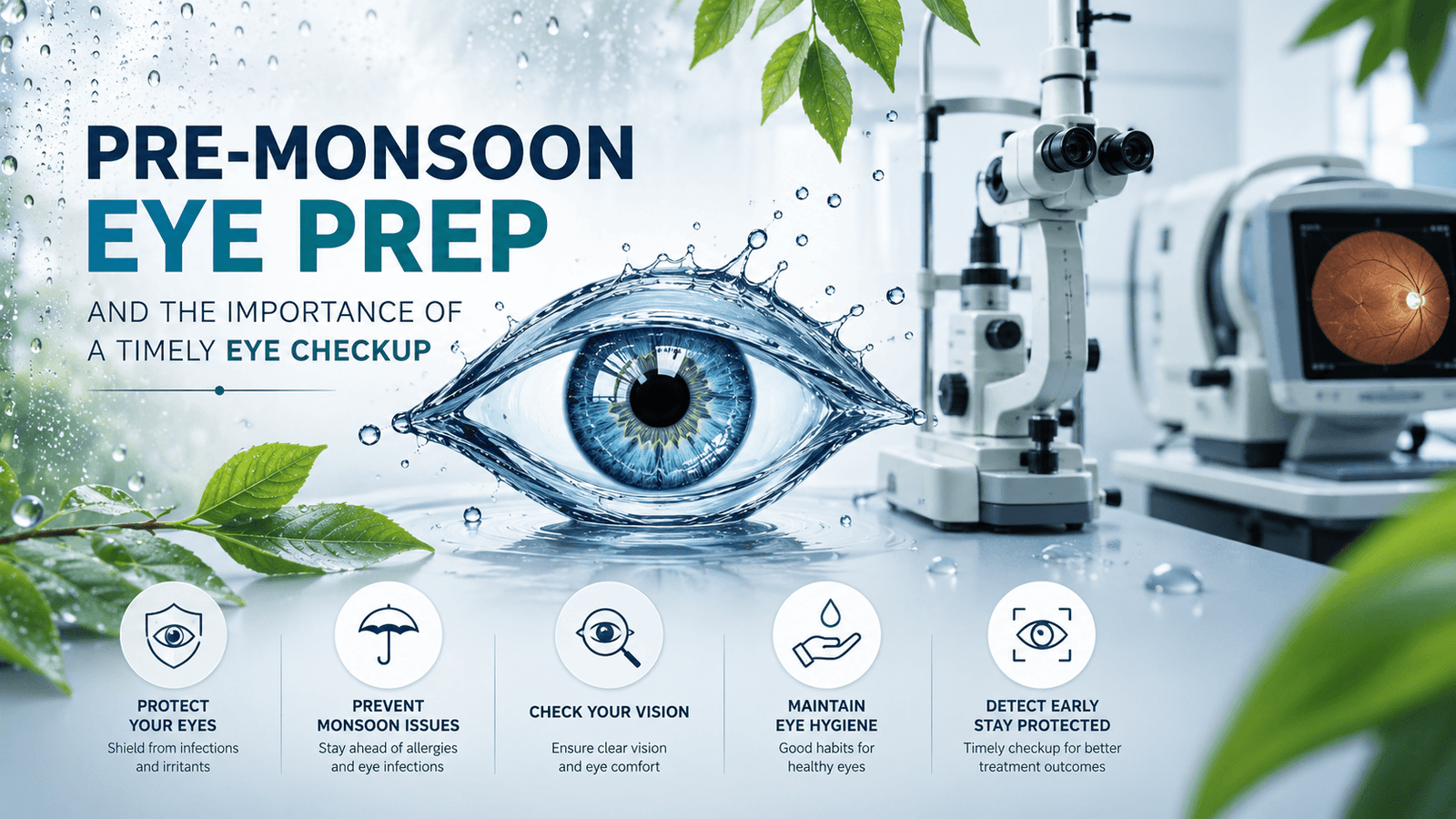
As the monsoon season approaches, it’s the perfect time to focus on your overall health, including your eye health. Seasonal changes can bring increased humidity, allergies, and a higher risk of eye infections, making preventive eye care more important than ever. A timely eye checkup can help detect potential issues early and ensure your vision stays clear and healthy throughout the rainy season.
Just as we prepare our bodies for seasonal changes, our eyes deserve the same attention. With the monsoon season approaching, it becomes the perfect time to schedule an Eye Checkup Before Monsoon. Increased humidity, waterborne infections, allergies, and changing environmental conditions can significantly affect eye health during the rainy season.
A timely eye checkup can help detect existing eye conditions, strengthen preventive care, and ensure your vision remains clear and healthy throughout the monsoon months.
Why Monsoon Season Can Be Challenging for Your Eyes
The arrival of the monsoon brings relief from the summer heat, but it also creates conditions that encourage the growth of bacteria, viruses, and fungi. These microorganisms can increase the risk of several eye-related problems.
Common eye issues during monsoon include:
- Conjunctivitis (Pink Eye)
- Eye allergies
- Dry eye syndrome
- Styes
- Corneal infections
- Redness and irritation
- Watering eyes
- Fungal eye infections
People who wear contact lenses, spend long hours outdoors, or already have eye conditions are particularly vulnerable during this season.
This is why experts recommend a thorough Eye Checkup Before Monsoon to identify risk factors and take preventive measures early.
Why Is the Best Time for an Eye Checkup
1. Detect Hidden Eye Problems Early
Many eye conditions develop gradually and show no noticeable symptoms in their early stages. Diseases such as glaucoma, diabetic retinopathy, cataracts, and retinal disorders may progress silently.
A professional eye examination can detect these conditions before they begin affecting your vision, allowing timely treatment and better outcomes.
2. Prepare Your Eyes for Seasonal Changes
The transition from summer to monsoon affects air quality, humidity levels, and exposure to allergens. These changes can trigger eye irritation and discomfort.
A comprehensive eye checkup helps assess your eye health and determine whether you need preventive treatment, updated prescriptions, or protective measures before the rainy season begins.
3. Reduce the Risk of Monsoon Eye Infections
Monsoon-related infections spread rapidly through contaminated water, dirty hands, and crowded environments.
During an eye examination, your ophthalmologist can identify signs of infection, inflammation, or weakened ocular health and recommend preventive care to minimize risks during the rainy season.
4. Update Your Prescription
Many people continue using outdated eyeglasses or contact lens prescriptions for years. Seasonal strain, increased screen time, and changing visual demands can worsen eye fatigue.
An eye checkup ensures your prescription remains accurate, helping you maintain clear vision and reduce unnecessary eye strain.
Signs You Should Not Ignore Before Monsoon
Even if your vision seems normal, certain symptoms indicate that an eye checkup may be necessary:
- Frequent headaches
- Blurred vision
- Eye strain
- Dry or itchy eyes
- Excessive watering
- Light sensitivity
- Redness
- Difficulty seeing at night
- Eye pain or discomfort
Ignoring these symptoms can lead to complications that become more difficult to manage during the monsoon season.
Essential Pre-Monsoon Eye Care Tips
Along with scheduling an Eye Checkup Before Monsoon, adopting healthy habits can significantly improve your eye health.
Maintain Proper Hand Hygiene
Many eye infections spread through contaminated hands. Wash your hands frequently and avoid touching your eyes unnecessarily.
Avoid Sharing Personal Items
Towels, handkerchiefs, eye makeup, and contact lens accessories should never be shared, especially during monsoon when infections spread more easily.
Use Clean Contact Lenses
Contact lens users should follow strict hygiene practices. Always clean lenses properly and avoid wearing them for extended periods.
Protect Your Eyes Outdoors
Rainwater may contain pollutants and microorganisms that can irritate your eyes. Protective eyewear can help reduce exposure.
Stay Hydrated
Adequate hydration supports tear production and helps prevent dryness and irritation.
Follow a Nutrient-Rich Diet
Foods rich in vitamins A, C, E, zinc, and omega-3 fatty acids support healthy vision and strengthen eye tissues.
Include:
- Carrots
- Spinach
- Sweet potatoes
- Citrus fruits
- Fish
- Nuts and seeds
Limit Screen Time
Digital devices contribute significantly to eye strain. Follow the 20-20-20 rule:
Every 20 minutes, look at an object 20 feet away for 20 seconds.
What Happens During a Comprehensive Eye Checkup?
Many people avoid eye examinations because they assume the process is lengthy or uncomfortable. In reality, a comprehensive eye checkup is a simple and highly beneficial procedure.
A complete evaluation typically includes:
Vision Assessment
Your doctor checks your visual acuity and determines whether corrective lenses are needed.
Eye Pressure Testing
This helps identify early signs of glaucoma.
Retinal Examination
The retina is examined for signs of diabetes-related changes, retinal disorders, or other vision-threatening conditions.
Corneal and Lens Evaluation
The front structures of the eye are assessed for cataracts, infections, and abnormalities.
Overall Eye Health Analysis
Your ophthalmologist evaluates eye muscles, tear production, and general ocular health.
These tests provide a complete understanding of your eye condition and help create a personalized care plan.
Who Should Prioritize an Eye Checkup Before Monsoon?
While everyone can benefit from routine eye care, the following groups should make eye examinations a priority:
- Children and students
- Working professionals with high screen exposure
- Senior citizens
- Diabetic patients
- Contact lens users
- Individuals with a family history of eye diseases
- People experiencing vision changes or discomfort
Regular eye examinations are essential for maintaining lifelong visual health.
Protect Your Vision with Advanced Eye Care in Vadodara
Seasonal changes should never compromise your vision. A preventive approach today can help you avoid infections, discomfort, and long-term eye complications tomorrow.
If you’re looking for Advanced Eye Care in Vadodara, the experienced specialists at Desai Eye Institute provide comprehensive diagnostic and treatment services using modern technology and patient-centered care.
Recognized by many patients as a destination for expert eye treatment, the institute is home to some of the Best Eye Doctors in Vadodara and experienced Top Eye Specialists in Vadodara who are committed to preserving and enhancing your vision.
This, take a proactive step toward healthier eyes. Schedule your Eye Checkup Before Monsoon and enjoy the rainy season with confidence, comfort, and clear vision.
Conclusion
Good health begins with prevention, and regular eye examinations are an essential part of maintaining long-term vision. Just as we prioritize our overall well-being, taking proactive steps to care for our eyes can help detect potential problems early and protect our vision for years to come.
Offers the perfect opportunity to prepare your eyes for the challenges of the monsoon season. A timely Eye Checkup Before Monsoon can detect hidden conditions, prevent infections, update prescriptions, and safeguard your vision for months ahead.
Don’t wait for symptoms to appear. Prioritize your eye health today and give your vision the care it deserves.