

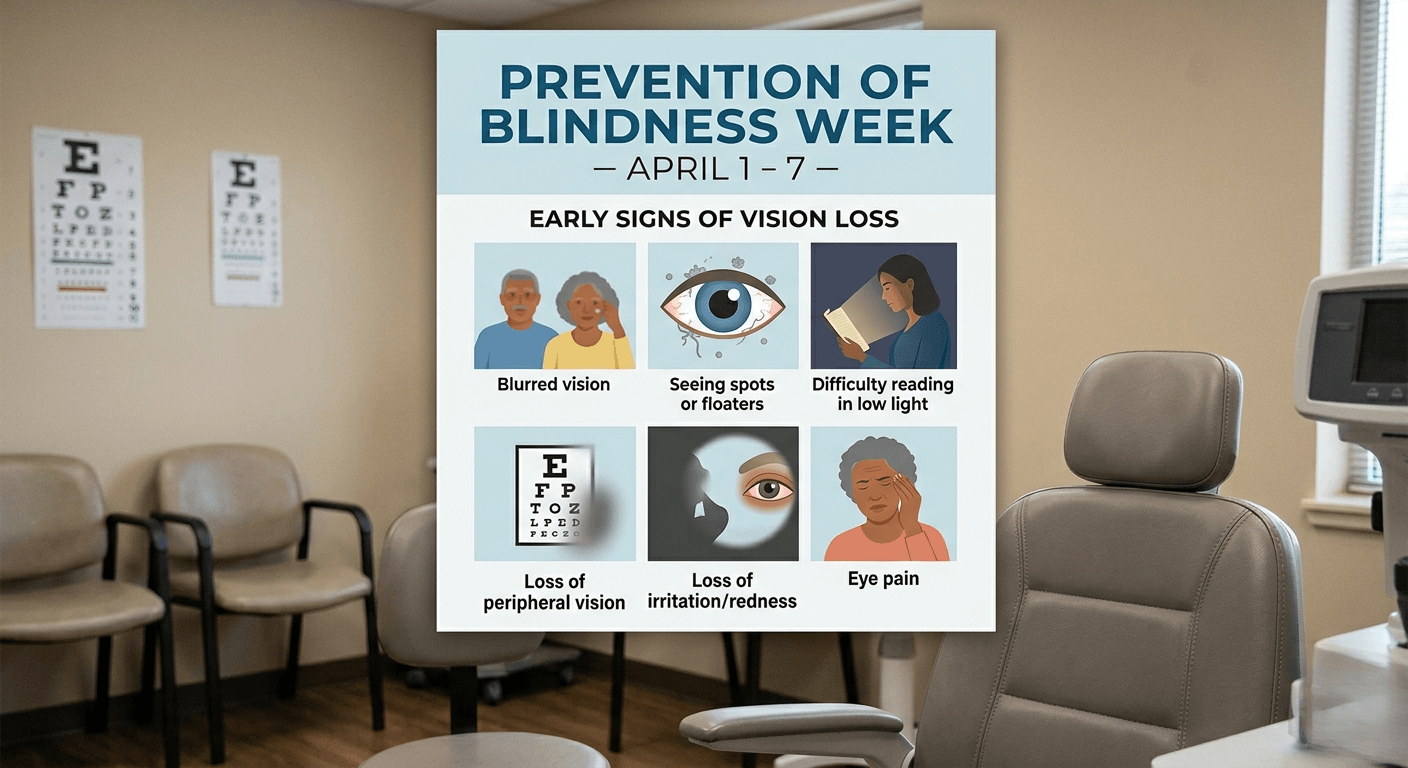
Every year, Prevention of Blindness Week in India highlights a simple but powerful message: vision loss rarely happens suddenly without warning. In many cases, the eyes send early signals long before serious damage occurs. Recognising these warning signs and acting quickly can make a significant difference in protecting long-term eyesight.
According to the World Health Organisation, more than 90 per cent of vision impairment cases are either preventable or treatable when detected early. This makes awareness of subtle visual changes an essential step toward safeguarding eye health.
When Everyday Tasks Become Slightly Difficult
A common early indicator of vision problems is difficulty performing routine activities such as reading small print, recognising faces from a distance, or focusing on screens. Many people assume these changes are due to ageing or fatigue, but persistent difficulty can signal underlying eye conditions.
If routine tasks start requiring more effort than usual, it may be time to visit a modern eye treatment center for a comprehensive eye evaluation. Early testing can identify refractive errors, cataracts, or retinal concerns before they progress.
Frequent Changes in Vision Clarity
Vision that changes throughout the day is another sign that should not be ignored. For example, you may notice that vision feels blurry in the morning or after extended screen use. While occasional blurriness may be harmless, repeated episodes can indicate dry eye syndrome, diabetes-related vision changes, or early cataract formation.
Research published by the National Eye Institute shows that early diagnosis of such conditions significantly improves treatment outcomes and reduces the risk of permanent vision impairment.
Increased Dependence on Brighter Light
Needing stronger lighting to read or work is often one of the earliest signs of declining visual function. This symptom is particularly common in individuals over the age of 40 and may be linked to changes in the lens of the eye or early cataract development.
Eye specialists advise monitoring these changes closely and scheduling timely examinations at a modern eye treatment center, where advanced diagnostic equipment can detect subtle vision changes that may not be noticeable during routine activities.
Noticing More Floaters or Visual Disturbances
Seeing small floating spots, flashes of light, or shadows in your field of vision can be alarming. While occasional floaters are common, a sudden increase in their number may indicate retinal problems that require urgent attention.
The All India Ophthalmological Society emphasises that immediate medical consultation is crucial when sudden visual disturbances occur, as early treatment can prevent irreversible damage.
The Importance of Timely Eye Care
Early symptoms of vision loss are often mild and easy to overlook, but ignoring them can lead to more serious complications over time. Regular eye check-ups, awareness of warning signs, and prompt treatment remain the most effective strategies for preserving vision.
Access to complete vision care in Vadodara ensures that individuals receive accurate diagnosis, preventive guidance, and personalised treatment tailored to their specific eye health needs.
Conclusion
Prevention of Blindness Week serves as a reminder that protecting vision begins with awareness and timely action. Paying attention to subtle visual changes and seeking professional care can prevent many serious eye conditions. For individuals looking for trusted expertise and patient-focused services, Desai Eye Institute continues to provide advanced diagnostics, compassionate care, and reliable eye health solutions for families across the region.
Sources
- World Health Organisation (WHO): World Report on Vision
- National Eye Institute (NEI): Early Detection of Vision Disorders
- All India Ophthalmological Society (AIOS): Eye Health Awareness Guidelines